How Much Does It Cost to Become a Dental Hygienist?

Does Reach Dental Floss Contain PFAS?
July 16, 2026
Does Dental Insurance Cover Braces in the UK?
July 16, 2026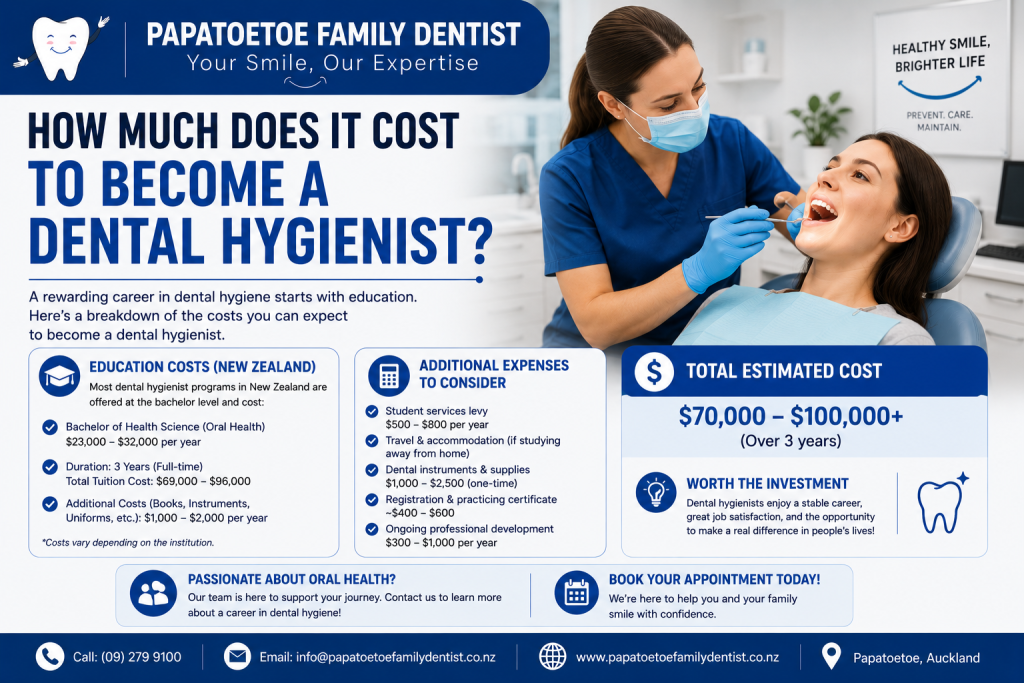
A career as a dental hygienist is an excellent choice for people who enjoy healthcare, patient care, and promoting good oral health. Dental hygienists play a vital role in preventing dental disease, performing professional teeth cleanings, and educating patients about oral hygiene.
One of the most common questions prospective students ask is: “How much does it cost to become a dental hygienist?” The answer depends on where you study, the type of program you choose, and the country you’re in. Tuition fees, equipment, textbooks, and licensing costs can all affect the total investment.
In this guide, we’ll break down the typical costs involved in becoming a dental hygienist and explain what you can expect throughout your education and training.
What Does a Dental Hygienist Do?
Dental hygienists work alongside dentists to help patients maintain healthy teeth and gums.
Their responsibilities typically include:
Professional teeth cleaning
Removing plaque and tartar
Taking dental X-rays (where permitted)
Examining gum health
Applying fluoride treatments
Educating patients on oral hygiene
Assisting with preventive dental care
It’s a rewarding career with strong job demand in many countries.
How Much Does Dental Hygienist Training Cost?
The cost of becoming a dental hygienist varies significantly depending on:
The country you study in
Public or private institution
Length of the program
Additional fees
Here are some general estimates:
New Zealand
Dental hygiene programs can cost approximately NZ$8,000–NZ$12,000 per year for domestic students, while international students usually pay significantly higher tuition fees.
Australia
Tuition may range from AUD $6,000–$12,000 per year for domestic students, with international fees often exceeding AUD $30,000 per year.
United Kingdom
Students generally pay standard university tuition fees. Domestic undergraduate tuition in England is currently up to £9,535 per year (subject to government changes), while international fees are usually much higher.
United States
Tuition varies widely:
Community colleges: US$5,000–US$15,000 per year
Universities: US$20,000–US$50,000+ per year
The total cost depends on the institution and program length.
Additional Costs to Consider
Tuition isn’t the only expense.
You may also need to budget for:
Textbooks
Dental hygiene textbooks and online resources can cost several hundred dollars each year.
Uniforms and Clinical Clothing
Most programs require:
Clinical uniforms
Protective footwear
Safety glasses
Instruments and Equipment
Some schools require students to purchase personal instrument kits for clinical training.
Vaccinations and Health Checks
Healthcare students are often required to complete:
Vaccinations
Medical examinations
Police or background checks
First aid certification
Licensing and Registration
After graduation, you may need to pay:
Registration fees
Licensing examination fees
Annual practising certificate fees
These costs vary by country.
How Long Does It Take to Become a Dental Hygienist?
Most dental hygiene programs take between:
2 to 4 years
depending on:
Certificate
Diploma
Bachelor’s degree
After completing your education, you must usually meet your country’s registration requirements before practising.
Can You Get Financial Assistance?
Many students reduce education costs through:
Government student loans
Scholarships
Grants
University financial aid
Employer sponsorship (where available)
Eligibility depends on your country and educational institution.
Is Becoming a Dental Hygienist Worth the Cost?
For many students, the answer is yes.
Benefits include:
Strong employment opportunities
Competitive salaries
Regular working hours
Opportunities for career advancement
The satisfaction of helping patients improve their oral health
The long-term earning potential often outweighs the initial education costs.
Skills You’ll Develop During Training
Dental hygiene programs teach:
Oral anatomy
Periodontal care
Preventive dentistry
Infection control
Radiography
Patient communication
Clinical dental hygiene techniques
Students also complete supervised clinical placements to gain practical experience.
Career Opportunities After Graduation
Qualified dental hygienists may work in:
General dental practices
Specialist dental clinics
Community oral health services
Hospitals
Public health programs
Educational institutions
Some hygienists also continue their education into teaching, research, or dental therapy.
Tips Before Choosing a Program
Before enrolling:
✔ Compare tuition fees
✔ Check accreditation status
✔ Research graduate employment rates
✔ Visit the campus if possible
✔ Ask about clinical placement opportunities
Choosing an accredited program is essential for future registration.
Dental clinics such as Papatoetoe Family Dentist work closely with qualified dental hygienists who have completed accredited education and clinical training, helping patients maintain healthy smiles through preventive care.
Frequently Asked Questions
How many years does it take to become a dental hygienist?
Most programs take between 2 and 4 years, depending on the qualification and country.
Is dental hygiene school expensive?
Costs vary widely by location and institution, but students should budget for tuition, equipment, textbooks, and licensing fees.
Can I work while studying?
Many students work part-time, although clinical placements may make balancing work and study more challenging.
Is financial aid available?
Many universities and governments offer loans, scholarships, or grants for eligible students.
Final Thoughts
If you’re wondering how much it costs to become a dental hygienist, the total investment depends on where you study and the type of program you choose. In addition to tuition, you’ll need to consider textbooks, clinical equipment, uniforms, and registration fees.
Although the upfront cost can be significant, dental hygiene offers a stable, rewarding career with strong job prospects and the opportunity to make a positive difference in patients’ oral health every day.