How Long Does Dental Numbing Injection Last?

What Type of Dentist Makes the Most Money?
September 3, 2026
How Many Dental Specialties Are There?
September 28, 2026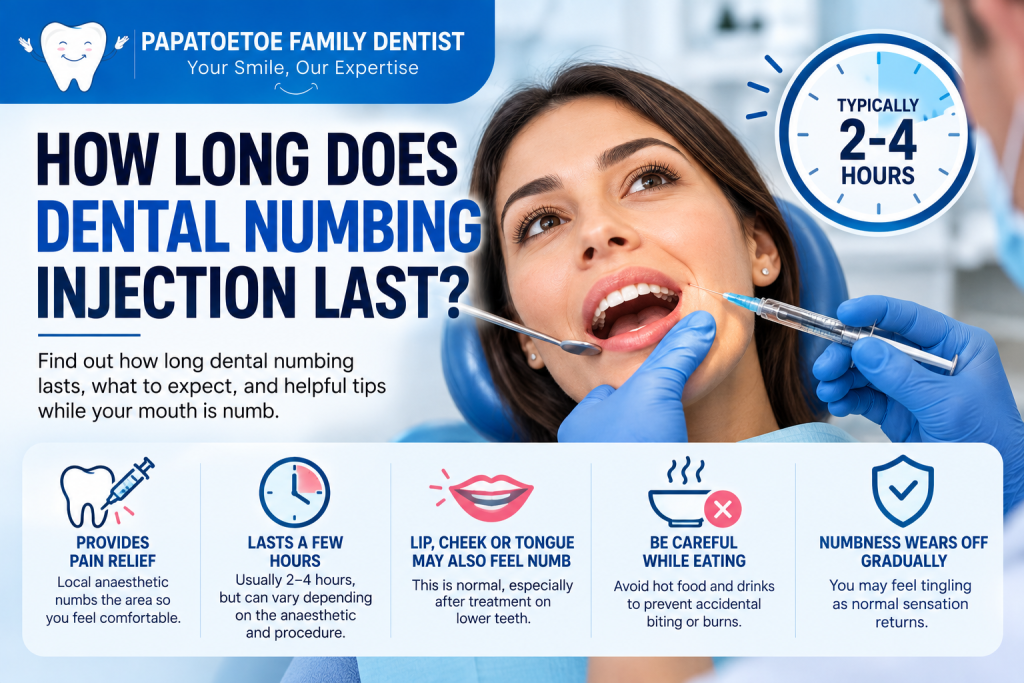
If you’ve ever had a filling, tooth extraction, root canal, or another dental procedure, you may have experienced that strange feeling of a numb lip, cheek, tongue, or jaw afterward.
One of the most common questions patients ask after dental treatment is:
How long does a dental numbing injection last?
In most routine dental procedures, numbness typically lasts around 2 to 4 hours, although the exact duration varies depending on the type and amount of local anaesthetic used, where it was injected, and the procedure being performed. Some longer-acting anaesthetics can cause numbness or reduced sensation for considerably longer.
At Papatoetoe Family Dentist, we understand that the numb feeling can be uncomfortable or unfamiliar, especially if you’ve never had dental anaesthetic before. Knowing what to expect can make the hours after treatment much easier.
In this guide, we’ll explain how dental numbing injections work, how long they usually last, why your lip or tongue may stay numb after your tooth feels normal, what you should avoid while you’re numb, and when you should contact your dentist.
What Is a Dental Numbing Injection?
A dental numbing injection is a type of local anaesthetic.
Unlike general anaesthesia, local anaesthetic doesn’t make you unconscious. Instead, it temporarily blocks nerve signals in a specific area, allowing your dentist to perform treatment while you remain awake.
You may receive local anaesthetic for procedures such as:
- Dental fillings
- Tooth extractions
- Root canal treatment
- Dental implant procedures
- Gum treatments
- Certain surgical procedures
When the anaesthetic starts working, you may initially notice warmth, tingling or a strange sensation. The treated area then becomes numb, reducing your ability to feel pain.
You may still feel pressure, movement or vibration during treatment even though sharp pain is blocked.
How Long Does Dental Numbing Last?
For many routine dental procedures, the numbness lasts approximately 2 to 4 hours.
For example, a hospital dental extraction guide states that numbness can last around 2–4 hours after an extraction under local anaesthetic.
However, this is only a general timeframe.
Depending on the anaesthetic and procedure, numbness can last longer. Some local anaesthetics can remain effective for several hours, and certain longer-acting preparations may provide pain relief for around 4–6 hours or more.
So if you’re still feeling numb after three or four hours, it doesn’t necessarily mean anything is wrong.
Why Does Dental Numbing Last for Different Amounts of Time?
Several factors can affect how long your mouth stays numb.
1. Type of Anaesthetic
Different local anaesthetics have different durations of action.
Your dentist chooses an anaesthetic based on factors such as:
- Type of treatment
- Location of the tooth
- Expected treatment duration
- Patient considerations
Some anaesthetic formulations are designed to provide longer-lasting effects.
2. Location of the Injection
The location of the injection can make a noticeable difference.
For example, an injection used to numb lower teeth may also affect nearby areas such as:
- Lower lip
- Chin
- Tongue
This can make it feel as though a larger part of your mouth is numb.
A local anaesthetic blocks nerve signals, so the areas supplied by the affected nerve can remain numb until the medication wears off.
3. Amount of Anaesthetic Used
The amount required depends on the treatment and the area being treated.
More extensive procedures may require additional injections or a different approach to ensure adequate pain control.
4. The Type of Dental Treatment
A simple filling may require less anaesthetic than a surgical extraction or more complex procedure.
For some treatments, dentists may intentionally use a longer-lasting anaesthetic to provide pain relief after treatment.
Why Is My Lip Still Numb After My Tooth Feels Fine?
This is very common.
You might notice that the tooth itself feels normal, but your:
- Lip
- Cheek
- Tongue
- Chin
still feels numb.
That’s because the local anaesthetic may affect a nerve supplying the surrounding soft tissues as well as the tooth.
For example, after treatment involving lower teeth, numbness can extend into the lower lip and chin.
The sensation normally returns gradually as the anaesthetic wears off.
What Does It Feel Like When the Numbing Injection Wears Off?
The return of sensation is usually gradual.
You might notice:
- Tingling
- Pins-and-needles sensations
- Mild burning
- Increased awareness of the area
- Gradual return of normal feeling
The NHS notes that tingling or a burning sensation can occur as local anaesthetic wears off.
These sensations are generally temporary.
Can You Eat While Your Mouth Is Numb?
It’s usually best to be careful about eating until normal sensation returns.
Why?
Because you may accidentally:
- Bite your cheek
- Bite your tongue
- Bite your lip
- Burn your mouth with hot food or drinks
You may not immediately feel an injury while the area is numb.
Dental and hospital guidance specifically warns patients to avoid biting the lip or tongue while numb.
If you need to eat, follow the specific instructions provided by your dentist. In particular, be cautious with hot food and drinks.
Can You Drink While Your Mouth Is Numb?
You should be especially careful with hot drinks.
Because the tissues in your mouth may have reduced sensation, you may not immediately recognise that something is too hot.
After some dental procedures, your dentist may recommend avoiding hot food and drinks for several hours.
Can You Brush Your Teeth While Your Mouth Is Numb?
In many situations, you can continue your normal oral hygiene routine, but you should be gentle around any treatment or surgical area.
If you’ve had an extraction or another procedure involving the gums, follow your dentist’s specific aftercare instructions rather than applying general advice.
Does a Dental Numbing Injection Hurt?
The injection itself can cause some temporary discomfort.
You may feel:
- A brief pinch
- Pressure
- Mild stinging
- Tightness
Dentists use techniques designed to make the injection as comfortable as possible.
Once the anaesthetic takes effect, you should not feel sharp pain from the dental procedure itself, although you may still feel pressure or vibration.
Why Do Dentists Use Local Anaesthetic?
The main purpose is to make treatment more comfortable.
Local anaesthetic works by temporarily preventing nerves from transmitting pain signals to the brain.
This allows dentists to perform procedures such as fillings, root canals and extractions while the patient remains awake.
Local anaesthetic is widely used because it can provide effective local pain control without putting the patient to sleep.
What If I’m Still Numb After 6 Hours?
The duration varies considerably depending on the procedure and anaesthetic used.
Some dental procedures can leave the mouth numb for several hours. Cleveland Clinic notes that local anaesthetic duration can range from about 30 minutes to 12 hours or more depending on factors such as the medication, dose and location.
Therefore, being numb for six hours does not automatically mean there is a problem.
However, if the numbness lasts significantly longer than your dentist told you to expect, or you’re concerned about it, contact your dental practice for advice.
What If My Mouth Is Still Numb the Next Day?
Persistent numbness should be discussed with a dental professional.
After certain dental procedures—particularly procedures involving lower wisdom teeth—the nerves supplying the lower lip, chin or tongue can occasionally be affected. Most altered sensation improves, but persistent numbness requires professional assessment.
Don’t simply ignore prolonged or unusual numbness.
Contact your dentist or oral surgery team if sensation isn’t returning as expected.
Can Dental Anaesthetic Cause Side Effects?
Local anaesthetics are generally considered safe when appropriately administered, and serious reactions are rare.
Temporary effects can include:
- Soreness at the injection site
- Minor bruising
- Tingling as sensation returns
- Headache
- Dizziness
- Temporary weakness or pins and needles
The NHS notes that most side effects improve within minutes or hours.
Some dental anaesthetics also contain a vasoconstrictor such as adrenaline. This can sometimes cause temporary sensations such as a racing heartbeat, warmth, sweating or shakiness, particularly in people who are sensitive to adrenaline.
If you experience worrying or severe symptoms after a dental injection, seek medical advice promptly.
Can You Drive After a Dental Numbing Injection?
A simple dental local anaesthetic generally doesn’t make you unconscious or impair you in the same way as general anaesthesia or sedation.
However, whether you should drive depends on the treatment, medications used, sedation, and your dentist’s instructions.
If you also received sedation, the advice can be very different. Sedation can affect alertness and driving ability.
Always follow the instructions provided by your dental team.
How Can You Make the Numbness More Comfortable?
Unfortunately, there isn’t a reliable way to instantly make dental anaesthetic disappear.
The safest approach is usually to allow the medication to wear off naturally.
While waiting:
Be Careful While Eating
Avoid accidentally biting your lip, cheek or tongue.
Avoid Very Hot Drinks
Reduced sensation can make burns easier to miss.
Follow Your Dentist’s Instructions
Your dentist knows what medication was used and what procedure you had.
Don’t Try to Massage or Manipulate the Area Aggressively
The numbness will generally resolve as the anaesthetic wears off.
Does the Numbing Injection Affect Everyone the Same Way?
No.
Two people receiving similar dental treatment may experience different durations of numbness.
Factors include:
- Anaesthetic type
- Dose
- Injection location
- Individual response
- Type of procedure
- Use of additives
This is why your dentist may give you an estimated timeframe rather than an exact number of minutes.
When Should You Contact Your Dentist?
Contact your dental practice if:
- Numbness lasts much longer than expected
- Sensation is not gradually returning
- You have persistent tingling
- You experience unusual weakness
- You develop significant swelling
- You experience severe or worsening pain
- You are concerned about a reaction to the injection
The NHS advises seeking medical advice if symptoms following local anaesthesia do not improve or if you’re worried about them.
Frequently Asked Questions
How long does a dental numbing injection last?
For many routine dental procedures, numbness lasts approximately 2–4 hours, although it can last longer depending on the anaesthetic and procedure.
How long does dental numbness last after a filling?
It commonly lasts for a few hours, but the exact duration depends on the anaesthetic, injection location and amount used.
How long does numbness last after a tooth extraction?
Numbness may last around 2–4 hours after some extractions, although longer periods are possible depending on the anaesthetic and procedure.
Can I eat while my mouth is numb?
It’s safer to be cautious because you can accidentally bite your lip, cheek or tongue without noticing. Avoiding very hot food and drinks is also important while sensation is reduced.
Why is my tongue still numb after dental treatment?
The injection may temporarily affect nerves supplying the tongue or nearby tissues, particularly during treatment involving lower teeth.
What if my dental numbness doesn’t go away?
If numbness continues significantly longer than expected or isn’t gradually improving, contact your dentist for advice.
Final Thoughts
So, how long does a dental numbing injection last?
For many routine procedures, you can expect numbness to last around 2–4 hours, although the duration can vary considerably. Some longer-acting local anaesthetics can produce effects for several additional hours.
The important thing is to be patient while the sensation returns. During this time, take care not to bite your lip, cheek or tongue, and be particularly careful with hot food and drinks.
If your numbness lasts considerably longer than expected or you’re concerned about unusual symptoms, contacting your dentist is the safest approach.
At Papatoetoe Family Dentist, understanding what to expect before, during and after dental treatment can help make your dental experience more comfortable and less stressful.