How Long Do Mini Dental Implants Last?

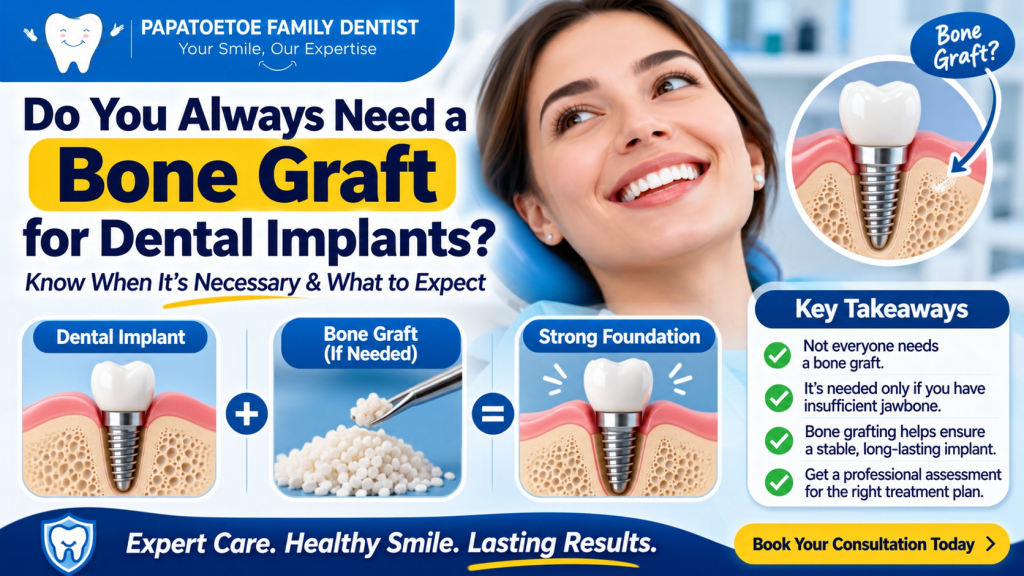
Do You Always Need a Bone Graft for Dental Implants?
November 20, 2026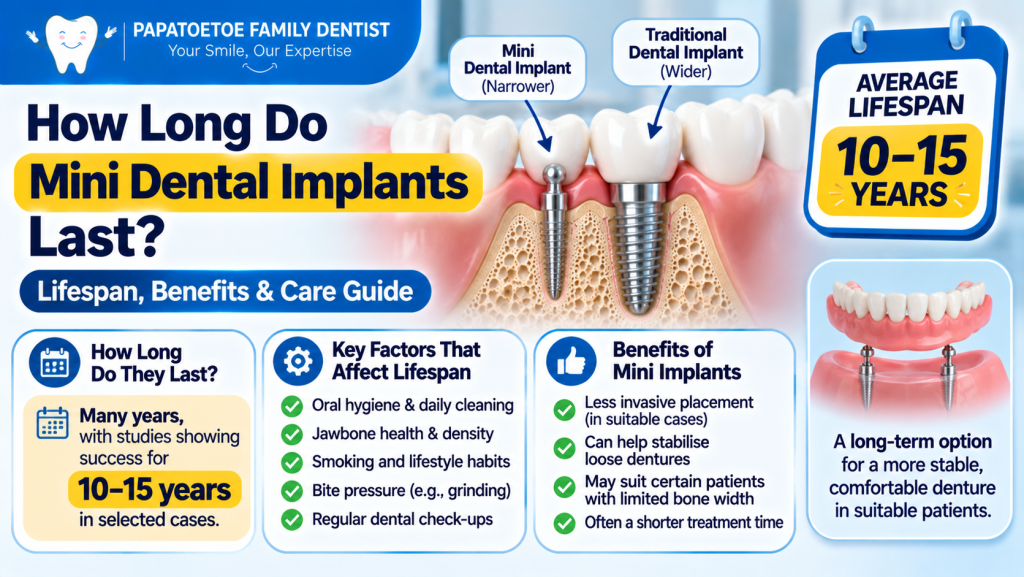
Mini dental implants are becoming an increasingly popular option for people who want to replace missing teeth or improve the stability of loose dentures. They are smaller in diameter than traditional dental implants and may offer a less invasive treatment option for certain patients.
One of the most common questions people ask before choosing this treatment is: How long do mini dental implants last?
Mini dental implants can last for many years, and some have been shown to remain successful for 10 to 15 years in clinical studies. However, their lifespan varies depending on several factors, including oral hygiene, bone health, implant placement, lifestyle habits and regular dental care.
Although mini implants can be a useful solution for selected patients, they are not suitable for every situation. Understanding their expected lifespan, benefits, limitations and maintenance requirements can help you make a more informed decision.
What Are Mini Dental Implants?
Mini dental implants are smaller versions of conventional dental implants. They are usually narrower in diameter and are designed to provide support for replacement teeth or removable dentures.
Like traditional implants, mini implants are placed into the jawbone. They act as artificial tooth roots and provide an anchor for a dental restoration.
A mini dental implant generally has a diameter of less than 3 mm, although definitions and implant designs can vary between manufacturers and clinical studies.
They are commonly used for:
- Stabilising loose or uncomfortable dentures.
- Supporting lower-jaw removable dentures.
- Replacing selected missing teeth where appropriate.
- Providing additional support in patients with limited jawbone width.
Mini implants are often placed using a less invasive surgical approach. In suitable cases, this may mean a smaller incision and a shorter recovery period compared with some conventional implant procedures.
However, the right implant type depends on your jawbone, bite, dental condition and treatment goals.
How Long Do Mini Dental Implants Last?
Mini dental implants can last anywhere from several years to more than a decade. Some clinical studies have reported successful outcomes after 10 to 15 years, but this does not mean every mini implant will last that long.
A 2025 retrospective study followed 83 patients with 334 mini dental implants used to support full-arch overdentures. The researchers reported a cumulative implant survival rate of 86.3% at 15 years.
Another 2024 clinical study examining one-piece mini implants used to support lower-jaw overdentures reported 100% implant survival among the 56 implants assessed at the 10-year follow-up. However, only 14 of the original 20 participants completed that follow-up, so the findings should be interpreted carefully.
These results show that mini dental implants can provide long-term support in appropriately selected cases. However, outcomes differ between patients, implant systems and treatment situations.
It is also important to understand the difference between implant survival and implant success. An implant may remain in the mouth but still require maintenance, adjustments or treatment for complications.
The key takeaway is that mini dental implants can last for many years, but their exact lifespan cannot be guaranteed.
What Factors Affect the Lifespan of Mini Dental Implants?
Several factors influence how long mini dental implants remain stable and functional.
1. Oral Hygiene and Daily Cleaning
Good oral hygiene is one of the most important parts of maintaining dental implants.
Although mini implants are artificial, the surrounding gum tissue and jawbone are still living structures. Bacteria and plaque can accumulate around the implant, potentially causing inflammation and damage to the supporting tissues.
To maintain healthy implants:
- Brush your teeth twice daily using a soft-bristled toothbrush.
- Clean carefully around the implant and gumline.
- Use interdental brushes or other cleaning aids recommended by your dentist.
- Clean removable dentures and implant attachments as instructed.
- Attend regular dental check-ups.
Poor oral hygiene can increase the risk of gum inflammation and peri-implant disease, which may affect implant stability.
2. Jawbone Health
Dental implants rely on the surrounding jawbone for support. The implant needs to integrate with the bone to remain stable.
If the jawbone is unhealthy or has insufficient volume, the implant may have difficulty achieving or maintaining adequate support.
Conditions such as untreated gum disease, previous bone loss and certain medical factors can affect the health of the tissues around an implant.
Your dentist will assess your bone condition before recommending mini dental implant treatment.
3. Smoking and Tobacco Use
Smoking can negatively affect oral health and the body’s ability to heal after implant surgery.
It may interfere with the healing process and increase the risk of complications around dental implants.
If you smoke, discuss this with your dentist before treatment. Reducing or stopping smoking can help improve your overall oral health and support better healing.
4. Bite Pressure and Teeth Grinding
Mini dental implants have a narrower diameter than conventional implants. As a result, the forces placed on them need to be considered carefully.
Excessive biting pressure, clenching or teeth grinding may increase stress on the implant and its supporting structures.
If you grind your teeth at night, your dentist may recommend a suitable night guard or other measures to protect your dental restoration.
5. Implant Placement and Treatment Planning
The position, angle and depth of an implant can influence how well it functions.
An implant must be placed in a position that provides suitable support while considering the patient’s bite, bone structure and the type of restoration being used.
Careful treatment planning and an appropriate choice of implant system are important for long-term outcomes.
6. Regular Dental Check-Ups
Dental implants need ongoing professional monitoring, just like natural teeth.
During routine appointments, your dentist can check the implant, surrounding gums, bone levels and attached restoration.
They can also identify early signs of inflammation, loosening or damage before these problems become more serious.
Mini Dental Implants vs Traditional Dental Implants: Which Lasts Longer?
One of the most important considerations when choosing between mini and traditional dental implants is their long-term performance.
Traditional implants generally have a wider diameter and are commonly used to support individual crowns, bridges and other fixed restorations. Mini implants are narrower and are frequently used to stabilise removable dentures.
The two types have different clinical applications, so they should not be considered interchangeable.
| Feature | Mini Dental Implants | Traditional Dental Implants |
|---|---|---|
| Diameter | Narrower, generally under 3 mm | Usually wider |
| Placement | Often less invasive in suitable cases | May involve a more extensive procedure |
| Common use | Denture stabilisation and selected restorations | Crowns, bridges and full-arch restorations |
| Bone requirements | May suit selected narrow ridges | Usually needs sufficient bone for the chosen implant |
| Long-term evidence | Encouraging, but varies by application | More extensive long-term research |
| Treatment suitability | Depends on individual needs | Depends on individual needs |
Traditional dental implants have a larger body of long-term clinical evidence, particularly for replacing individual teeth.
Mini implants can also provide long-term results, especially when used for suitable denture-stabilisation cases. However, the evidence varies depending on the implant design, number of implants and type of restoration.
Your dentist can help determine which option is more appropriate for your oral health and long-term needs.
What Are the Benefits of Mini Dental Implants?
Mini dental implants offer several potential benefits for patients who are suitable candidates.
Less Invasive Placement
Mini implants may be placed using a less invasive technique in appropriate cases. This can reduce the extent of surgery and may make the treatment more comfortable for some patients.
Support for Loose Dentures
One of their most common uses is improving the stability of removable dentures.
Loose dentures can move while eating or speaking, causing discomfort and reducing confidence. Mini implants can help secure a suitable denture and improve its retention.
May Require Less Bone Width
Because mini implants are narrower, they may be considered in certain patients who have limited jawbone width.
However, having a narrow jawbone does not automatically make someone suitable for mini implants. A clinical assessment is still necessary.
Potentially Shorter Treatment Time
Some mini implant procedures can be completed with fewer surgical steps, and certain patients may be able to use their denture sooner.
The actual treatment and healing timeline depends on the patient’s condition and the dentist’s treatment plan.
What Are the Limitations of Mini Dental Implants?
Although mini implants have several advantages, they also have limitations.
- Limited applications: They are not suitable for every missing-tooth situation.
- Mechanical considerations: Their smaller diameter may make them less suitable for certain high-force biting situations.
- Possible complications: Implant failure, bone loss, gum inflammation and damage to the attached restoration can occur.
- Denture maintenance: The denture attachments may wear out or require adjustment over time.
- Long-term evidence: Research on mini implants is less extensive for some applications than the evidence available for conventional implants.
For these reasons, a dentist should carefully evaluate whether mini implants are the right choice rather than recommending them simply because they are smaller or may involve less surgery.
How Can You Make Mini Dental Implants Last Longer?
Once your mini dental implants have been placed, proper care can help maintain their condition and reduce the risk of complications.
Here are some useful habits to follow:
1. Maintain a consistent cleaning routine
Clean your teeth, implants, gums and denture attachments according to your dentist’s instructions.
2. Avoid smoking
Smoking can interfere with healing and negatively affect the tissues surrounding dental implants.
3. Attend regular dental appointments
Professional examinations help monitor implant stability, gum health and bone levels.
4. Follow denture care instructions
If your mini implants support removable dentures, clean the denture and attachments regularly. Ask your dentist when attachment components need checking or replacing.
5. Avoid excessive pressure
Do not use your teeth to open packages or bite unnecessarily hard objects. If you grind or clench your teeth, discuss protective options with your dentist.
6. Seek advice if something feels different
If you notice pain, swelling, bleeding, difficulty chewing, looseness or changes in your denture’s fit, arrange a dental assessment.
Early attention can help prevent minor problems from becoming more serious.
When Should You Consider Replacing Mini Dental Implants?
Mini dental implants do not necessarily need to be replaced after a fixed number of years.
If an implant remains healthy, stable and functional, it may continue to be used for many years.
However, your dentist may recommend further treatment if there is:
- Persistent inflammation around the implant.
- Significant supporting bone loss.
- Implant mobility or loosening.
- Persistent pain or discomfort.
- Damage that affects the implant’s function.
- Repeated problems with the attached denture or restoration.
It is worth remembering that the implant itself and the restoration attached to it have different lifespans. A denture, attachment or other component may need repair, adjustment or replacement even when the implant remains stable.
Frequently Asked Questions
1. Can mini dental implants last 20 years?
Some mini dental implants may remain functional for a very long time, but there is not enough consistent long-term evidence to promise a 20-year lifespan for every patient. Published studies have reported outcomes extending to 10 and 15 years in selected cases.
2. Are mini dental implants permanent?
Mini dental implants are designed as a long-term tooth replacement or denture-support solution. However, they are not guaranteed to last forever. They require proper cleaning, professional monitoring and maintenance.
3. Do mini dental implants fail more often than traditional implants?
The risk of failure depends on the implant type, treatment application, bone conditions and patient factors. Traditional implants have a more extensive long-term evidence base. Mini implants can also achieve good outcomes when used in appropriate cases, particularly for denture stabilisation.
4. Can mini dental implants be used for missing front teeth?
In selected situations, mini implants may be considered for replacing certain missing teeth. However, the front teeth require careful attention to appearance, bite forces and gum support. Your dentist will determine whether a mini implant or a conventional implant is more suitable.
5. Do mini dental implants need special cleaning?
They do not necessarily require complicated cleaning, but they need consistent daily care. Your dentist may recommend a soft toothbrush, interdental brushes and specific cleaning methods depending on whether the implants support a fixed restoration or removable denture.
6. Can mini dental implants become loose?
Yes. Mini implants can become loose due to inadequate bone support, failed integration, excessive biting forces or problems affecting the surrounding tissues. If an implant feels loose, contact your dentist rather than trying to adjust it yourself.
7. Are mini dental implants suitable for older adults?
Age alone does not determine whether someone can receive mini dental implants. Jawbone condition, gum health, medical history, medications and overall treatment suitability are more important considerations.
Final Thoughts
Mini dental implants can be a long-lasting option for selected patients, with clinical research reporting successful outcomes over 10 to 15 years in some cases. However, their lifespan varies, and no dentist can guarantee exactly how long an individual implant will last.
Good oral hygiene, healthy gums, suitable bone support, careful treatment planning and regular dental check-ups all contribute to maintaining implant health.
If you are considering mini dental implants to replace missing teeth or stabilise loose dentures, a professional dental assessment is the best way to understand your options.
At Papatoetoe Family Dentist, patients can discuss their tooth replacement needs and explore suitable treatment options based on their individual oral health.