How Much Do Dentists Charge for Teeth Whitening? A Complete Cost Guide

What Is the Best Country to Get Dental Implants? A Complete Guide to Quality, Cost and Safety
November 12, 2026
What Do Dentists Use for Sedation? A Complete Guide to Dental Sedation
November 12, 2026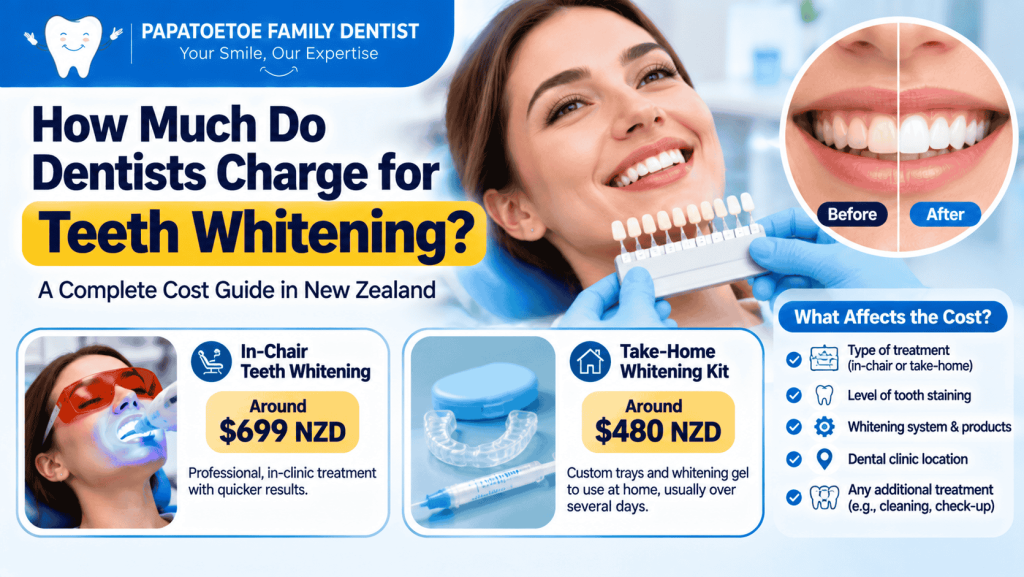
A bright, white smile can make a big difference to your appearance and confidence. Over time, however, teeth can become yellow or stained due to coffee, tea, red wine, smoking, ageing, and everyday lifestyle habits. Professional teeth whitening is one of the most popular cosmetic dental treatments for people who want to improve the appearance of their smile.
But before booking an appointment, many patients have an important question: How much do dentists charge for teeth whitening?
The cost depends on several factors, including the whitening method, the dental clinic, the products used, the level of staining, and whether you choose in-chair treatment or a professional take-home whitening kit.
In New Zealand, professional teeth whitening can cost several hundred dollars, with in-chair treatments generally costing more than take-home options. Understanding the available treatments and their prices can help you choose an option that suits your budget and dental needs.
In this guide, we explain how much dentists charge for teeth whitening in New Zealand, what affects the price, which treatment options are available, and whether professional whitening is worth the investment.
How Much Does Professional Teeth Whitening Cost in New Zealand?
The cost of professional teeth whitening varies between dental practices and treatment types.
According to figures reported from the New Zealand Dental Association’s 2025 Fees and Dental Workforce Survey, the national median fees are approximately:
| Teeth Whitening Treatment | Approximate Cost (NZD) |
|---|---|
| Dentist-supervised take-home whitening kit | $480 |
| In-chair professional whitening | $699 |
These figures are useful budgeting estimates rather than guaranteed prices. Individual dental clinics may charge more or less depending on their whitening systems, materials, consultation requirements, and location.
In Auckland, the reported median fees are approximately $450 for take-home whitening and $650 for in-chair whitening.
You should also remember that a dental examination or professional cleaning may be charged separately if required before whitening.
The best way to know the exact cost is to request a personalised quote from your dental practice. <Cite refs={[“turn814845search0″,”turn814845search12”]}/>
1. In-Chair Teeth Whitening: How Much Does It Cost?
In-chair teeth whitening is a professional treatment performed at a dental practice.
It is a popular option for patients who want a noticeably brighter smile without having to complete a whitening routine at home for several days.
The dentist or appropriately qualified dental professional first assesses your teeth and gums to determine whether whitening is suitable.
The treatment generally involves protecting the gums and applying a professional whitening gel to the teeth.
Depending on the system used, the procedure may also involve a specialised light or other equipment.
Average Cost of In-Chair Whitening
In New Zealand, the national median fee reported for in-chair whitening is approximately $699.
However, prices can vary depending on the clinic, whitening system, treatment time, and whether additional services are included.
Some practices may offer combined packages that include an in-chair session and take-home whitening trays.
Benefits of In-Chair Whitening
- Treatment is performed under professional supervision.
- It can produce visible results in a single appointment.
- It is convenient for patients with busy schedules.
- The dentist can assess tooth and gum health beforehand.
- The whitening process can be tailored to individual needs.
Is In-Chair Whitening Worth the Cost?
In-chair whitening may be a suitable choice if you want a quicker cosmetic improvement and prefer professional treatment.
However, results vary depending on the original tooth colour, the type of staining, and the whitening product used.
Your dentist can explain what level of improvement is realistic before treatment begins.
2. Take-Home Teeth Whitening Kits from a Dentist
A dentist-supervised take-home whitening kit is another popular option.
Unlike ordinary whitening products purchased from a shop, professional take-home systems commonly include custom-made trays designed to fit your teeth.
The dentist provides the whitening gel and explains how long and how frequently you should wear the trays.
Treatment usually takes several days to a few weeks, depending on the product and your individual whitening plan.
Average Cost of Take-Home Whitening
The national median price for a professional take-home whitening kit in New Zealand is approximately $480.
The actual price may depend on whether custom trays, whitening gel, follow-up appointments, and additional supplies are included.
Benefits of Take-Home Whitening
- Convenient treatment at home.
- Gradual whitening over several days.
- Custom-fitted trays for a personalised fit.
- Professional guidance on product use.
- The possibility of future top-ups if suitable trays are retained.
Who Should Choose Take-Home Whitening?
Take-home whitening may be suitable for patients who prefer gradual results and have enough time to complete the treatment routine.
It can also be a practical option for people who want more control over when they whiten their teeth.
Your dentist will recommend the appropriate gel strength and wearing schedule.
3. Dentist Whitening vs Shop-Bought Whitening Products
Patients often compare professional dental whitening with whitening products available in supermarkets, pharmacies, and online stores.
Both options aim to improve tooth appearance, but they are not the same.
| Feature | Professional Dentist Whitening | Shop-Bought Whitening Products |
|---|---|---|
| Professional assessment | Available | Usually not included |
| Treatment guidance | Dentist-supervised | Product instructions |
| Whitening products | Professionally selected | Depends on product |
| Custom trays | Available with some kits | Usually not custom-made |
| Treatment time | Depends on method | Varies by product |
| Cost | Generally higher | Often lower |
Shop-bought products may help remove some surface staining, depending on their ingredients.
However, they may not provide the same level of whitening as dentist-supervised treatments.
If you have tooth sensitivity, gum problems, untreated cavities, or existing dental restorations, seek professional advice before using whitening products.
The cheapest option is not always the most suitable one.
4. What Factors Affect the Cost of Teeth Whitening?
There is no single price for every patient because whitening treatment is personalised.
Several factors can influence the final cost.
Type of Whitening Treatment
In-chair whitening and take-home whitening involve different materials, equipment, and appointment requirements.
In-chair treatments usually cost more because they involve professional chairside treatment and additional clinical time.
Dental Clinic Location
Dental practices in larger cities may have different operating costs compared with clinics in smaller towns.
This can influence the fees charged for cosmetic dental services.
Whitening Products and Technology
Different professional whitening systems use different formulations and application methods.
The products selected by the dentist and the technology used may influence the overall price.
Level of Tooth Staining
Some patients have mild surface stains, while others have deeper discolouration.
The type and severity of staining can affect treatment suitability and the expected result.
Certain stains may respond less effectively to conventional whitening and may require alternative cosmetic treatments.
Additional Dental Treatment
Before whitening, your dentist may recommend an examination, professional cleaning, or treatment of existing dental problems.
For example, untreated tooth decay, leaking fillings, or gum disease should be assessed before cosmetic whitening.
These additional services may increase the total cost.
5. Do You Need a Dental Check-Up Before Teeth Whitening?
Yes, a dental assessment is an important part of professional whitening.
Not everyone is immediately suitable for teeth whitening.
Before recommending treatment, a dentist may examine your:
- Teeth and existing fillings.
- Gum health.
- Tooth sensitivity.
- Signs of tooth decay.
- Existing crowns, veneers, or bridges.
- Type and severity of staining.
If your teeth have plaque or surface stains, a professional cleaning may improve their appearance even before whitening.
Your dentist can also identify dental problems that could make whitening uncomfortable or unsuitable.
For example, whitening products applied over untreated decay or exposed dentine may cause significant sensitivity.
A consultation helps ensure that the treatment is appropriate for your oral health.
6. Does Teeth Whitening Hurt?
Most people tolerate professional teeth whitening well, but temporary tooth sensitivity can occur.
Some patients experience:
- Short periods of tooth sensitivity.
- Mild gum irritation.
- Temporary discomfort when consuming cold drinks.
- Increased sensitivity shortly after treatment.
These effects are generally temporary, although the experience varies between individuals.
If you already have sensitive teeth, tell your dentist before starting treatment.
They may recommend a suitable whitening system, a lower-strength approach, or a desensitising product.
Do not continue whitening if you experience severe pain or significant gum irritation without speaking to your dental professional.
7. How Long Do Teeth Whitening Results Last?
Professional teeth whitening does not permanently change tooth colour.
Results can last from several months to a few years, depending on lifestyle habits, oral hygiene, and the original cause of staining.
Certain habits can cause teeth to become stained more quickly.
Coffee and Tea
Coffee and tea contain pigments that can gradually stain tooth surfaces.
Frequent consumption may reduce the brightness achieved through whitening.
Red Wine
Red wine contains pigments that can contribute to tooth discolouration over time.
Smoking
Tobacco can cause noticeable yellow or brown staining on teeth.
Quitting smoking can benefit both oral health and the appearance of your smile.
Poor Oral Hygiene
Plaque and surface deposits can make teeth appear dull or discoloured.
Regular brushing, interdental cleaning, and professional dental maintenance help keep teeth looking clean.
How Can You Maintain Your Whitening Results?
- Brush twice daily with fluoride toothpaste.
- Clean between your teeth every day.
- Attend regular dental check-ups.
- Limit frequent consumption of staining drinks.
- Avoid smoking.
- Follow your dentist’s advice about whitening top-ups.
If you receive custom whitening trays, ask your dentist whether they can be reused for future maintenance and which gel is appropriate.
8. Can Everyone Get Their Teeth Whitened?
No. Teeth whitening is not suitable for everyone.
Your dentist needs to assess your oral health and identify the cause of discolouration before recommending treatment.
Whitening may not produce the desired result in patients with:
- Untreated tooth decay.
- Active gum disease.
- Severe tooth sensitivity.
- Cracked or damaged teeth.
- Certain types of internal tooth staining.
- Extensive visible dental restorations.
Pregnant or breastfeeding patients should discuss whitening with their dental professional before considering treatment.
Children and teenagers may also have different treatment considerations.
Professional advice is important because whitening is a cosmetic procedure, not a treatment for dental disease.
9. Do Dental Crowns, Veneers and Fillings Whiten?
One important thing to understand before paying for teeth whitening is that artificial dental materials do not whiten in the same way as natural tooth enamel.
Crowns, veneers, bridges, and tooth-coloured fillings generally retain their original shade during conventional teeth whitening.
This can create a colour difference between natural teeth and existing restorations.
For example, if you have a crown on one of your front teeth, whitening your surrounding natural teeth may make the crown appear darker by comparison.
If you have visible dental restorations, discuss your cosmetic goals with your dentist before whitening.
They can help you decide whether whitening should be performed before replacing or adjusting existing restorations.
10. Is Professional Teeth Whitening Worth the Money?
For many patients, professional whitening can be a worthwhile cosmetic investment.
It offers the opportunity to improve tooth colour with guidance from a dental professional.
However, whether it is worth the cost depends on your expectations and oral health.
Reasons to Consider Professional Whitening
- You have yellow or stained natural teeth.
- You want a brighter smile.
- You prefer professional guidance.
- You want a treatment suited to your dental condition.
- You want to understand realistic results before spending money.
When Whitening May Not Be the Best Option
Whitening may not be the best solution if your discolouration is caused by certain internal stains, existing restorations, or structural problems.
In these situations, your dentist may discuss alternatives such as bonding, veneers, or other restorative treatments.
The right approach depends on the condition of your teeth and the result you want to achieve.
11. How to Choose the Right Teeth Whitening Treatment
Choosing the right whitening treatment does not have to be complicated.
Start by considering your budget, how quickly you want results, and whether you prefer treatment at a dental practice or at home.
Choose in-chair whitening if:
- You prefer a shorter treatment process.
- You want professional chairside care.
- You have a special event approaching and enough time for an assessment.
Choose take-home whitening if:
- You prefer gradual whitening.
- You want the convenience of treatment at home.
- You are comfortable following a dentist’s instructions over several days.
Start with a dental assessment if:
- You have sensitive teeth.
- You have crowns, veneers, or fillings.
- Your teeth have unusual discolouration.
- You have not had a recent dental check-up.
Your dentist can explain the expected results, costs, benefits, and limitations of each option.
Conclusion
So, how much do dentists charge for teeth whitening?
In New Zealand, the national median fees reported from the NZDA 2025 survey are approximately $699 for in-chair whitening and $480 for a professional take-home whitening kit.
However, the actual cost depends on the dental practice, whitening system, condition of your teeth, and whether additional treatment is required.
Professional whitening can be an effective way to improve the appearance of natural teeth, but it is important to choose a suitable treatment and have realistic expectations.
Before booking, consider arranging a dental assessment to understand your options and receive an accurate treatment estimate.
At Papatoetoe Family Dentist, we believe that every patient should have the information needed to make confident decisions about their smile. Understanding the available whitening treatments, costs, and expected results is an important first step towards achieving a brighter, healthier-looking smile.
Frequently Asked Questions About Teeth Whitening Costs
1. How much does professional teeth whitening cost in New Zealand?
The national median fees reported from the NZDA 2025 survey are approximately $699 for in-chair whitening and $480 for a professional take-home kit. Individual clinic prices may vary.
2. Is in-chair teeth whitening more expensive than take-home whitening?
Generally, yes. In-chair whitening involves professional treatment at a dental practice and usually costs more than a dentist-supervised take-home kit.
3. How long does professional teeth whitening take?
In-chair whitening is generally completed in one appointment, although the duration depends on the whitening system. Take-home whitening usually takes several days to a few weeks.
4. How long do teeth whitening results last?
Results can last from several months to a few years. Coffee, tea, red wine, smoking, and oral hygiene habits can influence how quickly staining returns.
5. Does dental insurance cover teeth whitening?
Teeth whitening is generally considered a cosmetic treatment, so many health insurance policies do not cover it. Check your individual policy before booking.
6. Can I whiten my teeth if I have crowns or fillings?
You may still be able to whiten your natural teeth, but crowns and fillings will not change colour with conventional whitening products. Discuss the potential colour difference with your dentist first.
7. Is professional teeth whitening safe?
Professional whitening can be suitable for many patients when performed using appropriate products and instructions. A dental assessment helps identify problems that should be treated before whitening.
8. Is teeth whitening worth the money?
It can be worthwhile if you want to improve staining or yellowing of natural teeth. However, results vary, and some types of discolouration may require alternative cosmetic treatments.
9. Can I get teeth whitening without visiting a dentist?
Some over-the-counter whitening products are available, but they may not provide the same results as professional treatment. A dental assessment is recommended before whitening, particularly if you have sensitivity or existing dental problems.
10. What is the cheapest professional teeth whitening option?
A dentist-supervised take-home whitening kit is generally less expensive than in-chair whitening. Ask your dentist for a complete quote, including custom trays, gel, and any consultation fees.