Does Dental Insurance Cover Braces in the UK?

How Much Does It Cost to Become a Dental Hygienist?
July 16, 2026
Does Bupa Cover Dental Implants?
July 16, 2026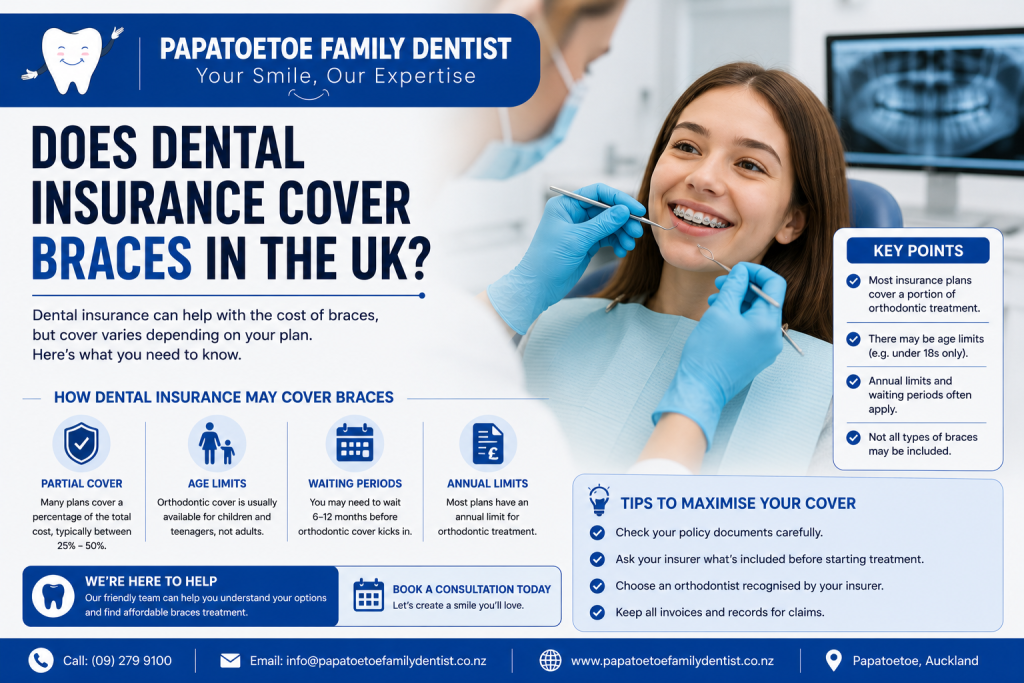
If you’re considering orthodontic treatment, one of the first questions you may ask is: “Does dental insurance cover braces in the UK?” The answer is sometimes—but it depends on your insurance policy, your age, and why you need braces.
Some UK dental insurance plans provide limited cover for orthodontic treatment, while many exclude braces altogether or only cover children. Understanding your policy before starting treatment can help you avoid unexpected costs.
In this guide, we’ll explain how dental insurance works for braces in the UK, what is typically covered, and what alternatives are available.
Does Dental Insurance Usually Cover Braces?
It depends on your policy.
Many UK dental insurance policies focus on:
Routine check-ups
Dental cleanings
Fillings
Root canal treatment
Crowns
Emergency dental care
Orthodontic treatment, including braces, is often excluded or only partially covered, especially for adults.
Are Children’s Braces Covered?
Children may have more options than adults.
NHS Braces
In the UK, braces may be available free on the NHS for eligible patients under the age of 18 if they have a clinically significant orthodontic need. Eligibility is assessed by an orthodontist after a referral from a dentist.
Private Dental Insurance
Some private dental insurance policies also provide orthodontic benefits for children, although cover is usually subject to:
Waiting periods
Lifetime benefit limits
Percentage reimbursement
Specific policy terms
Always check the policy wording before relying on insurance for orthodontic treatment.
Are Adult Braces Covered?
In many cases, adult braces are not fully covered by standard UK dental insurance.
Most insurers consider adult orthodontic treatment to be an optional or elective treatment unless the policy specifically includes orthodontic benefits.
If cover is available, it may only reimburse part of the treatment cost.
What Types of Braces Might Be Covered?
Depending on your policy, orthodontic benefits may apply to:
Traditional metal braces
Ceramic braces
Clear braces
Other orthodontic appliances
Some plans may exclude premium options or clear aligners, so it’s important to confirm the details with your insurer before treatment.
What Factors Affect Insurance Coverage?
Several factors determine whether your insurance will contribute towards braces.
Your Policy Level
Higher-level dental insurance plans may include orthodontic benefits that basic plans do not.
Waiting Periods
Many policies require you to complete a waiting period before making a claim for major dental treatment.
Benefit Limits
Orthodontic cover often has:
Annual limits
Lifetime limits
Maximum reimbursement amounts
Once you reach the limit, you’ll usually pay any remaining costs yourself.
Age Restrictions
Many policies only offer orthodontic benefits for children or teenagers.
Adult orthodontic cover is generally more limited.
Does Insurance Cover Invisalign?
Some patients prefer clear aligners such as Invisalign.
Whether they’re covered depends entirely on your policy.
Many insurers treat clear aligners the same as braces, while others exclude them completely or only provide limited benefits.
Always request confirmation before beginning treatment.
What If Your Insurance Doesn’t Cover Braces?
If your policy doesn’t include orthodontics, you may still have several options.
Payment Plans
Many orthodontic clinics offer:
Interest-free finance
Monthly payment plans
Flexible instalment options
These plans help spread the cost over the course of treatment.
NHS Treatment
Eligible children may qualify for NHS-funded braces if they meet the clinical criteria. Adults generally pay privately unless there are exceptional clinical circumstances.
Private Orthodontic Treatment
Many patients choose private treatment for:
Shorter waiting times
Greater choice of brace types
Flexible appointment scheduling
How to Check If Your Insurance Covers Braces
Before starting orthodontic treatment:
- Read Your Policy
Look for sections covering:
Orthodontics
Major dental treatment
Benefit limits
Waiting periods
Exclusions
- Request a Treatment Plan
Your dentist or orthodontist can provide:
Diagnosis
Estimated treatment cost
Treatment timeline
- Contact Your Insurer
Ask:
Are braces covered?
Is pre-authorisation required?
What percentage is reimbursed?
Are there lifetime limits?
Does the policy cover adults or children only?
Getting written confirmation before treatment can prevent unexpected expenses.
Why an Orthodontic Assessment Is Important
Before recommending braces, an orthodontist evaluates:
Bite alignment
Tooth spacing
Jaw development
Overall oral health
The assessment helps determine the most appropriate treatment and whether braces are clinically necessary.
Dental clinics such as Papatoetoe Family Dentist can assess orthodontic concerns, discuss treatment options, and refer patients to an orthodontist when braces or other corrective treatments are appropriate.
Frequently Asked Questions
Does UK dental insurance always cover braces?
No. Many policies exclude orthodontic treatment or only offer limited benefits for children.
Are braces free on the NHS?
Children under 18 with a qualifying orthodontic need may receive NHS-funded braces. Adults usually pay privately.
Does insurance cover Invisalign?
Some policies do, but many do not. It depends on your insurer and the specific policy.
Can I buy insurance after deciding to get braces?
Most policies have waiting periods and often won’t cover treatment that was already planned or recommended before the policy started.
Final Thoughts
If you’re wondering “Does dental insurance cover braces in the UK?”, the answer depends on your policy. While some dental insurance plans provide limited orthodontic benefits—particularly for children—many exclude adult braces or reimburse only part of the cost.
Before starting treatment, review your insurance policy carefully, obtain a written treatment plan from your dentist or orthodontist, and contact your insurer to confirm your cover. This will help you understand your benefits and plan for any out-of-pocket costs.