Does Reach Dental Floss Contain PFAS?

How to Get Free Dental Implants: Options That May Help Reduce the Cost
July 16, 2026
How Much Does It Cost to Become a Dental Hygienist?
July 16, 2026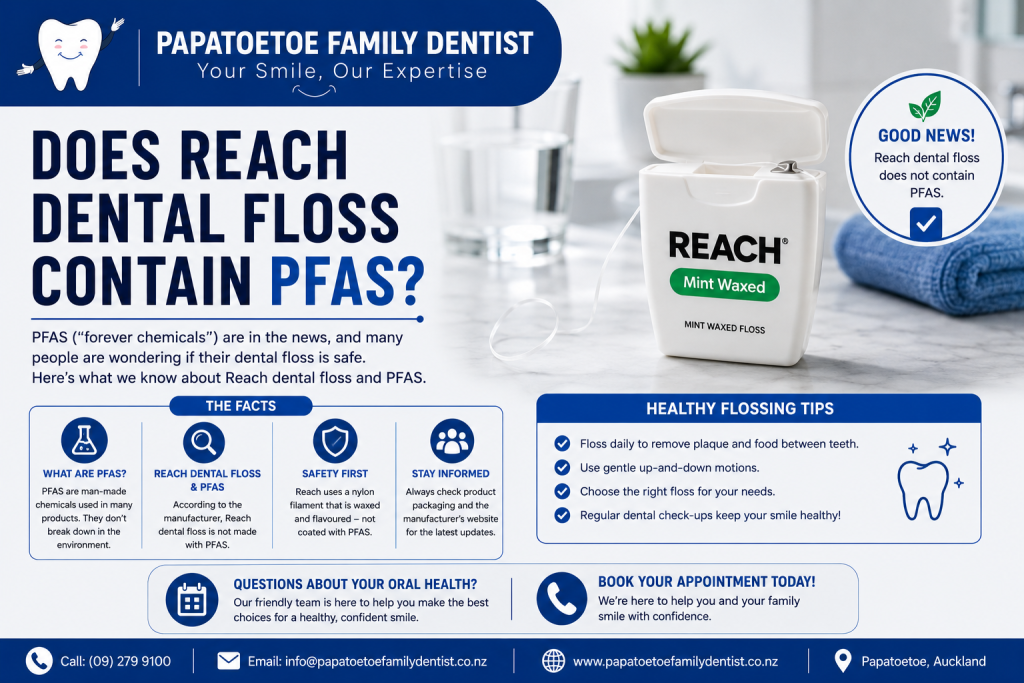
PFAS (per- and polyfluoroalkyl substances), often called “forever chemicals,” have received increased attention because some dental floss products have been found to contain these compounds. If you’re wondering “Does Reach dental floss contain PFAS?”, the answer depends on which Reach floss product you’re using.
Some older or PTFE-based (Teflon-like) floss products have raised PFAS concerns, while many current Reach floss products are now marketed as PFAS-free. Always check the packaging or the manufacturer’s product information for the specific floss you’re buying.
What Are PFAS?
PFAS are a large group of synthetic chemicals used to make products resistant to:
- Water
- Oil
- Grease
- Stains
Because they break down very slowly, they’re often referred to as “forever chemicals.”
Some studies have linked long-term PFAS exposure to potential health concerns, although exposure can come from many everyday sources—not just dental floss.
Why Were PFAS Used in Dental Floss?
Some dental flosses were manufactured with PTFE (polytetrafluoroethylene), a fluoropolymer that belongs to the PFAS family.
PTFE makes floss:
- Slide more easily between tight teeth
- Resist shredding
- Feel smoother during use
This is why certain “glide” style flosses attracted attention in PFAS research.
Has Reach Dental Floss Contained PFAS?
Some older Reach Glide-style products were reported to use PTFE, which is a type of PFAS. Earlier studies investigating floss products identified certain PTFE-based flosses as potential PFAS sources.
However, many current Reach floss products are now advertised by the manufacturer as “PFAS Free.” Examples on the official Reach product listings include:
- Reach Cool Mint Dental Floss
- Reach Dentotape
- Reach Ultraclean Floss
- Reach Dental Floss Picks
These products are specifically labeled PFAS Free on the manufacturer’s website.
How Can You Tell if Your Reach Floss Contains PFAS?
The easiest way is to:
- Read the product packaging
- Check the manufacturer’s website
- Look for labels stating “PFAS Free”
If your floss is several years old or specifically mentions PTFE, it may not be the same formulation as current products.
Is PFAS-Free Dental Floss Better?
Many consumers now choose PFAS-free floss to reduce unnecessary exposure to forever chemicals.
PFAS-free floss can still provide:
- Effective plaque removal
- Comfortable flossing
- Shred resistance
- Fresh breath
The most important thing is to floss every day, regardless of the brand.
Should You Stop Flossing?
No.
Dental professionals continue to recommend flossing because it helps:
- Remove plaque between teeth
- Prevent cavities
- Reduce gum disease
- Improve overall oral health
If you’re concerned about PFAS, switching to a PFAS-free floss is generally a better option than stopping flossing altogether.
Alternatives to PFAS-Containing Floss
If you prefer to avoid PFAS, consider:
- Nylon floss labeled PFAS-free
- Plant-based floss
- Silk dental floss
- Water flossers
- Dental tape labeled PFAS-free
Many manufacturers now clearly advertise PFAS-free products.
Why Daily Flossing Still Matters
Flossing removes plaque from areas your toothbrush cannot reach.
Regular flossing helps prevent:
- Gum disease
- Tooth decay
- Bad breath
- Plaque buildup
The benefits of flossing are well established and remain an important part of a healthy oral hygiene routine.
Frequently Asked Questions
Is all Reach dental floss PFAS-free?
Many current Reach floss products are marketed as PFAS-free, but older formulations may have been different. Always check the specific product packaging.
What is PTFE?
PTFE (polytetrafluoroethylene) is a fluoropolymer that belongs to the PFAS family and has been used in some smooth-glide dental floss products.
Is PFAS-free floss effective?
Yes. PFAS-free dental floss can effectively remove plaque and help prevent gum disease when used correctly.
Should I replace my current floss?
If you’re concerned about PFAS exposure, you may choose a floss that is clearly labeled PFAS Free by the manufacturer.
Final Thoughts
If you’re asking “Does Reach dental floss contain PFAS?”, the answer depends on the product and when it was made. While some older PTFE-based flosses raised concerns, many current Reach floss products are now specifically marketed as PFAS-free.
The best approach is to check your product label and continue flossing daily. Good oral hygiene remains one of the most effective ways to protect your teeth and gums.