How to Get Free Dental Implants: Options That May Help Reduce the Cost

How to Cope with Dental Anxiety: Practical Tips to Feel More Comfortable at the Dentist
July 16, 2026
Does Reach Dental Floss Contain PFAS?
July 16, 2026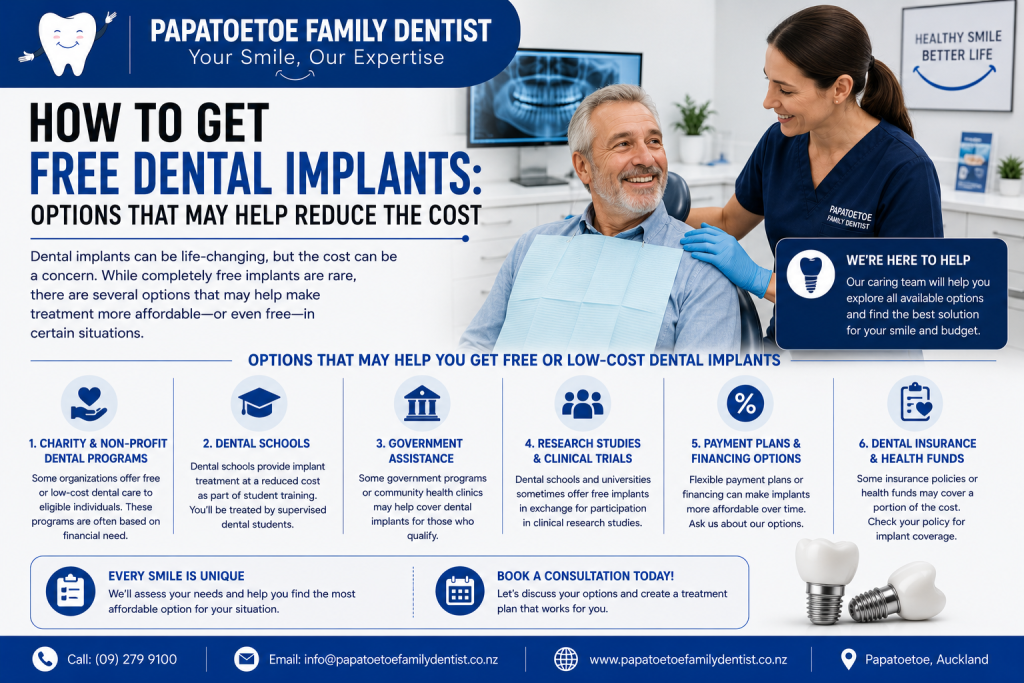
Dental implants are one of the most effective ways to replace missing teeth, but they can also be one of the most expensive dental treatments. As a result, many people ask: “How can I get free dental implants?”
The reality is that completely free dental implants are uncommon, but depending on your circumstances, there are programs, charities, dental schools, clinical trials, and financial assistance options that may help reduce or even cover part of the cost.
In this guide, we’ll explore legitimate ways to find affordable or potentially free dental implant treatment and explain what you should know before applying.
Can You Really Get Free Dental Implants?
The answer is sometimes—but only in specific situations.
Unlike routine dental care, dental implants are often considered an elective or restorative procedure rather than an emergency treatment. Because of this, they are not automatically covered by most public healthcare systems.
However, some organisations and programs may offer reduced-cost or free treatment for eligible patients.
- Dental Schools and University Clinics
One of the most common ways to reduce the cost of dental implants is through accredited dental schools.
Dental students and postgraduate trainees perform treatment under the close supervision of experienced dentists and implant specialists.
Benefits include:
Lower treatment costs
High clinical standards
Care supervised by qualified professionals
Appointments may take longer, but treatment is often significantly more affordable than private practice.
- Clinical Trials
Universities and research organisations sometimes conduct studies involving new implant techniques or materials.
Eligible participants may receive:
Free implant treatment
Reduced treatment costs
Free follow-up appointments
Each study has specific eligibility criteria, and not everyone will qualify.
- Charities and Community Dental Programs
Some charities and non-profit organisations provide financial assistance for essential dental care.
Support may be available for:
Low-income individuals
People with disabilities
Veterans
Individuals facing financial hardship
Availability varies depending on your country and local community services.
- Government Assistance Programs
Some government-funded programs may help eligible patients access dental treatment.
Depending on where you live, assistance may be available through:
Community oral health services
Disability support programs
Veteran healthcare services
Social assistance schemes
Coverage for implants varies, and many programs focus on medically necessary treatment rather than cosmetic procedures.
- Dental Insurance
Some dental insurance policies contribute toward implant treatment.
Coverage depends on:
Your policy
Waiting periods
Annual benefit limits
Medical necessity
Always confirm your benefits with your insurer before beginning treatment.
- Payment Plans
Although not free, many dental clinics offer:
Interest-free payment plans
Monthly instalments
Flexible financing options
This can make implant treatment more affordable by spreading the cost over time.
Who May Qualify for Financial Assistance?
Eligibility depends on the program but may include people who:
Have low incomes
Receive government benefits
Have disabilities
Require treatment following trauma
Have significant medical needs
Each organisation sets its own eligibility requirements.
Be Careful of “Free Implant” Advertisements
Some advertisements promote:
Free dental implants
Free implant consultations
Free implant days
Often, only the consultation is free, while the implant procedure itself still carries significant costs.
Always ask:
What’s included?
Are there additional fees?
Is the consultation obligation-free?
Understanding the full cost upfront helps avoid surprises.
Why Professional Dental Assessment Is Essential
Before recommending implants, your dentist will assess:
Jawbone density
Gum health
Medical history
Oral hygiene
Overall suitability
Not everyone is immediately eligible for dental implants, and some patients may require bone grafting or other preparatory treatment first.
Are There Alternatives to Dental Implants?
If implants are outside your budget, your dentist may recommend:
Dental Bridges
A fixed option that replaces one or more missing teeth.
Partial Dentures
A removable appliance that restores function and appearance.
Complete Dentures
Suitable for patients missing all teeth in one or both arches.
Each option has advantages and disadvantages depending on your oral health and budget.
How to Improve Your Chances of Finding Affordable Implant Care
✔ Compare treatment providers
✔ Ask about payment plans
✔ Contact dental schools
✔ Research local assistance programs
✔ Maintain good oral health
✔ Attend a professional consultation
Being proactive can help you find the most suitable and affordable solution.
Dental clinics such as Papatoetoe Family Dentist can discuss implant treatment, alternative tooth replacement options, and available payment plans to help patients make informed decisions based on their individual needs and budget.
Frequently Asked Questions
Are free dental implants available?
In some cases, yes. Dental schools, clinical trials, charities, or assistance programs may offer reduced-cost or free treatment for eligible patients.
Can I get dental implants through public healthcare?
This depends on your country and the reason for treatment. Public funding for implants is generally limited.
Are dental school implants safe?
Yes. Treatment is supervised by experienced dental professionals and follows strict clinical standards.
Is there a downside to low-cost implant treatment?
Treatment at teaching institutions may involve longer appointments and waiting times, but quality standards are maintained.
Final Thoughts
If you’re wondering how to get free dental implants, it’s important to know that while completely free treatment is rare, there are legitimate ways to reduce the cost. Dental schools, clinical trials, charitable organisations, government assistance programs, and flexible payment plans can all make implant treatment more accessible.
The best first step is to schedule a professional consultation, where your dentist can assess your oral health, discuss your options, and help you find the most appropriate and affordable solution for replacing missing teeth.