Why Are Dentists Suicidal? Understanding Stress, Mental Health & Suicide Risk in Dentistry

Why Is It So Expensive to Go to the Dentist?
August 19, 2026
What Is the Blue Light Used by Dentists?
August 19, 2026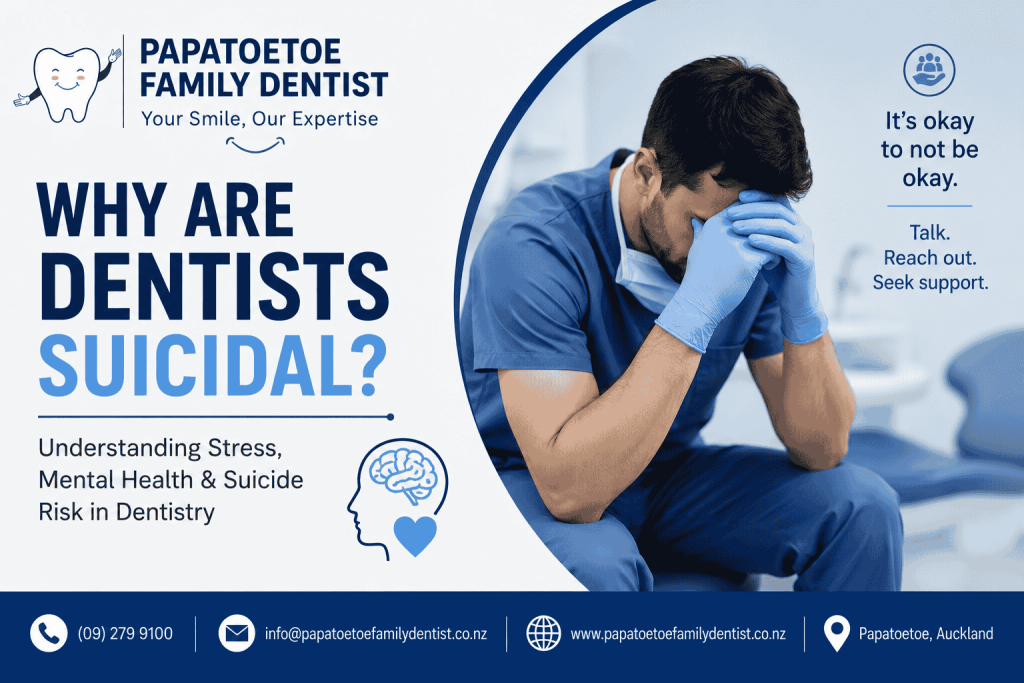
Dentistry is often viewed as a successful and rewarding healthcare career, but the profession can also involve significant pressure. This has led to an important question: “Why are dentists suicidal?”
It’s important to clarify that dentists are not inherently suicidal, and the widely repeated claim that dentists have the highest suicide rate of any profession is not supported consistently by research. Studies have produced different results depending on the country, time period, and methodology. However, some research does indicate elevated suicide risk or significant suicidal thoughts among dental professionals, making mental health in dentistry an important issue.
Is Suicide More Common Among Dentists?
Research on this topic is mixed.
A recent US study examining dentists who died between 1979 and 2018 found that suicide accounted for 2.2% of deaths in the study population, with suicide mortality higher than expected compared with the general population. The researchers also highlighted occupational stress and the need for better mental-health support for dental professionals.
However, research from New Zealand has not consistently found dentists to have unusually high suicide mortality compared with other occupations. A review also noted that the historical belief that dentists have the highest suicide rate may no longer accurately reflect the evidence.
So, rather than saying “dentists are suicidal,” it is more accurate to say that some dental professionals experience substantial psychological stress and may face increased mental-health risks.
Why Can Dentistry Be Stressful?
1. High Responsibility
Dentists are responsible for diagnosing and treating problems involving people’s health.
A small mistake can potentially affect:
- A patient’s comfort
- Oral function
- Appearance
- Long-term dental health
This responsibility can create significant pressure.
2. Managing Anxious Patients
Many patients are frightened of dental treatment.
Dentists may regularly deal with:
- Dental anxiety
- Crying patients
- Fear of needles
- Fear of pain
- Difficult treatment experiences
Supporting anxious patients while carrying out precise procedures can be emotionally demanding.
3. Financial Pressure
Running a dental practice involves significant expenses.
Dentists who own practices may need to manage:
- Staff salaries
- Equipment
- Rent
- Insurance
- Laboratory costs
- Regulatory requirements
- Business loans
Financial concerns can add another layer of stress.
4. Long Working Hours
Some dentists work long hours, particularly when running their own practices.
Balancing:
- Patients
- Administration
- Staff management
- Continuing education
- Family life
can contribute to burnout.
5. Physical Strain
Dentistry is physically demanding.
Dentists often maintain awkward positions while performing extremely precise procedures.
Over time, this can contribute to:
- Neck pain
- Back pain
- Shoulder problems
- Musculoskeletal discomfort
Physical problems can also affect mental wellbeing.
Burnout in Dentistry
Burnout is another important issue.
Burnout can involve:
- Emotional exhaustion
- Reduced motivation
- Feeling detached from work
- Reduced sense of accomplishment
A dentist experiencing burnout may still appear successful and professional while struggling privately.
This is why mental health should be treated as seriously as physical health.
Mental Health and Suicidal Thoughts
Research involving Australian dental practitioners found substantial levels of reported suicidal thoughts in the surveyed group. The study identified factors such as depression, psychological distress, substance use, previous suicide attempts, and lower resilience as associated with suicidal ideation.
Another study of US healthcare professionals found that job problems, physical health problems, mental illness, and other personal circumstances can contribute to suicide risk among healthcare workers.
These findings don’t mean that working as a dentist causes suicidal thoughts. Instead, they show why mental-health support and early intervention are important within dentistry.
Why Might Dentists Avoid Asking for Help?
Healthcare professionals sometimes feel pressure to appear strong or capable.
Dentists may worry that discussing mental-health difficulties could:
- Affect their professional reputation
- Make colleagues view them differently
- Affect their ability to practise
- Create embarrassment or stigma
This can make it harder for someone to seek help when they need it.
Reducing stigma and creating confidential support systems are therefore important parts of suicide prevention in dentistry.
Perfectionism Can Also Play a Role
Dentistry requires a high level of precision.
Dentists may spend considerable time trying to achieve an excellent result for every patient.
While attention to detail is valuable, excessive perfectionism can contribute to:
- Anxiety
- Self-criticism
- Fear of mistakes
- Work-related stress
Learning to maintain high professional standards without expecting perfection can be an important part of maintaining mental wellbeing.
What Can Help Dentists Protect Their Mental Health?
Maintain Work-Life Balance
Taking genuine time away from the clinic can help prevent chronic exhaustion.
Build Professional Support Networks
Talking with trusted colleagues can help dentists recognise that they aren’t alone in experiencing workplace stress.
Seek Professional Help Early
A psychologist, counsellor, psychiatrist, or doctor can provide appropriate support when stress, anxiety, depression, or burnout becomes difficult to manage.
Recognise Warning Signs
Warning signs can include:
- Persistent hopelessness
- Severe emotional exhaustion
- Withdrawing from friends and family
- Major changes in sleep
- Increased alcohol or drug use
- Feeling that life is not worth living
- Thoughts about suicide
These should never be ignored.
Dentistry Can Still Be a Rewarding Career
Despite the challenges, dentistry can provide many positive experiences.
Dentists can:
- Relieve severe pain
- Restore damaged teeth
- Improve patients’ confidence
- Build long-term patient relationships
- Help prevent serious oral disease
- Run their own practices
- Specialise in areas they enjoy
The profession itself isn’t the problem. Like other demanding healthcare careers, dentistry requires appropriate support, manageable workloads, and attention to mental health.
Frequently Asked Questions
Do dentists have a high suicide rate?
Some studies have found elevated suicide mortality among dentists, while others have not. Current evidence does not support the simple claim that dentists have the highest suicide rate of any profession.
Why is dentistry stressful?
High responsibility, patient anxiety, financial pressures, long hours, physical strain, and running a practice can all contribute to occupational stress.
Do dentists experience burnout?
Yes. Like other healthcare professionals, dentists can experience burnout and psychological distress.
Should dentists seek help for depression or anxiety?
Absolutely. Mental-health difficulties deserve professional attention just like physical health problems.
Final Thoughts
If you’re searching “why are dentists suicidal,” it’s important to avoid the stereotype that dentists are naturally prone to suicide. The evidence is more complicated. Some studies have identified elevated suicide risk among dentists, while others have found no unusually high risk.
What is clear is that dentistry can involve significant occupational stress, and dental professionals can experience depression, anxiety, burnout, and suicidal thoughts. Better mental-health education, supportive workplaces, confidential professional care, and reducing stigma can all help protect dentists and other dental professionals.
If this topic is personal for you or someone you know and there are current thoughts of suicide or immediate danger, seek urgent professional help rather than dealing with it alone.