Are Titanium Dental Implants Safe? What You Should Know

Can You Get Braces With Dental Implants?
August 19, 2026
Why Is It So Expensive to Go to the Dentist?
August 19, 2026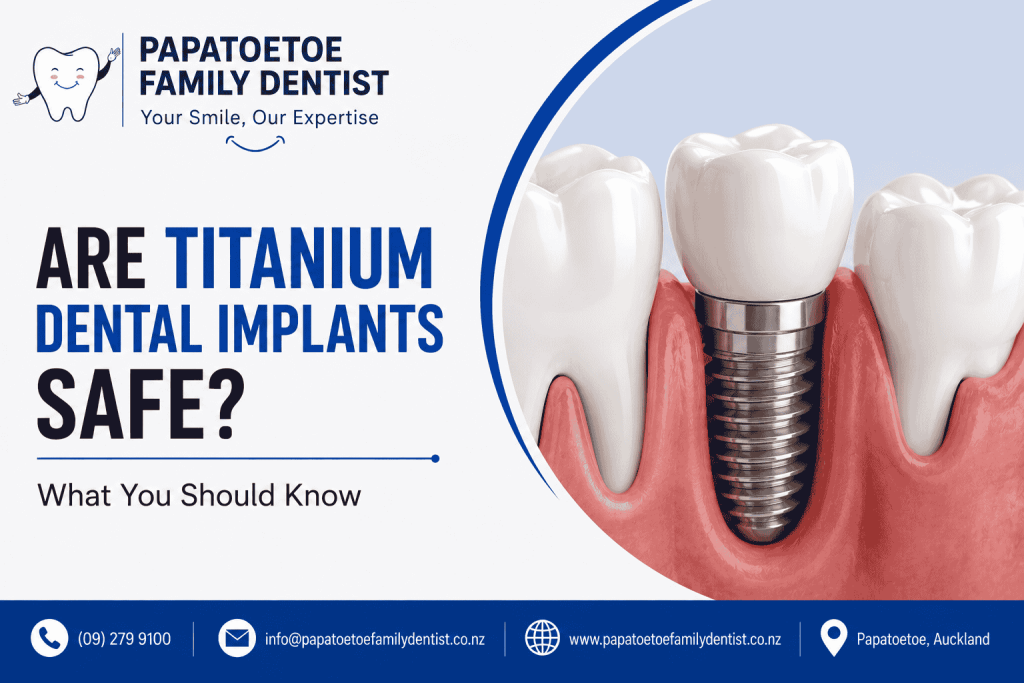
Dental implants have become a popular way to replace missing teeth because they can provide a stable, natural-looking, and long-lasting solution. Titanium is one of the most commonly used materials for dental implants, but many patients still ask: “Are titanium dental implants safe?”
For most people, titanium dental implants are considered safe and well tolerated. Titanium has been used in medical and dental implants for decades because it is strong, lightweight, corrosion-resistant, and capable of bonding with bone.
However, like any surgical treatment, dental implants have potential risks and are not suitable for everyone. A dentist needs to assess your oral and general health before recommending treatment.
What Are Titanium Dental Implants?
A dental implant is a small post that is surgically placed into the jawbone to replace the root of a missing tooth.
A typical implant restoration has three components:
- Implant: The titanium post placed in the jawbone
- Abutment: The connector attached to the implant
- Crown: The visible artificial tooth
Titanium is commonly used for the implant because it can integrate with the surrounding bone through a process called osseointegration.
Why Is Titanium Used for Dental Implants?
Titanium has several properties that make it suitable for dental implants.
Strong and Durable
Titanium is strong enough to withstand the forces created by chewing and biting.
Biocompatible
Titanium is generally well tolerated by the human body, meaning it can be used inside the body without normally causing a significant adverse reaction.
Integrates With Bone
One of the biggest advantages of titanium is its ability to form a stable connection with bone.
This helps create a strong foundation for the replacement tooth.
Resistant to Corrosion
Titanium has excellent resistance to corrosion, which is important because an implant remains in a moist environment inside the mouth.
Are Titanium Implants Safe for Most People?
Yes, generally.
Titanium dental implants have a long history of clinical use and are considered a well-established treatment for replacing missing teeth.
However, safety and success depend on factors such as:
- Overall health
- Gum health
- Jawbone condition
- Oral hygiene
- Smoking
- Implant placement technique
- Proper follow-up care
Your dentist will assess these factors before treatment.
Can You Be Allergic to Titanium?
A true titanium allergy appears to be rare, but hypersensitivity or reactions to titanium and other implant components have been reported.
If you’ve previously experienced a reaction to metal implants or have concerns about metal sensitivity, tell your dentist before treatment.
Your dental professional can discuss whether additional assessment or an alternative material is appropriate.
What Are the Risks of Titanium Dental Implants?
Although implants have high success rates, complications can occur.
Infection
Bacteria around an implant can cause a condition called peri-implantitis.
This can lead to:
- Inflamed gums
- Bone loss
- Implant instability
- Implant failure
Good oral hygiene and regular professional dental care can help reduce the risk.
Implant Failure
Sometimes an implant doesn’t properly integrate with the jawbone.
Possible causes include:
- Poor bone quality
- Infection
- Smoking
- Excessive pressure
- Certain medical conditions
If an implant fails, your dentist can assess the cause and discuss possible replacement.
Nerve Damage
Implants placed in the lower jaw need careful planning because important nerves are located nearby.
Incorrect placement can potentially cause:
- Numbness
- Tingling
- Pain
Modern dental imaging and careful treatment planning help reduce this risk.
How Long Do Titanium Implants Last?
With proper care, titanium dental implants can last many years and potentially decades.
Their longevity depends on:
- Oral hygiene
- Gum health
- Bite forces
- Smoking
- Regular dental check-ups
- Overall health
The implant itself may last for many years, while the crown attached to it may need replacement sooner due to normal wear.
Are Titanium Implants Better Than Other Materials?
Titanium is not the only material available.
Some dental implants are made from zirconia, a ceramic material.
Zirconia implants may be considered for certain patients who prefer a metal-free option, although suitability depends on the individual case.
Your dentist can compare titanium and zirconia based on:
- Bone conditions
- Implant location
- Oral health
- Aesthetic requirements
- Long-term treatment goals
How to Keep Titanium Implants Healthy
After receiving an implant, good oral hygiene is essential.
Brush Twice Daily
Use a soft-bristled toothbrush and fluoride toothpaste unless your dentist recommends something different.
Clean Between Your Teeth
Your dentist may recommend:
- Dental floss
- Interdental brushes
- Water flossers
Attend Regular Dental Appointments
Regular examinations allow your dentist to monitor the implant and surrounding tissues.
Avoid Smoking
Smoking can negatively affect gum health and implant healing.
When Should You Contact Your Dentist?
Contact your dental professional if you notice:
- Pain around the implant
- Swelling
- Bleeding
- Pus or discharge
- Persistent bad taste
- An implant that feels loose
- Changes in your bite
Early assessment can help prevent a small problem from becoming more serious.
Dental clinics such as Papatoetoe Family Dentist can assess whether dental implants are suitable for you and monitor the health of implants after treatment.
Frequently Asked Questions
Are titanium dental implants safe?
Yes. Titanium implants are widely used and generally considered safe and biocompatible for most suitable patients.
Can titanium dental implants cause health problems?
Complications are possible, but many are related to surgery, infection, gum health, or implant failure rather than the titanium itself.
Can your body reject a titanium implant?
The body does not typically “reject” titanium in the same way it can reject transplanted tissue. However, an implant can fail to integrate with bone or become affected by infection.
Are zirconia implants safer than titanium?
Not necessarily. Both materials have advantages and limitations. Your dentist can determine which option is appropriate for your circumstances.
Final Thoughts
If you’re wondering “Are titanium dental implants safe?”, titanium implants are generally considered a safe and well-established option for replacing missing teeth. Their strength, durability, corrosion resistance, and ability to integrate with bone make titanium particularly useful in implant dentistry.
However, successful treatment depends on more than the implant material. Proper planning, healthy gums, good oral hygiene, professional placement, and regular follow-up are all important for achieving a long-lasting result.
If you’re considering dental implants, speak with a qualified dentist who can evaluate your oral health and explain which implant option is best suited to your needs.