Do Dental Implants Feel Natural? Everything You Need to Know Before Getting Dental Implants

What Is It Like Being a Dentist? A Real Look at the Rewards, Challenges, and Daily Life
May 18, 2026
Do Dental Implants Set Off Metal Detectors? Here’s What You Need to Know
May 18, 2026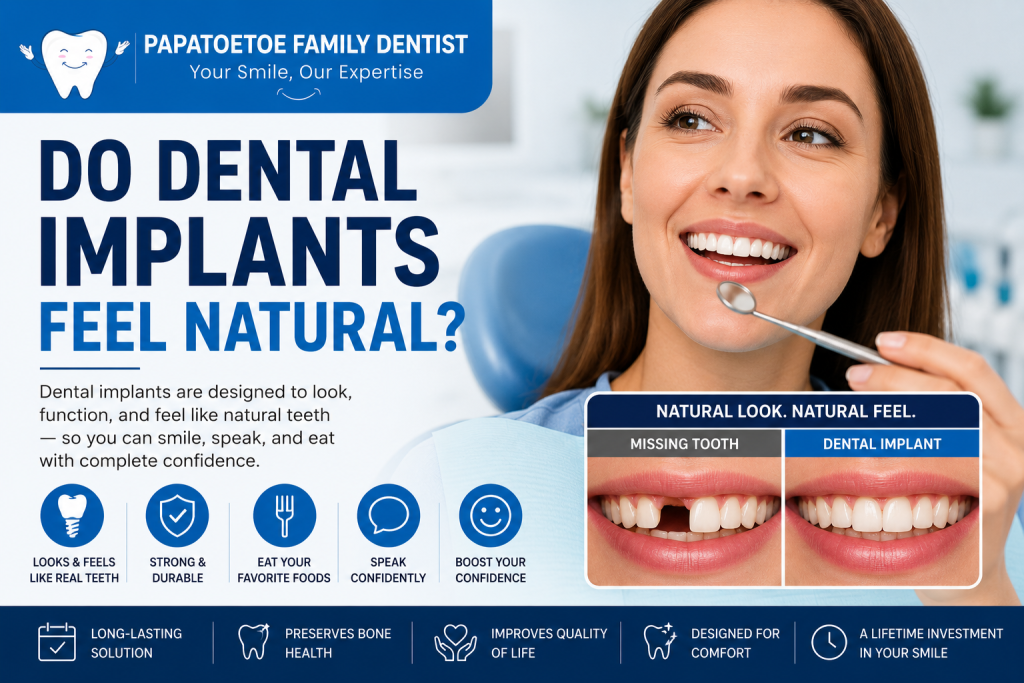
Losing a tooth can affect much more than your smile. Missing teeth may impact your confidence, speech, eating habits, and even your long-term oral health. Fortunately, modern dentistry offers several replacement options, with dental implants often considered one of the most advanced and long-lasting solutions available.
One of the most common questions patients ask before starting treatment is:
Do dental implants feel natural?
The short answer is: Yes, dental implants are designed to look, function, and feel very similar to natural teeth. However, understanding exactly what “natural” means—and what to expect during recovery—can help patients make informed decisions.
At Papatoetoe Family Dentist, patients often want realistic expectations regarding comfort, sensation, chewing ability, and daily life with dental implants. In this detailed guide, we explain how dental implants feel, whether they become like real teeth over time, and what factors influence the experience.
What Are Dental Implants?
Dental implants are artificial tooth roots placed into the jawbone to support replacement teeth. A complete implant usually includes:
- Implant post (placed in the jawbone)
- Abutment (connector)
- Crown (visible tooth replacement)
Unlike removable dentures, implants become fixed within the mouth and are designed to provide long-term stability.
Do Dental Implants Actually Feel Like Real Teeth?
For many patients, dental implants eventually feel very close to natural teeth.
Once healing is complete, patients often report:
✓ Comfortable chewing
✓ Stable biting force
✓ Natural appearance
✓ Improved speech
✓ Increased confidence
Because implants integrate with the jawbone, they typically feel more secure than removable alternatives.
However, implants are not identical to natural teeth in every way.
How Natural Do Dental Implants Feel?
The answer depends on understanding the difference between function and sensation.
Natural teeth contain:
- Nerves
- Blood vessels
- Periodontal ligaments
Dental implants do not contain these structures.
This means implants may not detect pressure exactly like natural teeth. However, surrounding tissues help compensate, and many patients adapt quickly.
Over time, most individuals stop noticing the difference during everyday activities.
What Is It Like Eating With Dental Implants?
Eating is one of the biggest concerns before treatment.
Patients often ask:
Will chewing feel normal again?
In many cases, yes.
Dental implants can help restore:
- Biting strength
- Stability
- Comfort while chewing
Many patients return to eating foods they previously avoided due to missing teeth.
Can You Bite Into Hard Foods?
Once fully healed and approved by your dentist, implants generally allow patients to eat a wide variety of foods.
However, excessively hard habits should still be avoided, including:
- Chewing ice
- Opening packaging with teeth
- Biting very hard objects
Protecting implants helps maximize lifespan.
Do Dental Implants Move Like Dentures?
One major advantage of implants is stability.
Unlike removable dentures, implants are designed to remain fixed in place.
Patients often appreciate:
✓ Reduced movement
✓ Better confidence speaking
✓ Improved eating comfort
This stability contributes significantly to the “natural” feeling.
Do Dental Implants Feel Strange at First?
Immediately after treatment, implants may feel unfamiliar.
Common temporary sensations include:
- Mild soreness
- Awareness of the new tooth
- Sensitivity during healing
These feelings usually improve as healing progresses.
How Long Does It Take for Dental Implants to Feel Normal?
Adjustment periods vary between individuals.
Several factors influence adaptation:
- Healing speed
- Number of implants
- Implant location
- Personal comfort levels
Many patients gradually stop noticing implants in daily life.
What Is Osseointegration and Why Does It Matter?
Osseointegration refers to the process where the jawbone bonds with the implant.
This process creates:
- Stability
- Strength
- Long-term support
Successful osseointegration contributes greatly to implants feeling natural.
Do Dental Implants Affect Speech?
Missing teeth sometimes affect pronunciation.
Dental implants may help restore clearer speech by replacing missing structures.
Most patients adapt quickly and experience improved confidence when speaking.
Can People Tell You Have Dental Implants?
Modern implant crowns are designed to match surrounding teeth.
Factors affecting appearance include:
- Colour matching
- Shape
- Size
- Placement quality
Well-designed implants often blend naturally into the smile.
Why Some Patients Say Implants Feel Better Than Expected
Many patients initially worry about discomfort but later describe implants as:
- Comfortable
- Stable
- Easy to forget
Improved function often changes daily experiences significantly.
Do Full Mouth Dental Implants Feel Natural?
Patients replacing many or all teeth often wonder whether full-mouth implants feel realistic.
Experiences vary, but stability often improves significantly compared with removable dentures.
Adaptation may take time.
What Factors Affect How Natural Dental Implants Feel?
Several elements influence patient experience.
Implant Placement Quality
Precise placement supports comfort.
Crown Design
Proper shape and bite alignment matter.
Bone Health
Healthy bone supports successful integration.
Healing Process
Recovery affects long-term comfort.
Can Dental Implants Ever Feel Uncomfortable?
Persistent discomfort is not considered normal.
Potential concerns may include:
- Infection
- Poor fit
- Bite issues
Patients experiencing ongoing discomfort should seek professional evaluation.
How Long Do Dental Implants Last?
With proper care, implants can remain functional for many years.
Long-term success depends on:
- Oral hygiene
- Regular dental visits
- Healthy gums
- Avoiding smoking
How to Care for Dental Implants
Implants require maintenance similar to natural teeth.
Recommended habits:
✓ Brush twice daily
✓ Floss regularly
✓ Attend check-ups
✓ Maintain healthy gums
Good care protects long-term results.
Frequently Asked Questions
Do dental implants feel exactly like natural teeth?
Not completely, because implants lack nerves and periodontal ligaments. However, many patients say they feel very similar after adjustment.
Do implants hurt after healing?
Long-term pain is not normal. Persistent discomfort should be evaluated.
Can you chew normally with implants?
Many patients regain strong chewing ability after successful healing.
Are implants more comfortable than dentures?
Many people find implants more stable and natural-feeling than removable dentures.
Final Thoughts
So, do dental implants feel natural?
For most patients, the answer is yes. Dental implants are designed to provide stability, comfort, and function similar to natural teeth. While the sensation may not be identical because implants do not contain nerves, many individuals adapt quickly and eventually forget they even have implants.
Dental implants can improve chewing, confidence, speech, and quality of life. Understanding the healing process and maintaining realistic expectations helps patients feel more prepared before treatment.
At Papatoetoe Family Dentist, helping patients understand every stage of their treatment journey remains an important part of achieving long-term success.