Do Dental Implants Set Off Metal Detectors? Here’s What You Need to Know

Do Dental Implants Feel Natural? Everything You Need to Know Before Getting Dental Implants
May 18, 2026How to Get Medical Insurance to Pay for Dental Work: What You Need to Know
June 15, 2026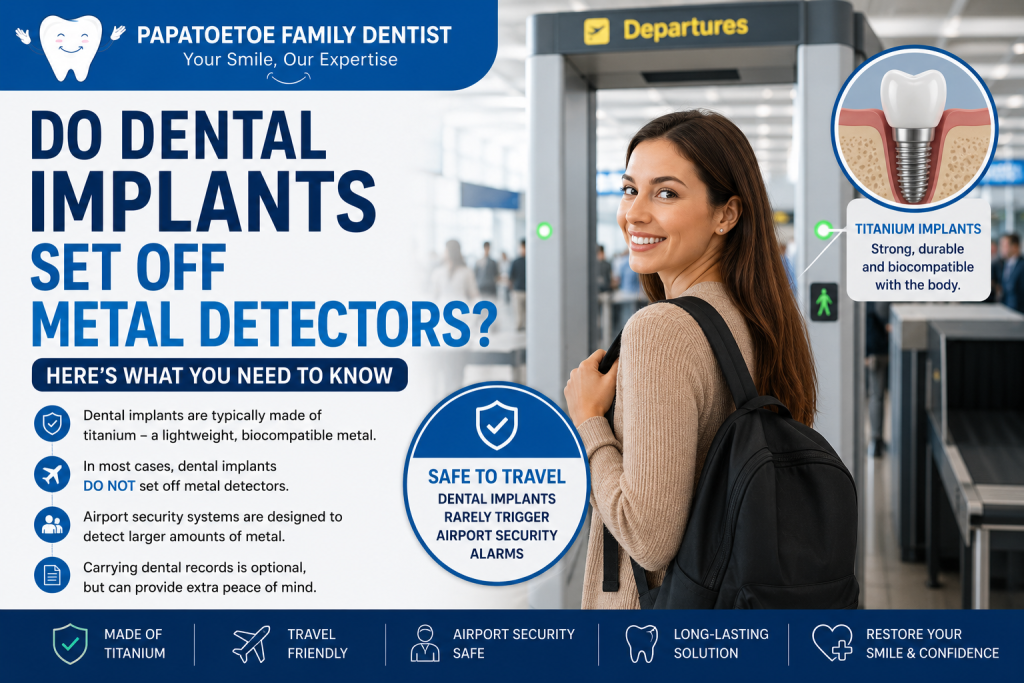
Dental implants are a popular and long-lasting solution for replacing missing teeth. They are designed to restore function, improve appearance, and help patients regain confidence in their smiles. However, many people preparing for travel or airport security checks wonder:
Do dental implants set off metal detectors?
The simple answer is:
In most cases, dental implants do not trigger metal detectors.
Modern dental implants are typically made from titanium, a lightweight and biocompatible metal chosen because it integrates well with the jawbone. Although titanium is metal, the amount used in dental implants is usually very small and unlikely to activate standard airport security systems.
At Papatoetoe Family Dentist, patients occasionally ask about traveling with implants and whether they should expect issues at security checkpoints. This guide explains how metal detectors work, why implants rarely cause problems, and what travelers with dental implants should know.
What Are Dental Implants Made Of?
Most dental implants use:
- Titanium
- Titanium alloys
- Zirconia (metal-free option)
Titanium is commonly used because it is:
✓ Strong
✓ Durable
✓ Resistant to corrosion
✓ Biocompatible with human bone
The implant post is surgically placed into the jawbone and acts as an artificial tooth root.
Can Titanium Trigger Metal Detectors?
Technically, titanium is a metal.
However, standard metal detectors generally focus on detecting larger quantities of metal associated with weapons or prohibited items.
Because dental implants contain a relatively small amount of titanium and are fixed inside bone, they rarely activate security systems.
Most patients with one or multiple implants pass through airport screening without any issues.
Do Airport Metal Detectors Detect Dental Implants?
For the majority of travelers:
No, dental implants usually do not set off airport metal detectors.
Airport screening systems are designed to identify larger metal objects.
Small implanted medical devices often go unnoticed.
What About Full Mouth Dental Implants?
Patients with:
- Multiple implants
- Full-mouth implant restorations
- Implant-supported dentures
sometimes wonder whether larger amounts of titanium increase detection risk.
Even then, reports of implants triggering alarms remain uncommon.
Can Dental Implants Affect Security Scanners?
Modern airports often use:
- Walk-through metal detectors
- Body scanners
- Advanced imaging technology
These systems differ in sensitivity.
Body scanners may identify implanted medical devices, but this does not automatically mean a problem.
Security personnel routinely encounter medical implants.
Should You Carry Documentation for Dental Implants?
Most travelers do not need documentation.
However, some patients feel more comfortable carrying:
- Dental treatment records
- Implant information
- Clinic contact details
This is usually optional rather than necessary.
Do Other Dental Materials Trigger Metal Detectors?
Besides implants, patients may have:
- Crowns
- Bridges
- Fillings
- Orthodontic appliances
These also rarely cause airport issues.
What Happens If a Metal Detector Is Triggered?
If security systems alert, staff may perform:
- Additional screening
- Brief questioning
- Alternative checks
Medical implants are common and generally handled routinely.
Can Dental Implants Cause Problems During Travel?
The implants themselves rarely interfere with travel.
However, recent implant surgery may require additional planning.
Patients traveling soon after treatment should consider:
- Healing progress
- Follow-up appointments
- Comfort during flights
Are Metal-Free Dental Implants Available?
Yes.
Some implants use zirconia, a ceramic material rather than metal.
Potential reasons patients choose zirconia include:
- Preference for metal-free restorations
- Cosmetic considerations
Suitability varies by patient.
Frequently Asked Questions
Do dental implants beep at airport security?
Usually no. Most implants do not contain enough metal to trigger alarms.
Can titanium implants activate metal detectors?
Titanium is metal, but dental implants rarely set off detectors due to their small size.
Do I need proof of my dental implants for travel?
Generally no, although some people prefer carrying treatment information.
Do full-mouth implants trigger airport scanners?
Most patients with multiple implants still pass through security without problems.
Final Thoughts
So, do dental implants set off metal detectors?
For most people, the answer is no. Dental implants are usually too small to activate airport security systems, and travelers with implants typically move through screening without complications.
Modern security procedures also account for medical implants, making travel straightforward for most patients.
If you’re considering implants or have questions about treatment, travel, or recovery, understanding what to expect can provide extra peace of mind.
At Papatoetoe Family Dentist, helping patients feel informed and confident about every aspect of their dental care remains a priority.