Are Dentists Open in Level 3?

Do-It-Yourself Dental Implants: Why It’s Dangerous and What You Should Do Instead
July 16, 2026
Can You Get Braces With Dental Implants?
August 19, 2026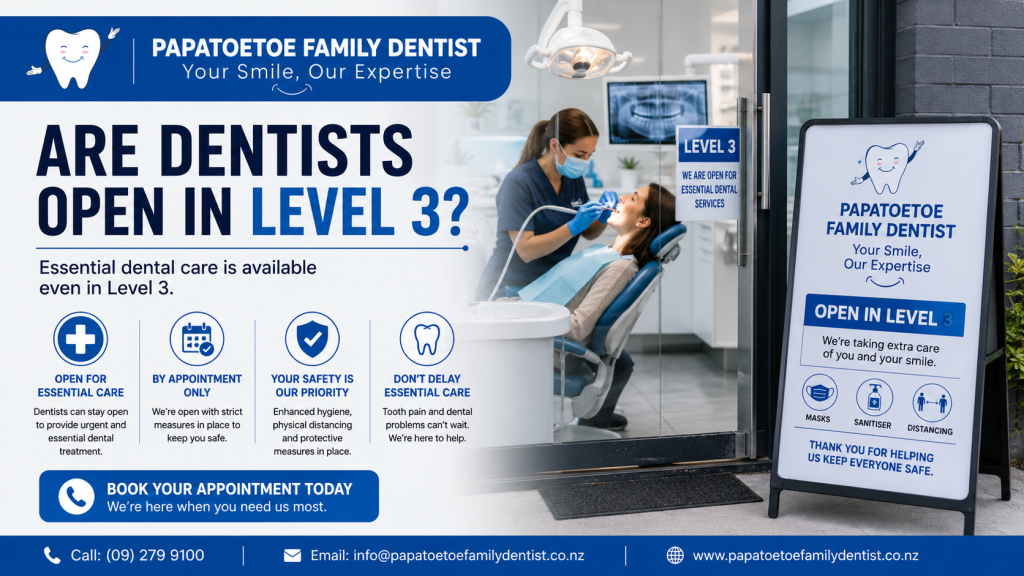
During COVID-19 Alert Level 3 restrictions, many people wondered whether dental clinics remained open and what types of treatment were available. The answer is yes—but with important limitations.
In New Zealand, dental services operating under Alert Level 3 followed strict guidance from the Dental Council and the Ministry of Health. While some clinics remained open, the type of care they could provide depended on the alert level, patient risk, and the clinic’s ability to meet infection prevention requirements.
In this guide, we’ll explain what dental services were available during Alert Level 3, which treatments were allowed, and what patients could expect.
Were Dentists Open During Alert Level 3?
Yes. Many dental clinics remained open during Alert Level 3, but they were required to follow enhanced infection control measures and government guidance.
Depending on the alert level guidance in effect at the time, clinics could provide:
- Emergency dental care
- Urgent dental treatment
- Some routine dental care where permitted and where safety requirements were met
The exact services available depended on the current public health rules and the clinic’s facilities.
What Dental Treatments Were Available?
Emergency Dental Care
Emergency treatment generally continued during Alert Level 3.
Examples included:
- Severe toothache
- Dental abscesses
- Facial swelling
- Broken teeth causing significant pain
- Dental trauma following an accident
- Uncontrolled bleeding
These conditions required prompt treatment because delaying care could lead to serious complications.
Urgent Dental Treatment
Urgent dental care was also commonly available for problems that could worsen without timely treatment, such as:
- Lost fillings causing pain
- Broken crowns
- Cracked teeth
- Temporary restorations that had failed
Patients were usually assessed before an appointment was offered.
Routine Dental Care
Routine treatments such as:
- Regular check-ups
- Cosmetic dentistry
- Teeth whitening
- Non-urgent cleanings
could be postponed or provided only under specific safety conditions, depending on the official Alert Level 3 guidance in force at the time.
Why Were Some Dental Treatments Delayed?
Many dental procedures create aerosols—tiny droplets that can spread through the air.
Examples include:
- High-speed drilling
- Ultrasonic scaling
- Some polishing procedures
Because of this, dental clinics had to follow strict infection prevention protocols during COVID-19 restrictions.
These precautions helped protect:
- Patients
- Dentists
- Dental assistants
- Other healthcare workers
What Happened Before the Appointment?
During Alert Level 3, many clinics introduced patient screening before scheduling appointments.
Patients were often asked about:
- COVID-19 symptoms
- Recent travel history
- Contact with confirmed cases
- Overall health status
Some clinics completed these assessments over the phone before confirming an appointment.
Safety Measures Used by Dental Clinics
Dental practices operating during Alert Level 3 commonly implemented additional precautions, including:
- Enhanced PPE for staff
- Patient screening before appointments
- Increased cleaning and disinfection
- Physical distancing in waiting areas
- Reduced patient numbers
- Appointment spacing
- Improved ventilation where required
These measures were designed to reduce the risk of COVID-19 transmission while continuing essential dental care.
Should You Delay Dental Treatment During Level 3?
It depends on the type of problem.
You Should Contact a Dentist Immediately If You Have:
- Severe tooth pain
- Swelling
- Dental infection
- Broken tooth causing pain
- Trauma to the teeth or jaw
- Bleeding that won’t stop
Delaying treatment for these conditions could result in more serious complications.
Routine Visits May Be Rescheduled
If your appointment was for:
- A routine examination
- Cosmetic treatment
- Teeth whitening
- A regular cleaning
Your dentist may recommend postponing treatment until restrictions ease or confirm whether it can safely proceed under the current guidelines.
How to Prepare for a Dental Appointment During Level 3
If you needed dental care during Alert Level 3:
✔ Call the clinic before visiting
✔ Describe your symptoms clearly
✔ Follow screening instructions
✔ Wear a face covering if required
✔ Arrive on time to minimise waiting
✔ Follow the clinic’s infection control procedures
These simple steps helped protect both patients and dental staff.
Maintaining Oral Health at Home
If your treatment was delayed, maintaining good oral hygiene became even more important.
Daily habits included:
- Brushing twice a day with fluoride toothpaste
- Flossing once daily
- Limiting sugary foods and drinks
- Drinking plenty of water
- Contacting your dentist if symptoms worsened
Good oral hygiene helped reduce the likelihood of dental emergencies while waiting for an appointment.
Choosing the Right Dental Clinic
During periods of public health restrictions, it’s important to choose a clinic that follows current health and safety guidance.
Dental clinics such as Papatoetoe Family Dentist follow strict infection prevention protocols and assess each patient’s needs to determine the most appropriate care during changing public health conditions.
Frequently Asked Questions
Were dentists considered essential during Alert Level 3?
Yes. Dentists continued providing essential oral healthcare, particularly for urgent and emergency cases, while following public health guidance.
Could I get my teeth cleaned during Level 3?
Routine cleanings depended on the Alert Level guidance in force at the time and whether the clinic could safely provide the treatment.
Should I wait if I have severe tooth pain?
No. Severe pain, swelling, or infection should be assessed by a dentist as soon as possible.
Did dentists use extra protective equipment during Level 3?
Yes. Dental teams followed enhanced infection control procedures, including additional PPE and patient screening where required.
Final Thoughts
If you’re asking “Are dentists open in Level 3?”, the answer is yes, but services were provided under strict public health guidelines. Emergency and urgent dental care remained available, while some routine treatments were postponed or offered only when clinics could safely meet the required infection control standards.
If you experience dental pain, swelling, or signs of infection during any period of public health restrictions, contact your dentist promptly for advice. Early assessment can help prevent minor problems from becoming serious emergencies.