Do You Always Need a Bone Graft for Dental Implants?

What Do Dentists Use for Sedation? A Complete Guide to Dental Sedation
November 12, 2026
How Long Do Mini Dental Implants Last?
November 20, 2026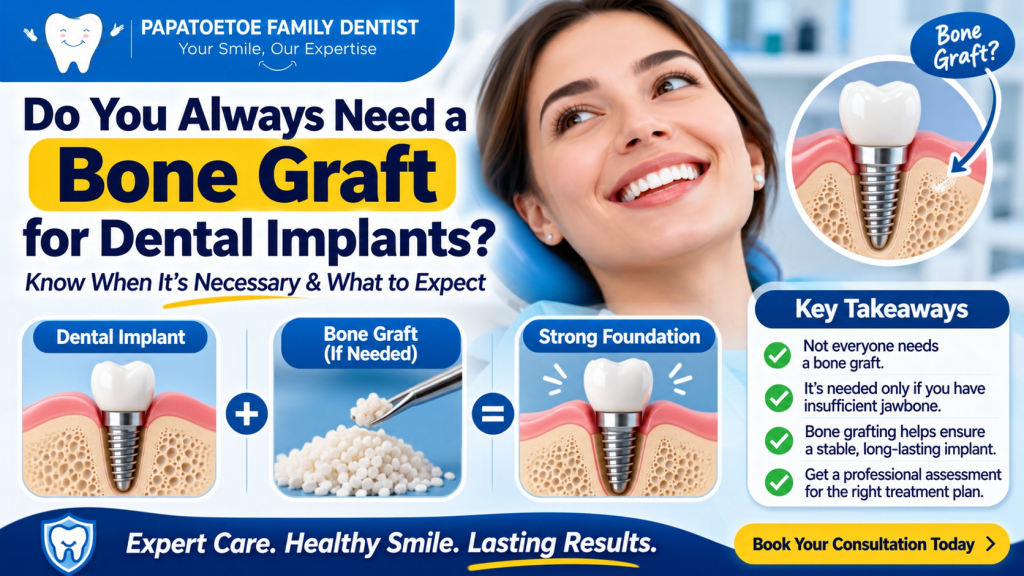
Dental implants are a popular and reliable way to replace missing teeth. They look and function much like natural teeth, helping restore your smile, improve chewing ability and support long-term oral health. However, before getting dental implants, many patients have questions about the procedures involved. One common concern is whether a bone graft is always necessary.
The good news is that not everyone needs a bone graft before getting dental implants. Many patients already have enough healthy jawbone to support an implant. Bone grafting is generally recommended when there is not enough bone in the planned implant area to provide a stable foundation.
Understanding why bone grafting may be needed, when it can be avoided and how dentists assess your jawbone can help you feel more confident about your treatment.
What Is a Bone Graft for Dental Implants?
A dental bone graft is a procedure used to rebuild or increase the amount of bone in an area of the jaw where bone has been lost or is insufficient.
Dental implants are small posts, usually made from titanium, that are placed into the jawbone to replace missing tooth roots. Over time, the surrounding bone bonds with the implant through a process called osseointegration. This connection helps keep the implant stable.
If the jawbone is too thin, too short or not dense enough to support the implant, additional bone may be required. A bone graft helps create a stronger foundation for implant placement.
The graft material may come from different sources, including:
- Your own bone: Bone taken from another area of your body or mouth.
- Donor bone: Carefully processed bone from a human donor.
- Animal-derived material: Specially processed bone material used to support new bone growth.
- Synthetic bone substitutes: Artificial materials designed to support the body’s natural bone regeneration process.
Your dentist or oral surgeon will recommend an appropriate material based on your dental condition and treatment requirements.
Do You Always Need a Bone Graft Before Dental Implants?
No, a bone graft is not required for every dental implant procedure.
If you have sufficient healthy jawbone in the correct position, your dentist may be able to place the implant without additional grafting. The implant needs enough surrounding bone to achieve stability and support normal chewing forces.
However, if you have experienced bone loss or your jawbone does not have the required height, width or density, bone grafting may be recommended.
Whether you need this procedure depends on several factors, including:
- The amount of bone available at the implant site.
- The thickness and density of your jawbone.
- How long the tooth has been missing.
- Whether you have experienced gum disease or an infection.
- The position and type of implant being considered.
- Your overall oral and general health.
Every patient’s mouth is different. A dental examination and appropriate imaging help determine whether bone grafting is necessary.
Why Might You Need a Bone Graft Before Dental Implants?
There are several reasons why a dentist may recommend bone grafting before implant placement.
1. Bone Loss After Tooth Extraction
When a natural tooth is removed, the jawbone in that area no longer receives the same stimulation from the tooth root. Over time, the bone may naturally shrink or become thinner.
This process is known as bone resorption. It can make the area less suitable for dental implant placement, particularly if the tooth has been missing for a long time.
A bone graft may help rebuild the lost bone and create enough space to support an implant.
2. Gum Disease
Advanced gum disease, also known as periodontitis, can damage the tissues and bone supporting your natural teeth.
If the condition has caused significant bone loss, there may not be enough healthy jawbone to support an implant in the planned position.
Before implant treatment, your dentist will need to assess and manage any active gum disease. Bone grafting may also be considered if additional bone support is required.
3. Long-Term Missing Teeth
Many people delay replacing a missing tooth for several years. During this time, the jawbone in the empty space may gradually lose volume.
The longer a tooth has been missing, the greater the possibility of bone changes in that area. However, this does not automatically mean you will need a bone graft.
Your dentist will assess the available bone and determine whether an implant can be placed safely without additional treatment.
4. Injury or Dental Infection
An injury, serious dental infection or complicated tooth extraction can sometimes damage the surrounding jawbone.
If the bone has been affected, it may not provide enough support for an implant. In such cases, bone grafting may be recommended to rebuild the affected area.
5. Insufficient Bone in the Upper Jaw
The upper back jaw can present a particular challenge because of the location of the maxillary sinuses.
If there is not enough bone height between the upper jaw and the sinus, your dentist or oral surgeon may recommend a procedure called a sinus lift.
A sinus lift increases the available bone height in the upper jaw to help create a suitable foundation for dental implants.
When Can You Get Dental Implants Without a Bone Graft?
Many patients can receive dental implants without bone grafting when their existing jawbone is healthy and sufficient.
You may be suitable for implant placement without a graft if:
- You have adequate bone height and width.
- Your jawbone has sufficient density to provide implant stability.
- There is no significant bone loss around the planned implant site.
- Your gum health is stable.
- The implant can be positioned safely without additional bone support.
For example, someone who has recently lost a tooth and still has enough healthy bone around the extraction site may be able to proceed without a separate bone graft.
In some cases, the dentist may also use a treatment approach that makes better use of the existing bone. However, this depends on your anatomy and the type of implant treatment being planned.
It is important to understand that avoiding a bone graft should never come at the expense of implant stability or long-term success.
Can a Bone Graft and Dental Implant Be Done at the Same Time?
Yes, in certain situations, a bone graft and dental implant can be performed during the same appointment.
This may be possible when there is enough existing bone to hold the implant securely, but a small amount of additional bone is needed around it.
However, if there is significant bone loss, your dentist may recommend completing the bone graft first and allowing it to heal before placing the implant.
The treatment approach generally depends on the amount of bone required and whether the implant can achieve initial stability.
Your dentist will explain which option is appropriate for your situation.
How Long Does a Bone Graft Take to Heal Before Dental Implants?
Bone graft healing time varies depending on the size of the graft, the material used, the patient’s healing response and the complexity of the procedure.
A small graft performed at the same time as implant placement may heal alongside the implant.
If a larger bone graft is required before implant placement, it may need several months to heal. In many cases, dentists allow approximately three to six months or sometimes longer before proceeding with implant surgery.
During this period, the body gradually develops new bone around the graft material.
Your dentist will monitor the healing process and decide when the area is ready for implant placement.
Is Bone Grafting Painful?
Bone grafting is a surgical procedure, but it is generally performed under local anaesthesia. This helps numb the treatment area so you should not feel pain during the procedure.
After the anaesthetic wears off, you may experience:
- Mild to moderate swelling.
- Soreness around the treatment area.
- Minor bruising.
- Temporary tenderness while eating.
- Slight bleeding during the initial recovery period.
These symptoms usually improve as healing progresses. Your dental professional will provide aftercare instructions and recommend suitable medication when necessary.
Following the instructions carefully can help support a smoother recovery.
Does a Bone Graft Increase the Cost of Dental Implants?
Yes, bone grafting can increase the overall cost of dental implant treatment because it involves an additional procedure, materials and sometimes extra appointments.
The final cost depends on several factors, such as:
- The amount of bone that needs to be rebuilt.
- The type of graft material used.
- Whether a sinus lift is required.
- Whether the graft and implant can be performed together.
- The complexity of the surgical procedure.
- The number of implants being placed.
Not every patient needs this additional treatment. Your dentist should explain why a graft is being recommended and provide a clear treatment plan and cost estimate before proceeding.
How Do Dentists Know If You Need a Bone Graft?
Your dentist will assess your jawbone before recommending dental implant treatment.
This may involve:
1. Dental examination
Your dentist will examine your teeth, gums and the area where the implant is planned. They may also review your dental and medical history.
2. Dental X-rays
X-rays help assess the general condition of the jawbone and surrounding structures.
3. CBCT scan
A Cone Beam Computed Tomography (CBCT) scan may be recommended when more detailed information is required. It provides three-dimensional images that help assess bone height, width and surrounding anatomy.
4. Individual treatment planning
After reviewing the examination and imaging results, your dentist will determine whether your existing bone is sufficient or whether bone grafting or another approach may be needed.
A personalised assessment is important because the right treatment depends on your individual dental condition.
Frequently Asked Questions
1. Can I get dental implants if I have bone loss?
Yes, some patients with bone loss can still receive dental implants. Depending on the amount and location of the missing bone, your dentist may recommend bone grafting or another suitable implant approach.
2. What happens if I do not get a bone graft when I need one?
If there is insufficient bone to support an implant, proceeding without the necessary treatment may affect implant stability and increase the risk of complications or implant failure. Your dentist will assess whether additional bone support is required before surgery.
3. Is bone grafting necessary for every missing tooth?
No. Missing a tooth does not automatically mean you need a bone graft. The decision depends on the amount and quality of bone available at the implant site.
4. Can a dental implant fail without a bone graft?
An implant may fail if there is not enough healthy bone to provide proper support. However, bone grafting is only necessary when the existing bone is inadequate. Patients with sufficient bone can often receive implants without grafting.
5. How long after a tooth extraction can I get a dental implant?
The timing varies from patient to patient. Some implants can be placed immediately after extraction, while others may require a healing period first. Your dentist will consider the condition of the extraction site, surrounding bone and gums before recommending the right timing.
6. Is a sinus lift the same as a bone graft?
A sinus lift is a type of bone augmentation procedure used in the upper back jaw. It creates additional bone height beneath the sinus when there is not enough bone to support a dental implant.
Final Thoughts
You do not always need a bone graft to get dental implants. Many patients have enough healthy jawbone to support an implant without additional surgery. However, if bone loss, gum disease, an old extraction or other dental conditions have reduced the available bone, grafting may help create a suitable foundation.
The best way to know whether you need a bone graft is to have your jawbone and oral health assessed by a qualified dental professional. A personalised treatment plan will help you understand your options and choose an approach that supports the stability and long-term health of your dental implant.
If you are considering dental implants, the team at Papatoetoe Family Dentist can help you understand your treatment options and the steps involved in restoring your smile.