Who Buys Dental Gold? A Complete Guide to Selling Gold Crowns and Dental Scrap

Can You Go to the Dentist When Pregnant? A Complete Guide for Expecting Mothers
July 16, 2026
What Do Dental Hygienists Do? A Complete Guide to Their Role in Oral Health
July 16, 2026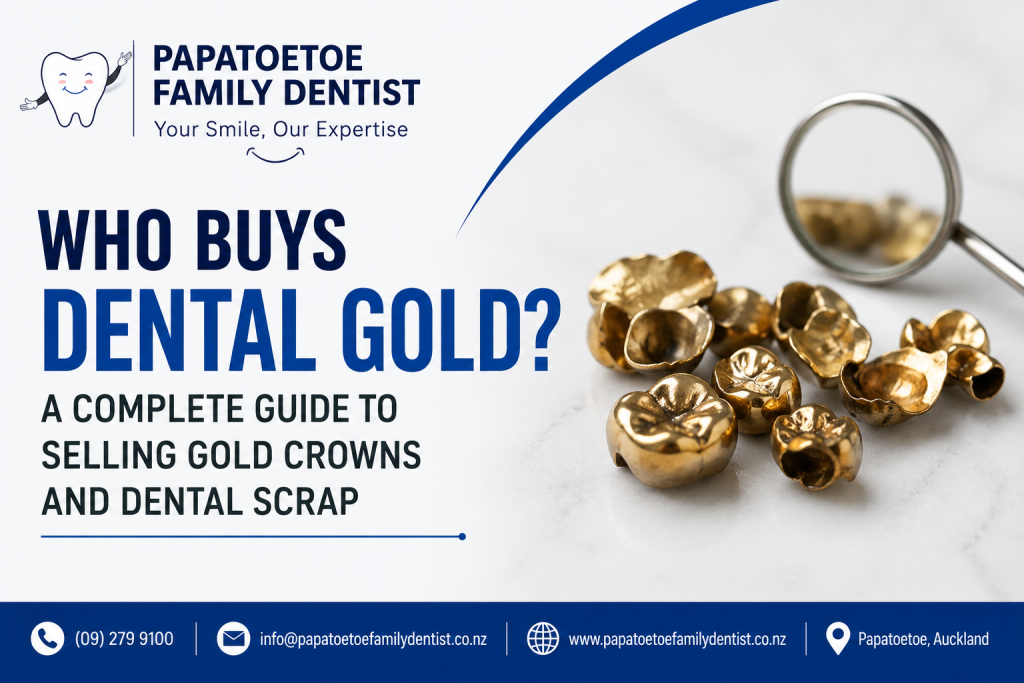
If you’ve recently had a gold crown, bridge, or filling removed, you may be wondering: “Who buys dental gold?” The good news is that dental gold can often be sold, provided it contains precious metals such as gold, platinum, palladium, or silver.
Because dental gold is usually made from metal alloys rather than pure gold, it’s typically purchased as scrap precious metal. The value depends on the weight, purity, and current market price of the metals it contains.
In this guide, we’ll explain who buys dental gold, how it’s valued, and how to get the best possible price.
What Is Dental Gold?
Dental gold refers to precious metal alloys used in dental restorations such as:
- Gold crowns
- Gold bridges
- Gold inlays
- Gold onlays
- Gold fillings
- Some partial dentures
Most dental gold is not pure 24-karat gold. Instead, it’s an alloy that may contain:
- Gold
- Platinum
- Palladium
- Silver
- Copper
These metals make dental restorations stronger and more durable.
Who Buys Dental Gold?
Several types of buyers purchase dental gold.
1. Precious Metal Refineries
Specialist precious metal refineries are often the best option.
They:
- Test the metal accurately
- Measure precious metal content
- Pay based on current market prices
- Can process crowns with porcelain still attached
Because refiners recover the precious metals, they often offer higher payouts than general buyers.
2. Gold Buyers
Many professional gold-buying businesses purchase:
- Gold crowns
- Dental bridges
- Scrap dental gold
- Precious metal dental alloys
They usually evaluate the item by:
- Weight
- Purity
- Current gold price
3. Jewellery Refiners
Some jewellery refiners also accept dental gold because they already process scrap precious metals.
They may purchase:
- Single crowns
- Multiple dental restorations
- Estate collections
4. Coin and Bullion Dealers
Some precious metal dealers buy dental gold, particularly if they also purchase:
- Scrap gold
- Gold jewellery
- Gold coins
- Silver
Policies vary between dealers.
5. Pawn Shops
Some pawn shops will buy dental gold.
However, they may not have specialised testing equipment and often focus primarily on the gold content, which can result in lower offers compared with specialist refiners.
How Is Dental Gold Valued?
The value of dental gold depends on several factors.
Precious Metal Content
The biggest factor is how much recoverable precious metal the restoration contains.
Many dental alloys include:
- Gold
- Palladium
- Platinum
- Silver
These metals all contribute to the final value.
Weight
Heavier crowns generally contain more precious metal and may be worth more.
Purity
Dental gold commonly ranges between 10K and 22K equivalent, depending on the alloy used.
Higher precious metal content generally results in higher payouts.
Current Gold Prices
Since gold prices change daily, the amount you receive will vary with the market.
Does Porcelain Reduce the Value?
No.
Many dental crowns have porcelain attached.
Specialist refiners can separate the porcelain from the precious metal during processing.
They usually value the item based on the recoverable metal rather than its appearance.
Can You Sell a Single Gold Crown?
Yes.
Many buyers purchase:
- One gold crown
- Multiple crowns
- Dental bridges
- Gold fillings
- Estate dental collections
Even a single crown may have value if it contains precious metals.
How to Get the Best Price
Before selling:
Compare Multiple Buyers
Different buyers may offer different payout percentages.
Getting several quotes can help you find the best offer.
Choose a Specialist
Refiners with professional assay equipment can accurately identify all precious metals in the alloy.
This often results in a more accurate valuation than general gold buyers.
Don’t Clean the Crown Excessively
There’s usually no need to remove:
- Cement
- Porcelain
- Minor residue
Most specialist buyers will process the item as received.
Can Dentists Buy Dental Gold?
Most dental clinics do not buy old crowns from patients.
Instead, removed crowns are usually returned to the patient, who can choose whether to keep or sell them.
Is Selling Dental Gold Legal?
Yes.
If the dental gold belongs to you, you can generally sell it to a legitimate precious metal buyer.
Some buyers may ask for identification to comply with local regulations.
Tips Before Selling
✔ Compare several offers
✔ Ask how the metal will be tested
✔ Check whether there are any assay or processing fees
✔ Understand how the payout is calculated
✔ Use reputable buyers with transparent pricing
Frequently Asked Questions
Is dental gold real gold?
Yes, but it’s usually an alloy containing gold mixed with other metals such as platinum, palladium, or silver.
Can I sell a gold crown with porcelain attached?
Yes. Many specialist buyers accept crowns with porcelain and separate the materials during refining.
How much is dental gold worth?
The value depends on the weight, precious metal content, and current market prices. Two similar-looking crowns can have very different values.
Who usually pays the most for dental gold?
Specialist precious metal refiners often provide the most accurate valuations because they test for all recoverable precious metals, not just gold.
Final Thoughts
If you’re asking “Who buys dental gold?”, you have several options, including specialist precious metal refiners, gold buyers, jewellery refiners, bullion dealers, and some pawn shops. While many buyers accept dental gold, specialist refiners often provide the most accurate valuations because they assess the full precious metal content of the alloy.
Before selling, compare offers, ask how your dental gold will be tested, and choose a reputable buyer. Taking a little extra time can help ensure you receive a fair price for your old dental restoration.