How to Use Dental Tools at Home: What’s Safe and What to Avoid

Is Dental Hygiene Worth It? Benefits of Professional Teeth Cleaning and Good Oral Care
July 16, 2026
How to Make Dental Wax at Home: Safe Temporary Alternatives
July 16, 2026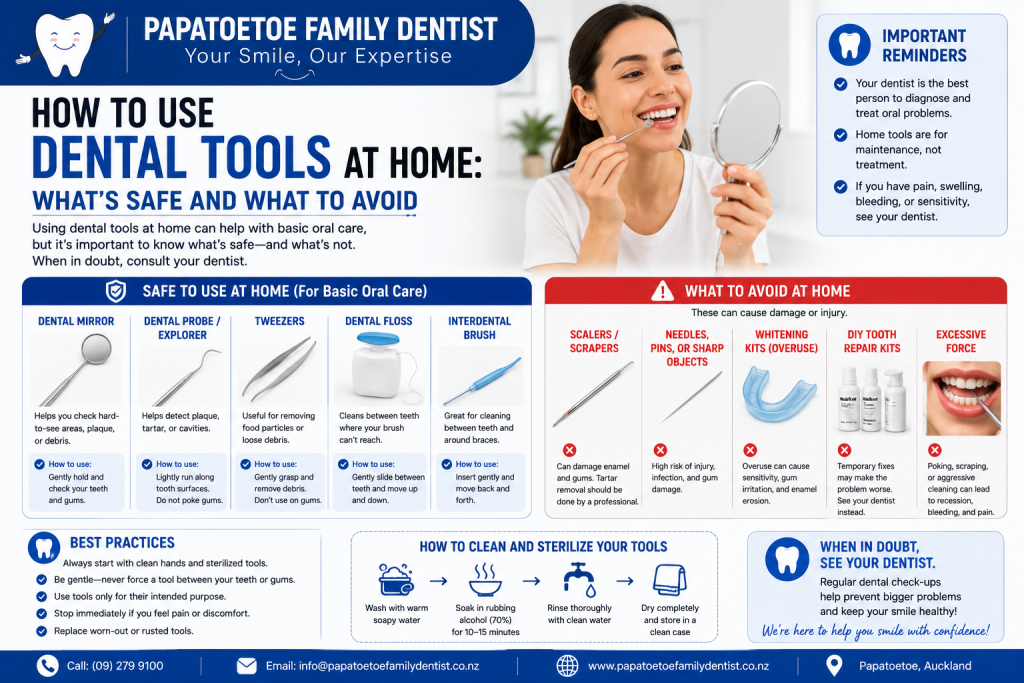
Many people purchase dental tool kits online hoping to remove plaque, clean between their teeth, or save money on dental visits. While these tools may look simple to use, using professional dental instruments at home can do more harm than good if you’re not properly trained.
If you’re wondering how to use dental tools at home, it’s important to understand which tools are safe for home use and which should only be used by a dentist or dental hygienist. This guide explains how to care for your teeth safely while avoiding accidental damage to your gums and enamel.
What Are Dental Tools?
Dental tools are instruments used by dentists and dental hygienists to examine, clean, and treat teeth and gums.
Common dental instruments include:
Dental mirrors
Plaque disclosing tablets
Dental floss
Interdental brushes
Water flossers
Dental scalers
Explorers (dental probes)
Some of these are suitable for home use, while others should only be used by trained professionals.
Which Dental Tools Are Safe to Use at Home?
Several oral hygiene tools are designed specifically for home care.
Dental Mirror
A dental mirror can help you:
Check hard-to-see areas
Look for food trapped between teeth
Monitor braces or dental work
It should only be used for inspection—not treatment.
Dental Floss
Floss removes plaque and food particles from between teeth where a toothbrush can’t reach.
To floss correctly:
Use about 45 cm (18 inches) of floss.
Wrap it around your fingers.
Gently slide it between teeth.
Curve it into a “C” shape around each tooth.
Move it up and down without snapping it into the gums.
Daily flossing helps reduce plaque and gum disease.
Interdental Brushes
Small interdental brushes clean wider spaces between teeth.
Use them by:
Choosing the correct size.
Gently inserting the brush.
Moving it in and out without forcing it.
They’re especially useful for people with braces, bridges, or implants.
Water Flosser
A water flosser uses a stream of water to remove debris and plaque.
To use one:
Fill the reservoir with lukewarm water.
Start with the lowest pressure setting.
Aim along the gumline.
Move slowly around each tooth.
Water flossers are a helpful addition to brushing and flossing but don’t always replace traditional floss.
Which Dental Tools Should You NOT Use at Home?
Some dental instruments require professional training and should not be used at home.
Dental Scalers
Metal scalers are designed to remove hardened tartar.
Using them yourself can:
Cut your gums
Damage tooth enamel
Leave tartar behind
Increase the risk of infection
Tartar below the gumline should only be removed by a qualified dental professional.
Dental Explorers (Sharp Probes)
These pointed instruments are used by dentists to detect cavities and other dental problems.
Using them at home may:
Scratch teeth
Injure gums
Miss underlying dental disease
Curettes and Periodontal Instruments
These specialized tools are used to treat gum disease and should never be used without professional training.
Why DIY Dental Cleaning Can Be Risky
Trying to remove tartar or perform deep cleaning yourself may result in:
Bleeding gums
Gum recession
Tooth sensitivity
Enamel damage
Infection
Delayed diagnosis of dental problems
Even if your teeth look clean afterward, harmful plaque or tartar may still remain.
Safe Ways to Keep Your Teeth Clean at Home
The best daily oral care routine includes:
Brush Twice Daily
Use:
A soft-bristled toothbrush
Fluoride toothpaste
Gentle circular motions
Brush for at least two minutes.
Floss Every Day
Daily flossing removes plaque from areas your toothbrush can’t reach.
Clean Your Tongue
Use a tongue scraper or toothbrush to remove bacteria that contribute to bad breath.
Limit Sugary Foods
Reducing sugar helps lower the risk of tooth decay.
Drink Plenty of Water
Water helps rinse away food particles and supports saliva production.
When Should You See a Dentist Instead?
Book an appointment if you notice:
Tartar that won’t brush away
Bleeding gums
Persistent bad breath
Tooth pain
Loose teeth
Swelling
Sensitivity that doesn’t improve
These issues usually require professional assessment and treatment.
How Often Should You Have Professional Dental Cleaning?
Most people benefit from a professional dental cleaning every six months.
Some patients with gum disease or a higher risk of plaque buildup may need more frequent visits.
Your dentist or dental hygienist can recommend the best schedule based on your oral health.
Tips for Safe Home Dental Care
✔ Brush twice daily with fluoride toothpaste
✔ Floss every day
✔ Use interdental brushes if recommended
✔ Replace your toothbrush every 3–4 months
✔ Avoid using sharp dental instruments on your teeth or gums
✔ Attend regular dental check-ups and professional cleanings
Dental clinics such as Papatoetoe Family Dentist provide professional cleanings and personalised oral hygiene advice, helping patients remove plaque and tartar safely while preventing damage to their teeth and gums.
Frequently Asked Questions
Can I remove tartar at home with dental tools?
It’s not recommended. Hardened tartar is best removed by a dentist or dental hygienist using professional instruments and techniques.
Is it safe to buy dental tool kits online?
Some kits include safe items like mirrors, floss, or interdental brushes. However, sharp instruments such as scalers should not be used for self-treatment.
Can I damage my teeth using dental tools?
Yes. Incorrect use of sharp instruments can scratch enamel, injure gums, and increase the risk of infection.
What’s the safest way to clean my teeth at home?
Brush twice a day with fluoride toothpaste, floss daily, and use interdental brushes or a water flosser if appropriate. These methods are safer and more effective than attempting to scale your own teeth.
Final Thoughts
If you’re asking how to use dental tools at home, the safest approach is to use only tools designed for home oral care—such as dental mirrors, floss, interdental brushes, and water flossers—and avoid using professional instruments like scalers or probes on yourself.
A consistent home care routine, combined with regular professional dental check-ups, is the best way to maintain healthy teeth and gums without risking unnecessary injury.