How Often Should I Go to the Dentist?

What Is the Blue Light Used by Dentists?
August 19, 2026
What Type of Dentist Makes the Most Money?
September 3, 2026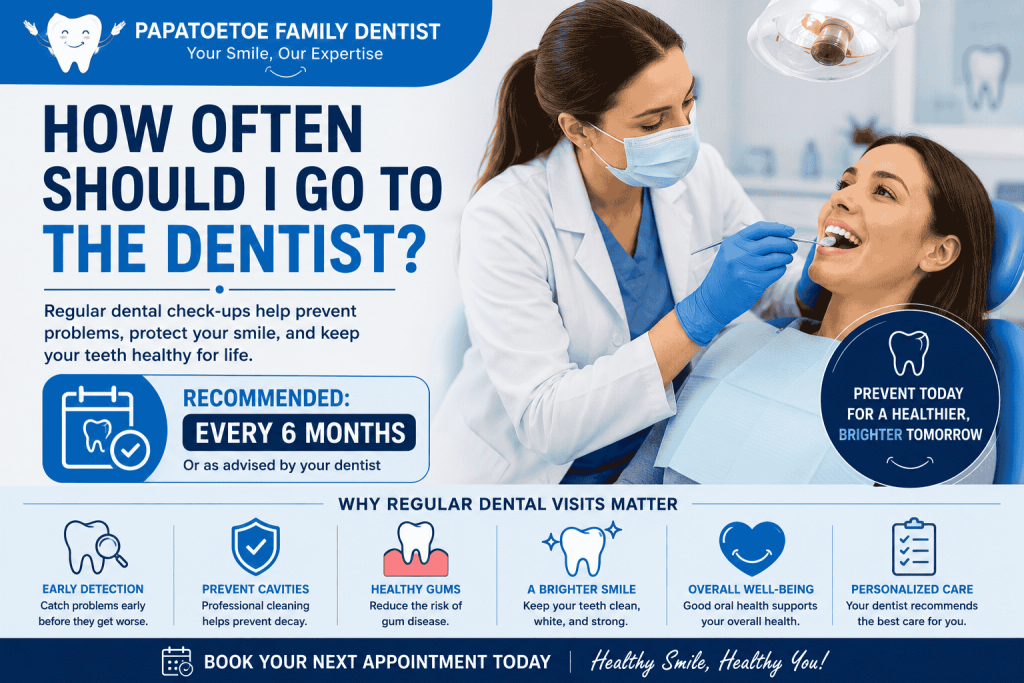
Regular dental visits are an important part of maintaining healthy teeth and gums, but many people are unsure about how often they actually need to see a dentist. Some people schedule a check-up every six months, while others only make an appointment when they experience tooth pain or notice a problem.
So, how often should you go to the dentist?
For many people, visiting a dentist at least once a year is a good starting point. However, there is no single schedule that works for everyone. Your ideal dental visit frequency depends on your oral health, age, gum health, risk of tooth decay, medical history, lifestyle, and previous dental problems. The New Zealand Dental Association recommends visiting your dentist regularly and notes that at least an annual visit can help detect problems early.
At Papatoetoe Family Dentist, we believe regular dental care should be about more than treating problems. Routine examinations allow dental professionals to identify potential issues early, provide preventive advice, and help you maintain a healthy smile for years to come.
In this guide, we’ll explain how often you should visit the dentist, what happens during a routine appointment, when you may need more frequent visits, and why waiting until you have tooth pain isn’t always the best approach.
How Often Should You Go to the Dentist?
For a generally healthy adult, a dental check-up at least once a year is a useful general recommendation.
However, some people may benefit from visiting more frequently, such as every six months or every three to six months.
The right schedule depends on your individual needs.
Your dentist may recommend more frequent appointments if you have:
- A history of cavities
- Gum disease
- Heavy plaque or tartar buildup
- Dental implants
- Orthodontic appliances
- Frequent tooth sensitivity
- Dry mouth
- Certain medical conditions
- Difficulty maintaining good oral hygiene
- A high risk of tooth decay
The goal isn’t simply to follow a fixed calendar. Instead, your dentist should assess your individual risk and recommend an appropriate recall schedule.
Why Are Regular Dental Visits Important?
Many dental problems develop gradually and may not cause noticeable symptoms during their early stages.
For example, tooth decay can progress before you experience significant pain. Similarly, gum disease may develop without obvious discomfort. The New Zealand Dental Association notes that gum disease can sometimes progress without pain or noticeable symptoms, which is one reason regular examinations are important.
Regular dental appointments can help identify:
- Early tooth decay
- Gum disease
- Tartar buildup
- Damaged fillings
- Cracked or broken teeth
- Dental infections
- Changes in existing restorations
- Other problems affecting your mouth
Finding these issues early may allow treatment to be simpler and less invasive.
Should I Go to the Dentist Every Six Months?
You’ve probably heard the recommendation that everyone should visit the dentist every six months.
While a six-monthly appointment can be appropriate for many people, it isn’t necessarily the correct interval for everyone.
Some patients may need visits more frequently, while others with consistently good oral health may be advised to attend less often.
Your dentist considers factors such as your:
- Oral hygiene
- Cavity history
- Gum health
- Age
- Diet
- Smoking or tobacco habits
- Previous dental treatment
- Risk of developing oral disease
This means your dental schedule should be personalised rather than based solely on a six-month rule.
What Happens During a Routine Dental Check-Up?
A routine dental appointment is about more than simply looking at your teeth.
Depending on your needs, your dentist may examine your:
Teeth
Your dentist checks for signs of:
- Cavities
- Cracks
- Wear
- Discolouration
- Broken fillings
- Other damage
Gums
The gums are examined for signs of inflammation and periodontal disease.
Warning signs can include:
- Redness
- Swelling
- Bleeding
- Gum recession
- Tenderness
Mouth and Soft Tissues
A dental examination may also involve checking areas of the mouth for unusual changes.
Existing Dental Work
Crowns, bridges, fillings, dentures, and other restorations can also be assessed.
X-rays When Appropriate
Dental X-rays may be recommended when clinically necessary to identify problems that cannot be seen during a visual examination. The NZDA explains that X-rays can help identify tooth decay and other problems that aren’t visible during a standard clinical examination.
How Often Should Children Go to the Dentist?
Children need regular dental care because their teeth and mouths are developing rapidly.
In New Zealand, publicly funded oral health services include annual examinations for children through school year 8, with twice-yearly examinations for children who meet certain at-risk criteria.
Children’s dental appointments can help identify:
- Tooth decay
- Problems with developing teeth
- Poor brushing habits
- Diet-related dental problems
- Changes in bite
- Gum problems
Early dental experiences can also help children become comfortable with dental care and understand how to look after their teeth.
Parents should not necessarily wait until their child complains of toothache. Preventive appointments can help identify problems before they become painful.
How Often Should Adults Go to the Dentist?
Adults should maintain regular dental examinations even if their teeth feel healthy.
The New Zealand Dental Association recommends visiting the dentist at least once a year so potential problems can be detected early and treated.
However, some adults may need more frequent appointments.
For example, someone who develops cavities regularly may need closer monitoring than someone who has maintained excellent oral health for many years.
How Often Should Older Adults Visit the Dentist?
Oral health remains important as you get older.
Older adults may experience an increased risk of certain dental concerns, including:
- Gum disease
- Root decay
- Dry mouth
- Tooth wear
- Broken or worn restorations
- Problems with dentures
The NZDA recommends regular dental visits for older adults as part of maintaining healthy teeth and gums.
People who wear dentures should also have their oral health monitored rather than assuming dentures eliminate the need for dental care.
How Often Should You Get a Dental Cleaning?
Dental examinations and professional cleaning are not exactly the same thing.
A dentist examines your oral health, while a dentist or dental hygienist may provide professional cleaning to remove plaque, tartar, and stains.
Some people may only require routine cleaning, while others with significant tartar accumulation or gum disease may need professional cleaning every three to six months. The NZDA specifically notes that professional cleaning every three to six months may be appropriate for patients with gum disease or increased periodontal risk.
Your dentist or dental hygienist can recommend the appropriate frequency based on your needs.
What Happens If You Only Visit the Dentist When You Have Pain?
One of the biggest mistakes people make is waiting until something hurts before booking an appointment.
Tooth pain can indicate that a dental problem has already progressed.
For example, untreated decay can become more extensive and may eventually affect the inner part of the tooth.
Gum disease can also progress without obvious pain.
The NZDA reports that people who visit dental professionals only when they have a dental problem tend to have poorer oral health than regular users of dental services.
Regular check-ups are therefore an important part of prevention, not simply emergency treatment.
Signs You Should See a Dentist Sooner
You shouldn’t always wait for your next scheduled check-up.
Contact a dental professional if you experience:
Toothache
Persistent or severe tooth pain should be assessed.
Bleeding Gums
Occasional bleeding should not simply be ignored, particularly if it happens regularly.
Swollen Gums
Swelling can be associated with gum inflammation or infection.
Facial or Jaw Swelling
Swelling around the jaw or face can indicate a dental infection and should be assessed promptly.
Persistent Bad Breath
Ongoing bad breath can sometimes be associated with gum disease or other oral health problems.
Tooth Sensitivity
Sensitivity to hot, cold, sweet, or acidic foods may have several possible causes and should be assessed if persistent.
Broken or Cracked Teeth
A damaged tooth can become more vulnerable to further problems.
Loose Teeth
Adult teeth should not become loose without a reason requiring evaluation.
How Your Lifestyle Can Affect Dental Visit Frequency
Your daily habits can influence how often you need professional dental care.
Diet
Frequent consumption of sugary foods and drinks can increase the risk of tooth decay. The NZDA recommends limiting sugary foods and drinks, particularly between meals.
Oral Hygiene
Brushing twice daily with fluoride toothpaste and cleaning between your teeth daily are important parts of preventing dental disease.
Smoking and Tobacco
Smoking can negatively affect your teeth and gums and is associated with increased oral health risks.
Dry Mouth
Reduced saliva flow can increase the risk of certain dental problems. People with persistent dry mouth may benefit from additional professional monitoring.
How to Keep Your Teeth Healthy Between Dental Visits
Dental appointments are only one part of maintaining good oral health.
Between visits, make these habits part of your routine:
Brush Twice a Day
Use fluoride toothpaste and brush thoroughly without applying excessive pressure.
Clean Between Your Teeth
Floss or use interdental brushes at least once a day.
Limit Sugary Snacks and Drinks
Try to reduce how frequently your teeth are exposed to sugar.
Drink Water
Water can help keep your mouth hydrated and is generally a better everyday drink choice than sugary beverages.
Don’t Ignore Symptoms
If something feels different or unusual, don’t wait several months for your next appointment.
Does Good Oral Hygiene Mean You Don’t Need Dental Check-Ups?
No.
Even people who brush and floss consistently can develop problems that aren’t immediately noticeable.
Professional examinations can identify issues that may be difficult to detect at home.
For example, a dentist can evaluate areas that you cannot easily see and determine whether further examination, X-rays, cleaning, or treatment is appropriate.
Good home care and regular professional care work together.
What If I’m Nervous About Going to the Dentist?
Dental anxiety is common, and avoiding appointments can unfortunately allow dental problems to become more complicated.
If you feel nervous, tell your dental team before treatment.
You can discuss:
- What makes you uncomfortable
- Previous dental experiences
- Concerns about pain
- Treatment options
- Breaks during treatment
A good dental team can explain what is happening and help you feel more comfortable throughout your visit.
How Often Should I Go to the Dentist After Getting Dental Implants?
Patients with dental implants still need regular professional care.
Although implants aren’t natural teeth, the tissues around them need monitoring and maintenance.
Your dentist may recommend a personalised schedule based on:
- Number of implants
- Gum health
- Oral hygiene
- Implant history
- Overall risk factors
Regular appointments can help identify potential problems early and support the long-term health of your implants and surrounding tissues.
Why Prevention Is Better Than Waiting
A routine dental check-up may seem unnecessary when everything feels fine.
But that’s exactly the point.
Preventive dentistry aims to identify and manage problems before they become more serious.
Regular visits can potentially mean:
- Earlier diagnosis
- Simpler treatment
- Better gum health
- Fewer unexpected dental emergencies
- Greater confidence in your oral health
The NZDA describes regular dental visits as an important part of maintaining healthy teeth and gums alongside effective home care and a healthy diet.
Frequently Asked Questions
How often should I go to the dentist?
For many adults, visiting the dentist at least once a year is a useful general recommendation. Your dentist may recommend more frequent visits depending on your individual oral health needs.
Is going to the dentist every six months necessary?
Not necessarily for everyone. Some patients benefit from six-monthly appointments, while others may need visits more or less frequently depending on their risk factors.
Can I skip the dentist if my teeth don’t hurt?
It’s better not to. Some dental problems, including gum disease and early tooth decay, may not cause noticeable pain.
How often should I get my teeth professionally cleaned?
The frequency varies. Some people may need cleaning every six months, while those with gum disease or significant tartar buildup may require cleaning every three to six months.
Should children visit the dentist regularly?
Yes. Children benefit from regular dental examinations to monitor tooth development, prevent decay, and establish good oral health habits.
What should I do if my gums bleed?
Regular bleeding while brushing or flossing should be discussed with a dental professional, particularly if it continues.
Final Thoughts
So, how often should you go to the dentist?
For many people, at least once a year is a good general starting point, but your ideal schedule should be based on your individual oral health needs. Some patients may benefit from appointments every six months, while others may require more frequent monitoring and professional cleaning.
The most important thing is not to wait until you experience severe pain before seeking care. Regular dental examinations can help identify problems early and support healthier teeth and gums over the long term.
Alongside professional care, remember the basics: brush twice a day with fluoride toothpaste, clean between your teeth daily, limit sugary foods and drinks, and pay attention to changes in your mouth.