What Is the Best Country to Get Dental Implants? A Complete Guide to Quality, Cost and Safety

How to Make Dental Numbing Go Away Faster: Safe Tips to Get Your Feeling Back
November 12, 2026
How Much Do Dentists Charge for Teeth Whitening? A Complete Cost Guide
November 12, 2026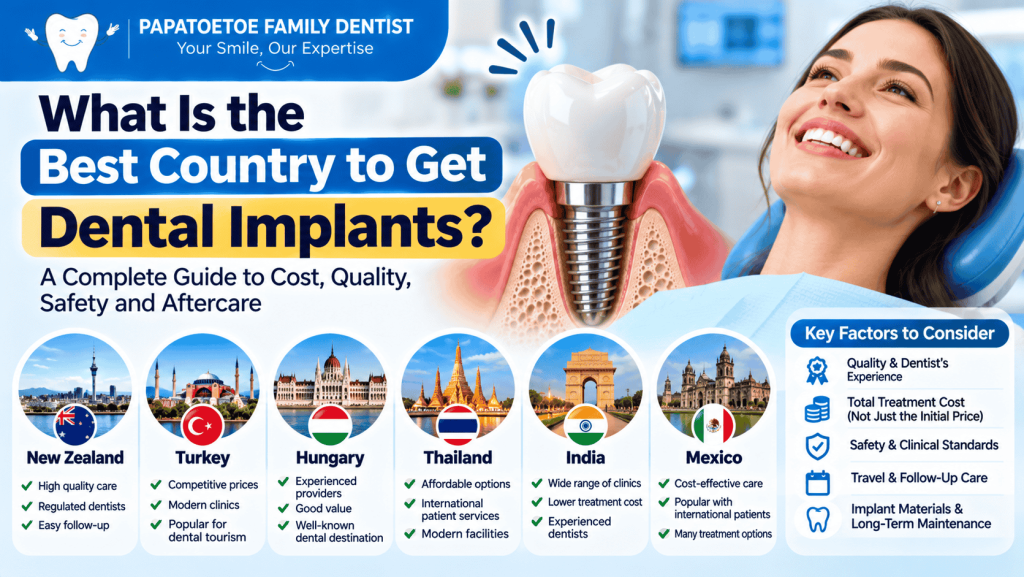
Dental implants have become one of the most popular solutions for replacing missing teeth. They offer a natural-looking appearance, strong chewing support, and the potential for long-term tooth replacement. However, dental implant treatment can be expensive, leading many patients to explore treatment options in different countries.
If you are considering replacing one or more missing teeth, you may be wondering: What is the best country to get dental implants?
Countries such as New Zealand, Turkey, Hungary, Thailand, India, and Mexico are frequently considered by patients researching dental implant treatment. Some offer the convenience of local care, while others attract international patients with competitive treatment prices.
However, the best country for dental implants is not necessarily the cheapest or the one advertising the most advanced technology. The quality of the treating dentist, clinical standards, treatment planning, implant materials, and access to follow-up care are all important factors.
In this guide, we compare popular destinations for dental implants, discuss the advantages and disadvantages of treatment abroad, and explain what patients in New Zealand should consider before making a decision.
What Are Dental Implants?
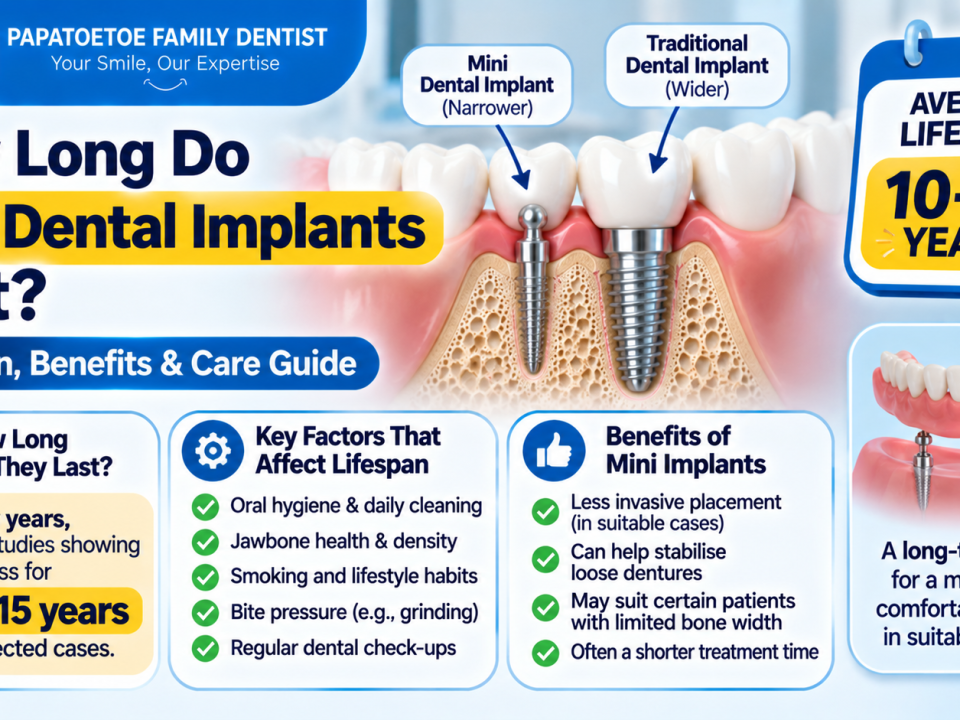
Dental implants are artificial tooth roots used to replace missing teeth. They are usually made from titanium or another biocompatible material and are surgically placed into the jawbone.
After placement, the surrounding bone gradually integrates with the implant surface through a process called osseointegration.
Once the implant is sufficiently stable, a dental crown, bridge, or denture can be attached to restore the missing tooth or teeth.
A typical implant-supported tooth consists of three main components:
- Implant fixture: The artificial root placed into the jawbone.
- Abutment: The connecting component between the implant and restoration.
- Dental crown: The visible replacement tooth.
Dental implants can provide a stable alternative to removable dentures or conventional bridges for suitable patients.
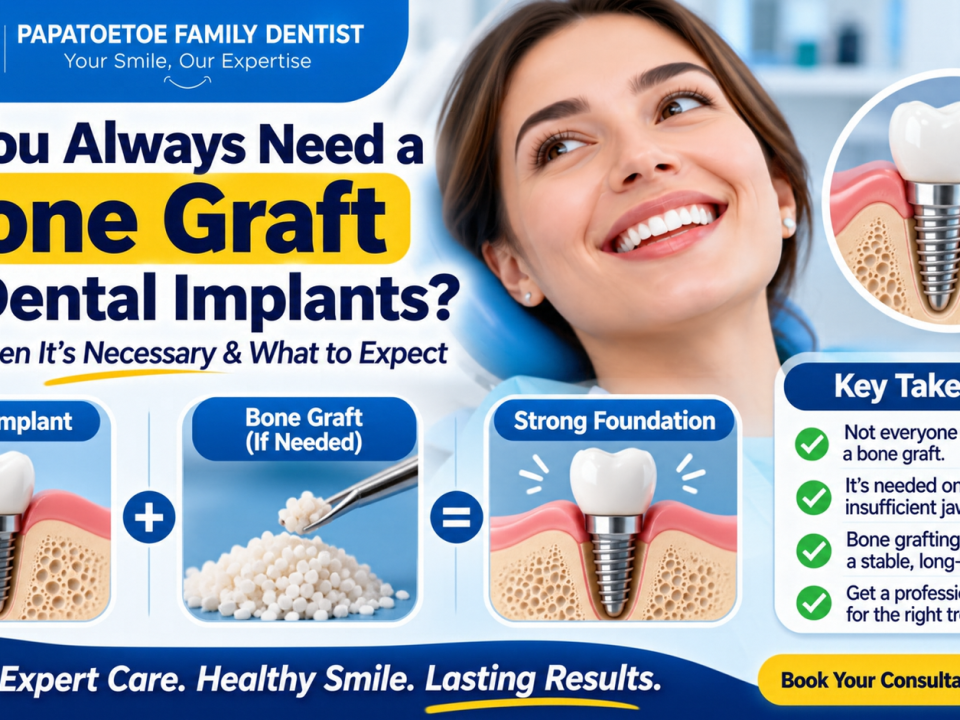
However, treatment involves careful planning, surgery, healing, and long-term maintenance. Not everyone is a suitable candidate, and some patients may require additional procedures such as bone grafting.
Which Country Is Best for Dental Implants?
There is no single country that is best for every patient.
The ideal destination depends on your budget, oral health, medical history, treatment complexity, travel arrangements, and ability to attend follow-up appointments.
For patients living in New Zealand, receiving dental implant treatment locally may offer important advantages, particularly easier access to the treating dentist if adjustments or complications arise.
Other countries may offer lower advertised treatment prices, but international patients should carefully evaluate the dentist’s qualifications, infection-control standards, treatment plan, and total costs.
The following countries are commonly considered when comparing dental implant options.
1. New Zealand: A Convenient Option for Local Patients
New Zealand is an important option for residents who want dental implant treatment without travelling overseas.
Dentists practising in New Zealand must meet Dental Council registration requirements and hold a current practising certificate.
Patients can seek professional assessments, discuss treatment options, and arrange ongoing care without the additional complications of international travel.
Advantages of Getting Dental Implants in New Zealand
Local dental care: Patients can attend consultations, surgical appointments, restoration visits, and follow-up examinations without travelling internationally.
Professional regulation: Dental practitioners are regulated by the Dental Council of New Zealand.
Continuity of treatment: The same dental team may be able to manage treatment planning, implant placement, restoration, and maintenance.
Easier follow-up: If a crown becomes loose or the surrounding gums become inflamed, patients can contact their treating practice more easily.
Clear communication: Local treatment can make discussing medical history, consent, treatment alternatives, and long-term care more straightforward.
What About Dental Implant Costs in New Zealand?
Dental implant treatment in New Zealand is generally privately funded for adults, and costs vary between practices.
The final price depends on the number of implants, the complexity of the procedure, imaging, bone grafting requirements, restoration materials, and other clinical factors.
Patients should request a personalised written treatment plan rather than relying on a single advertised price.
Who Should Consider New Zealand?
New Zealand may be particularly suitable for patients who value continuity of care, have complex treatment needs, or want convenient access to their dentist throughout the healing and maintenance process.
2. Turkey: A Popular Destination for Dental Tourism
Turkey is frequently promoted as a destination for international dental treatment.
Cities such as Istanbul and Antalya have dental clinics that cater to overseas patients, including those seeking implant-supported crowns, bridges, and full-arch restorations.
Why Do Patients Consider Turkey?
One of the main attractions is the possibility of lower treatment prices compared with some higher-cost countries.
Some clinics also provide international patient coordination, assistance with accommodation, and information about treatment schedules.
However, these services should not be confused with guarantees of clinical quality.
Important Considerations
Patients should carefully verify the qualifications and registration status of the treating dentist.
It is also essential to understand whether the proposed treatment requires multiple visits.
Dental implants often need a healing period before the final restoration is fitted. This means a patient may need to return to Turkey after several months.
Travelling home before healing is complete can make follow-up more complicated.
Is Turkey the Best Choice?
Turkey may be an option for patients who have thoroughly researched a qualified provider and can manage the necessary travel and follow-up arrangements.
However, selecting a clinic based only on low prices or promotional packages can expose patients to avoidable risks.
3. Hungary: An Established European Dental Tourism Destination
Hungary is another country frequently associated with dental tourism.
Budapest and other Hungarian cities attract patients researching restorative and implant dentistry.
Why Do Patients Choose Hungary?
Some international patients consider Hungary because of its location in Europe and the availability of dental practices serving overseas visitors.
Patients may also find treatment prices that are lower than those quoted by certain practices in other European countries.
What Should You Check?
Before booking dental implant treatment in Hungary, verify:
- The dentist’s professional qualifications.
- The clinic’s registration and relevant credentials.
- The implant system being used.
- The complete treatment schedule.
- The expected healing period.
- The arrangements for follow-up care.
- The process for managing complications after returning home.
For patients travelling from New Zealand, distance and travel expenses may reduce the financial advantages of receiving treatment in Hungary.
4. Thailand: An Option for Patients in the Asia-Pacific Region
Thailand is another destination considered by international dental patients.
Cities such as Bangkok and Phuket have private dental facilities that offer services to international visitors.
Advantages Patients May Consider
Thailand may be attractive because of its location within the Asia-Pacific region and the availability of private dental services for overseas patients.
Some clinics provide international patient support and treatment coordination.
However, facilities and practitioner experience vary, so patients should evaluate individual clinics rather than assuming all providers offer the same standard of care.
What Are the Potential Challenges?
Dental implant treatment may require multiple appointments separated by a healing period.
Patients should consider the cost of return flights, accommodation, additional treatment, and follow-up care.
They should also confirm who will manage any complications after returning to New Zealand.
Thailand may be worth considering for some patients, but treatment suitability and provider quality should come before travel convenience or advertised prices.
5. India: A Country Offering a Wide Range of Dental Services
India is another country that patients may consider when researching affordable dental implant treatment.
Major cities such as Delhi, Mumbai, Bengaluru, and Chennai have private dental practices providing implant dentistry.
Why Do Patients Consider India?
Patients may be attracted by the range of available private dental services and the possibility of lower treatment costs.
However, the standard of care, clinician experience, equipment, and pricing can differ significantly between providers.
What Should Patients Look For?
Before selecting a dental clinic in India, ask about the dentist’s qualifications, implant training, treatment experience, and the materials being used.
Patients should also confirm the clinic’s infection-control procedures and arrangements for dealing with complications.
If you live in New Zealand, consider whether travelling to India for follow-up visits would be practical.
A lower initial treatment quote may not represent a lower total cost once travel and ongoing maintenance are included.
6. Mexico: A Common Choice for North American Dental Tourists
Mexico is frequently considered by patients travelling from the United States and Canada for dental treatment.
Its geographical proximity to North America can make it a convenient destination for some patients.
Why Is Mexico Popular?
Some patients explore Mexican dental clinics because of potentially lower prices and easier access from certain parts of the United States.
Private clinics in several Mexican cities provide implant treatment for international patients.
What Should Patients Consider?
As with any destination, the dentist’s qualifications, clinical assessment, treatment planning, and aftercare arrangements are more important than the country’s reputation for lower prices.
Patients should confirm whether the clinic uses an implant system that can be serviced by dentists in their home country.
For New Zealand residents, Mexico is a long-distance destination, which may make repeated appointments expensive and inconvenient.
Dental Implant Countries Compared
The following comparison highlights general considerations rather than guaranteed prices, outcomes, or quality rankings.
| Country | Potential Advantage | Main Consideration |
|---|---|---|
| New Zealand | Convenient local treatment and follow-up | Private treatment costs |
| Turkey | Potentially competitive treatment prices | Provider verification and repeat travel |
| Hungary | Established dental tourism market | Distance and aftercare |
| Thailand | Asia-Pacific location and international patient services | Clinic selection and treatment scheduling |
| India | Wide range of private dental services | Variation between providers and follow-up planning |
| Mexico | Convenient for some North American patients | Long-distance travel for New Zealand residents |
The most appropriate destination depends on the individual patient’s needs and the quality of the chosen dental provider.
Is It Cheaper to Get Dental Implants Abroad?
Dental implant treatment may have a lower advertised price in some countries.
However, the total cost of treatment abroad can be higher than the initial quote suggests.
When comparing costs, consider:
- Initial dental consultation.
- Diagnostic X-rays or scans.
- Implant surgery.
- Bone grafting, if required.
- Abutments and dental crowns.
- Temporary restorations.
- Return flights.
- Accommodation and local transport.
- Additional appointments.
- Treatment for complications.
- Long-term maintenance.
A clinic may advertise the cost of the implant fixture without including the final crown or other necessary procedures.
Always ask for an itemised written quote that clearly explains what is included and excluded.
You should also check whether your travel insurance covers planned dental treatment and any related complications. Standard policies may exclude these costs.
What Makes a Country Good for Dental Implant Treatment?
Rather than focusing only on the destination, patients should evaluate several important factors.
Qualified and Experienced Dentists
The experience and competence of the treating dentist are essential.
Ask about their qualifications, professional registration, implant training, and experience with cases similar to yours.
Complex cases may require additional expertise or referral to an appropriately qualified specialist.
Proper Treatment Planning
Dental implants require a careful assessment of the gums, teeth, jawbone, bite, and general health.
Diagnostic imaging may be needed to evaluate bone availability and important anatomical structures.
A responsible dentist should explain whether implants are suitable and discuss alternative treatments.
Infection Control and Patient Safety
The clinic should follow appropriate infection prevention and sterilisation procedures.
Patients should feel comfortable asking about the clinic’s hygiene practices, surgical protocols, and emergency arrangements.
Implant Materials and Components
Ask which implant brand and system will be used.
Request documentation identifying the implant components, as this information may be important for future maintenance or repairs.
Long-Term Aftercare
Implants require monitoring after placement and regular maintenance once the final restoration has been fitted.
Before travelling overseas, confirm who will provide follow-up care and how complications will be managed.
A clear aftercare plan is one of the most important parts of safe dental tourism.
What Are the Risks of Getting Dental Implants Abroad?
Dental implant treatment involves potential risks regardless of where it is performed.
These can include infection, implant failure, nerve injury, sinus-related complications, gum inflammation, and mechanical problems with the restoration.
Receiving treatment abroad can introduce additional practical challenges.
Limited Follow-Up Access
If you experience pain, swelling, or a loose crown after returning home, the original dentist may be thousands of kilometres away.
A local dentist may be able to assess the problem, but they may need detailed records and information about the implant system.
Communication Difficulties
Language differences can sometimes make it harder to understand treatment options, consent information, or aftercare instructions.
Make sure you can communicate directly and clearly with the dentist performing your treatment.
Pressure to Complete Treatment Quickly
Dental implants require appropriate healing.
Some patients may feel pressured to fit all treatment into a short holiday, but the clinical schedule should be determined by their oral health rather than their travel itinerary.
Unexpected Expenses
Complications, additional procedures, and return travel can increase the overall cost.
Before booking, ask who is financially responsible if further treatment is required.
How Long Does Dental Implant Treatment Take?
Dental implant treatment usually involves several stages.
Initial assessment: The dentist examines your mouth, reviews your medical history, and plans the treatment.
Implant placement: The implant fixture is surgically inserted into the jawbone.
Healing: The surrounding bone gradually integrates with the implant. This process often takes several months, although healing times vary.
Final restoration: Once the implant is ready, the dentist fits the appropriate crown, bridge, or denture.
Maintenance: Regular dental appointments help monitor the implant and surrounding tissues.
Some patients may be suitable for immediate or early restoration, but this is not appropriate for everyone.
The treatment schedule should be based on clinical assessment rather than a promise of unusually fast results.
Why Follow-Up Care Matters After Dental Implants
Dental implants are intended to provide long-term tooth replacement, but they still require ongoing care.
Plaque and bacteria can accumulate around implant-supported teeth, potentially leading to inflammation and peri-implant disease.
Regular professional examinations allow dentists to monitor gum health, implant stability, bite forces, and the condition of the restoration.
Patients should also brush twice daily and clean between their teeth using appropriate tools.
If you receive implants overseas, arrange a maintenance plan before travelling.
Ask whether a dentist in New Zealand can access the implant components and records if adjustments become necessary.
Questions to Ask Before Choosing a Dental Implant Clinic Abroad
Before committing to treatment, ask the following questions:
- Is the dentist properly qualified and registered?
- How much experience does the dentist have with implant treatment?
- What implant system will be used?
- Do I need bone grafting or additional procedures?
- How many appointments will be required?
- How long should I stay in the country?
- Will I need to return for the final restoration?
- What is included in the total treatment cost?
- What happens if the implant fails or a complication occurs?
- Who will provide follow-up care after I return home?
A trustworthy dental provider should be willing to discuss these questions and provide clear information before treatment begins.
Should New Zealand Patients Get Dental Implants Overseas?
For patients living in New Zealand, overseas dental implant treatment may appear attractive because of the possibility of lower initial prices.
However, it is important to consider the full treatment journey.
Dental implants may require multiple visits, several months of healing, and ongoing maintenance.
Travelling overseas can make these stages more difficult to coordinate.
Receiving treatment locally may offer easier communication, convenient appointments, and better continuity of care.
This does not mean that all overseas dental treatment is unsafe or that every local clinic is automatically the best choice.
The decision should be based on the individual provider, the proposed treatment plan, and the patient’s personal circumstances.
Before booking international travel, consider obtaining an assessment and written treatment quote from a dentist in New Zealand.
This gives you a clearer basis for comparing treatment options and total costs.
Conclusion: What Is the Best Country to Get Dental Implants?
So, what is the best country to get dental implants?
The answer depends on your oral health, budget, treatment requirements, and access to reliable professional care.
New Zealand offers the practical advantage of local treatment and easier follow-up for residents. Turkey, Hungary, Thailand, India, and Mexico are among the destinations patients may explore when researching dental tourism.
However, a lower advertised price does not automatically mean better value, and no country can guarantee successful implant treatment.
The most important factors are the dentist’s qualifications, careful treatment planning, suitable implant materials, appropriate healing, and reliable long-term maintenance.
At Papatoetoe Family Dentist, we believe patients should have clear information before making important decisions about their oral health. If you are considering dental implants, a professional dental assessment can help you understand your treatment options, potential risks, and the care required for long-term success.
Frequently Asked Questions
1. What is the best country to get dental implants?
There is no single best country for everyone. The right choice depends on the dentist’s qualifications, treatment quality, cost, safety standards, and access to follow-up care. For New Zealand residents, local treatment may offer important practical advantages.
2. Which country offers the cheapest dental implants?
Some clinics in countries such as Turkey, India, Hungary, Thailand, and Mexico advertise lower prices than clinics in certain higher-cost markets. However, prices vary considerably, and the total cost should include travel, accommodation, restorations, additional procedures, and aftercare.
3. Is it safe to get dental implants in Turkey?
Dental implant treatment in Turkey can be provided by qualified professionals, but standards vary between clinics. Verify the dentist’s credentials, understand the proposed treatment, and confirm follow-up arrangements before booking.
4. Are dental implants expensive in New Zealand?
Dental implants are generally privately funded for adults in New Zealand, and costs vary depending on the treatment complexity, number of implants, and additional procedures required. A personalised consultation is the best way to obtain an accurate estimate.
5. How many trips are needed for dental implants abroad?
Some patients require separate visits for implant placement and final restoration, with several months of healing between them. The number of trips depends on the treatment plan and individual healing.
6. Can dental implants last a lifetime?
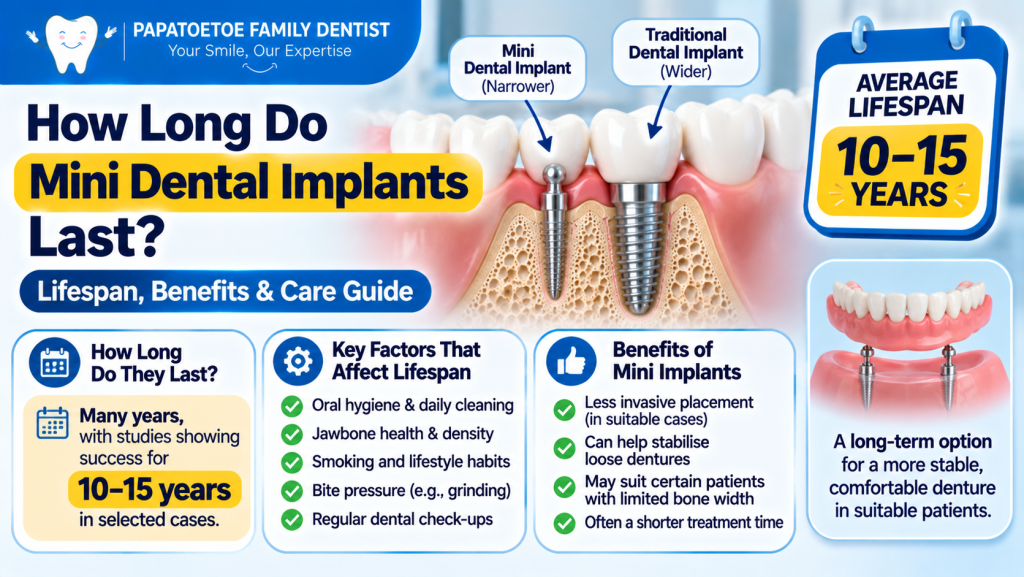
Dental implants can remain functional for many years, but their lifespan is not guaranteed. Oral hygiene, gum health, smoking, medical conditions, bite forces, and regular professional maintenance all affect long-term outcomes.
7. Is getting dental implants abroad worth it?
It may be worthwhile for some patients, but the decision should consider more than the initial price. Travel expenses, treatment complexity, potential complications, and ongoing care should all be included in the comparison.
8. What should I check before choosing a dental implant clinic?
Check the dentist’s qualifications and registration, treatment experience, implant system, infection-control procedures, written treatment plan, total costs, and aftercare arrangements.
9. Can I get dental implant follow-up care in New Zealand after treatment abroad?
A New Zealand dentist may be able to assess and maintain implants placed overseas, but the availability of compatible components and complete treatment records can affect what care can be provided. Arrange follow-up before travelling.
10. Is it better to get dental implants locally?
For many patients, local treatment provides advantages such as easier follow-up, direct communication, and convenient access to care if complications occur. However, the best decision depends on the individual patient’s needs and the quality of the chosen provider.