What Type of Dentist Makes the Most Money?

How Often Should I Go to the Dentist?
September 3, 2026
How Long Does Dental Numbing Injection Last?
September 28, 2026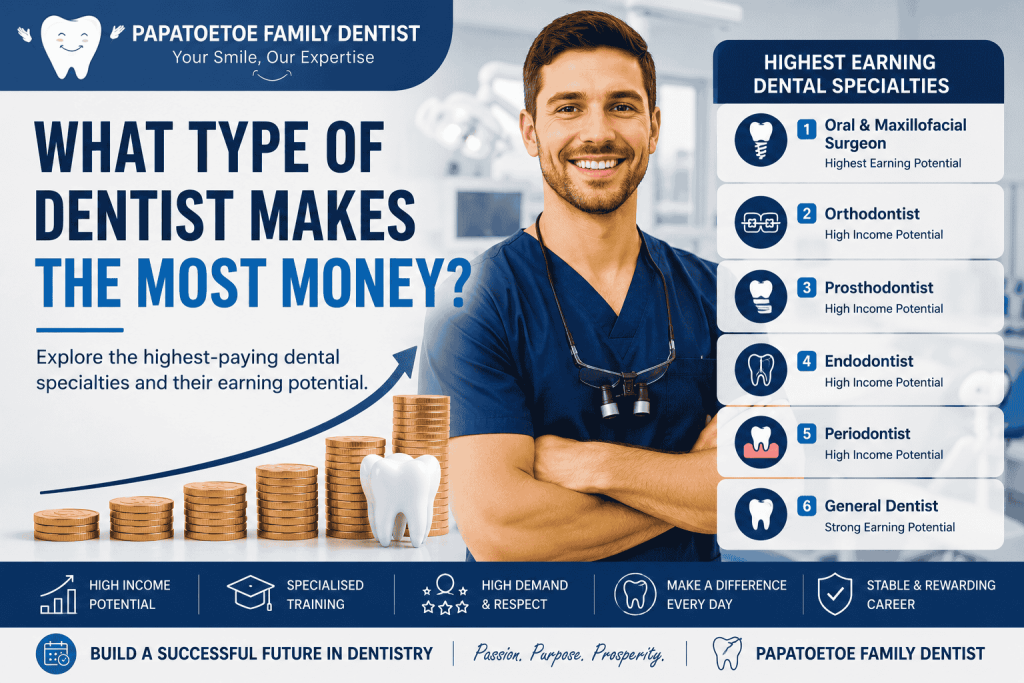
Dentistry is a rewarding career, but not every dental specialty has the same earning potential. Dentists can choose from several areas of specialisation, including orthodontics, oral and maxillofacial surgery, prosthodontics, periodontics, endodontics and paediatric dentistry.
So, what type of dentist makes the most money?
The answer depends on the country, experience, practice setting, workload and whether the dentist owns a practice. In New Zealand, specialist dentists can have strong earning potential, while oral and maxillofacial surgeons can command particularly high remuneration because of their advanced surgical training and responsibilities.
According to current New Zealand career information, dentists have a common pay range of around NZ$206,000–$247,000 per year, with an upper range around NZ$268,000. Specialist roles such as orthodontics and prosthodontics have similar published common ranges, while oral and maxillofacial surgery can offer higher packages in certain hospital roles.
Let’s look at the dental specialties that can offer some of the highest earning potential.
1. Oral and Maxillofacial Surgeons
Oral and maxillofacial surgeons are among the highest-paid dental professionals, particularly in roles involving complex surgery.
They treat conditions involving the:
- Mouth
- Jaw
- Face
- Teeth
- Facial bones
- Oral tissues
Their work can include complex tooth extractions, jaw surgery, facial trauma treatment and other surgical procedures.
In New Zealand, becoming an oral and maxillofacial surgeon requires extensive training. Tahatū lists approximately 13 years of training, reflecting the advanced education required for this specialty.
Health New Zealand currently lists an average salary package of approximately NZ$343,500 for international oral and maxillofacial surgeons, although actual remuneration depends on experience, specialty, location and the specific employment package.
This makes oral and maxillofacial surgery one of the most financially attractive dental career paths, although it also involves some of the longest and most demanding training.
2. Orthodontists
Orthodontists specialise in correcting the position of teeth and jaws.
They commonly provide treatments such as:
- Traditional braces
- Clear aligners
- Bite correction
- Jaw alignment treatment
- Retainers
- Other orthodontic appliances
Orthodontics can be financially rewarding because treatment often takes place over an extended period, with patients returning for regular appointments.
New Zealand’s Tahatū career information currently lists NZ$206,000–$247,000 as the most common annual pay range for orthodontists, with an upper range around NZ$268,000.
However, income can vary considerably between an employed orthodontist and someone who owns or operates a successful private orthodontic practice.
3. Prosthodontists
Prosthodontists focus on restoring and replacing damaged or missing teeth.
Their work can involve:
- Dental crowns
- Bridges
- Dentures
- Dental implants
- Complex restorations
- Full-mouth rehabilitation
- Cosmetic and functional dental reconstruction
These treatments can be technically demanding and may involve high-value procedures.
Tahatū currently lists NZ$206,000–$247,000 as the most common annual pay range for prosthodontists in New Zealand, with an upper range around NZ$268,000.
Prosthodontics can therefore be an attractive specialty for dentists interested in complex restorative treatment.
4. Endodontists
Endodontists specialise in problems affecting the inside of the tooth, particularly the dental pulp and tissues surrounding the tooth root.
The procedure most commonly associated with endodontics is root canal treatment.
Endodontists may also treat:
- Difficult root canals
- Dental infections
- Tooth trauma
- Complicated root canal cases
- Persistent problems following previous root canal treatment
Because endodontic procedures can be technically challenging, dentists who develop advanced skills in this area may have strong earning potential.
Income, however, depends heavily on patient demand, location, experience and whether the dentist works in an established specialist practice or owns a clinic.
5. Periodontists
Periodontists specialise in the prevention, diagnosis and treatment of gum and supporting-tissue diseases.
Their work may include:
- Treatment of gum disease
- Periodontal surgery
- Gum grafting
- Treatment around dental implants
- Management of advanced periodontal problems
Periodontics can also be financially rewarding because some patients require multiple stages of treatment and ongoing maintenance.
However, as with every dental specialty, higher qualifications do not automatically guarantee higher income. Practice ownership, patient volume and business management can have a major impact.
General Dentist vs Specialist Dentist: Who Earns More?
A general dentist can earn an excellent income without becoming a specialist.
General dentists provide a broad range of treatments, including:
- Dental examinations
- Fillings
- Crowns
- Extractions
- Preventive care
- Children’s dentistry
- Emergency dentistry
- Dentures
- Some cosmetic procedures
In New Zealand, Tahatū currently lists NZ$206,000–$247,000 as the most common annual pay range for dentists, with an upper range around NZ$268,000.
This illustrates an important point: specialisation isn’t the only factor that determines income.
An experienced general dentist who owns a busy private practice may potentially earn more than an employed specialist.
Does Owning a Dental Practice Increase Income?
It can.
A dentist’s income is influenced not only by their clinical specialty but also by their business model.
Practice owners may earn income from the overall performance of their dental practice rather than simply receiving a salary for their clinical work.
Factors that can influence practice profitability include:
- Number of patients
- Treatment mix
- Patient retention
- Location
- Operating costs
- Staffing
- Equipment expenses
- Dentist productivity
- Reputation
- Practice management
However, owning a practice also brings financial risk and additional responsibilities.
A practice owner has to manage staff, equipment, rent, compliance, marketing, supplies and other business expenses.
So, higher revenue doesn’t necessarily mean higher personal income.
Which Dental Specialty Has the Highest Salary?
There isn’t one universal answer because salary data varies by country and employment setting.
For New Zealand, current published figures show strong earning potential across several dental specialties. Oral and maxillofacial surgery can stand out in certain hospital positions, while orthodontists and prosthodontists also have high published pay ranges.
A simple way to think about the earning potential is:
| Dental Career | Main Area | Earning Potential |
|---|---|---|
| Oral & Maxillofacial Surgeon | Complex oral/facial surgery | Very high |
| Orthodontist | Teeth and jaw alignment | High |
| Prosthodontist | Tooth replacement & restoration | High |
| Endodontist | Root canal & tooth pulp treatment | High |
| Periodontist | Gums & supporting tissues | High |
| General Dentist | Broad dental care | High |
These categories should not be interpreted as guaranteed salary rankings. Actual income can differ substantially depending on experience, location, employment model and practice ownership.
Why Do Some Dentists Earn More Than Others?
Several factors influence a dentist’s income.
Experience
A newly qualified dentist generally earns less than someone who has spent many years developing advanced clinical skills and building a patient base.
Specialisation
Specialist dentists undergo additional education and training. New Zealand’s Dental Council recognises multiple specialist scopes, including orthodontics, oral and maxillofacial surgery, periodontics, prosthodontics and endodontics.
Location
Dentists working in areas with high demand or limited access to dental services may have different earning opportunities from dentists in highly competitive urban markets.
Private Practice
Private practice can provide greater earning potential than a fixed salaried position, although it also comes with greater business responsibility.
Treatment Type
Some procedures require advanced equipment, specialist training and significant clinical time. The fees associated with these procedures can therefore differ substantially.
Practice Ownership
A successful practice owner may have a different earning structure from an employed dentist because their income can be connected to the profitability of the business.
Is Becoming a Specialist Worth It?
For someone considering dentistry as a career, becoming a specialist can be financially attractive, but salary shouldn’t be the only consideration.
Specialist training requires additional years of education, examinations and supervised clinical experience.
For example, Tahatū lists approximately 8 years of training for orthodontists and prosthodontists compared with approximately 5 years for a general dentist. Oral and maxillofacial surgery can involve substantially longer training.
Before choosing a specialty, students should also consider:
- What type of patients they enjoy treating
- Whether they enjoy surgery or restorative work
- How much additional training they want
- Lifestyle and working hours
- Employment opportunities
- Location
- Practice ownership opportunities
- Long-term career goals
What Type of Dentist Makes the Most Money in New Zealand?
If you’re specifically asking about New Zealand, oral and maxillofacial surgery can offer some of the highest earning opportunities, particularly in senior hospital roles. Health New Zealand currently advertises an average total salary package of about NZ$343,500 for international oral and maxillofacial surgeons.
Orthodontists and prosthodontists also have strong published earning ranges, while experienced general dentists can earn very well depending on their practice and workload.
Ultimately, the highest-paid dentist isn’t determined by specialty alone. Experience, location, patient demand, practice ownership and business performance can all make a significant difference.
Frequently Asked Questions
What type of dentist makes the most money?
Oral and maxillofacial surgeons can be among the highest-paid dental professionals, particularly in senior surgical positions. Orthodontists and prosthodontists can also have strong earning potential.
Do orthodontists make more money than general dentists?
They can, but it isn’t guaranteed. Income depends on experience, location, employment arrangement, patient volume and whether the orthodontist owns a practice.
Are dental specialists paid more than general dentists?
Specialists often have strong earning potential because they have additional training and provide specialised treatment. However, an experienced general dentist or practice owner can also earn a high income.
Is dentistry a high-paying career in New Zealand?
Yes. Current New Zealand career information shows strong earning potential for dentists, with a common annual pay range of NZ$206,000–$247,000.
Does owning a dental clinic make a dentist richer?
Practice ownership can increase earning potential, but it also introduces business expenses and financial risk. The profitability of the clinic matters more than simply owning one.
Final Thoughts
So, what type of dentist makes the most money?
There isn’t a single specialty that will always earn the most. In New Zealand, oral and maxillofacial surgery, orthodontics and prosthodontics can all offer excellent earning potential, while experienced general dentists and practice owners can also achieve high incomes.
If you’re considering dentistry as a career, it’s worth looking beyond salary. The best specialty is one that matches your interests, skills, preferred lifestyle and long-term career goals.