How to Make Dental Wax at Home: Safe Temporary Alternatives

How to Use Dental Tools at Home: What’s Safe and What to Avoid
July 16, 2026
How to Cope with Dental Anxiety: Practical Tips to Feel More Comfortable at the Dentist
July 16, 2026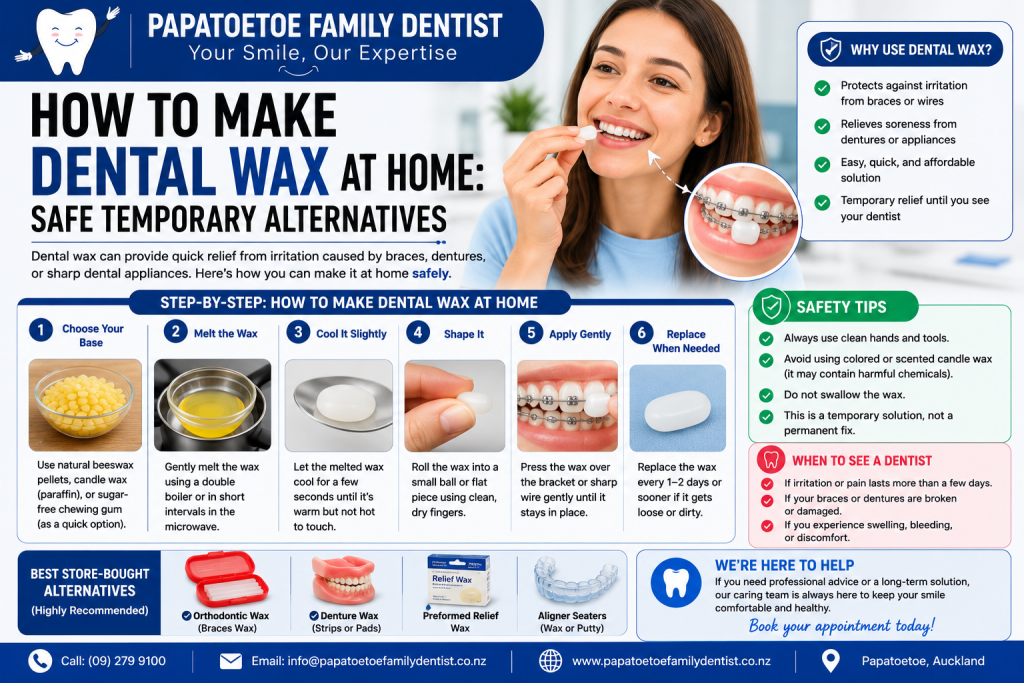
Dental wax is commonly used to cover sharp braces, orthodontic wires, or the rough edge of a chipped tooth to prevent irritation inside the mouth. If you’ve run out of dental wax, you might wonder: “How can I make dental wax at home?”
The truth is that it’s not recommended to make your own dental wax using household ingredients. Homemade mixtures may not be clean, food-safe, or suitable for use inside your mouth, and they could increase the risk of irritation or infection.
Instead, there are a few safe, temporary alternatives you can use until you’re able to buy dental wax or visit your dentist.
What Is Dental Wax?
Dental wax is a soft, medical-grade wax made specifically for oral use. It’s commonly used to:
Cover sharp braces or wires
Protect the inside of your cheeks and lips
Reduce irritation from orthodontic appliances
Temporarily cover a chipped or broken tooth
It’s non-toxic, easy to shape, and designed to stay in place for short periods.
Can You Make Dental Wax at Home?
No—not safely.
Although you may find DIY recipes online using ingredients like beeswax, paraffin, or petroleum jelly, these homemade mixtures are not recommended because they:
May not be sterile
Can contain impurities
May soften too much or become brittle
Might not stay in place properly
Are not designed for use inside the mouth
For your safety, it’s best to use products made specifically for dental use.
Safe Temporary Alternatives
If you don’t have dental wax, these options may help for a short time.
- Sugar-Free Chewing Gum
If you wear braces, a small piece of sugar-free chewing gum can temporarily cover a sharp bracket or wire.
Only use a small amount and replace it regularly.
Do not use gum if it sticks to your orthodontic appliance or if your orthodontist has advised against chewing gum.
- Orthodontic Silicone
Some pharmacies sell orthodontic silicone strips or cushions that work similarly to dental wax and are designed for oral use.
- Temporary Dental Repair Kits
Many pharmacies stock temporary dental repair kits that include materials intended for use on:
Lost fillings
Loose crowns
Minor dental emergencies
Always follow the manufacturer’s instructions carefully.
What Not to Use Instead of Dental Wax
Avoid placing the following items in your mouth:
Candle wax
Crayons
Modeling clay
Household glue
Adhesives
Craft wax
Cosmetic wax
Petroleum jelly on its own
These materials are not intended for oral use and may be unsafe.
How to Apply Dental Wax Correctly
If you obtain proper dental wax:
Step 1
Wash your hands thoroughly.
Step 2
Dry the tooth, bracket, or wire with clean gauze or tissue.
Step 3
Roll a small piece of wax into a ball.
Step 4
Press it gently over the sharp area until it feels smooth.
Step 5
Replace the wax whenever it becomes loose or after eating.
What If You’re Using Wax for a Broken Tooth?
Dental wax can temporarily reduce irritation from a chipped tooth, but it does not repair the tooth.
You should arrange a dental appointment as soon as possible if you have:
A broken tooth
A cracked filling
A lost crown
Ongoing pain
Swelling
When to See a Dentist
Temporary relief is helpful, but professional care is still important.
Book an appointment if:
A bracket or wire is causing persistent pain
A tooth has broken
You have swelling or signs of infection
The irritation continues despite using dental wax
Dental clinics such as Papatoetoe Family Dentist can provide appropriate dental wax, repair orthodontic appliances, and treat chipped or broken teeth to prevent further discomfort.
Tips to Prevent Mouth Irritation
While waiting for your appointment:
✔ Brush gently around braces or the affected tooth
✔ Rinse with warm salt water
✔ Avoid hard or sticky foods
✔ Replace dental wax regularly
✔ Keep your mouth clean to reduce irritation
Frequently Asked Questions
Can I make dental wax with beeswax?
Although beeswax is a natural wax, homemade beeswax mixtures are not recommended for use inside the mouth because they aren’t manufactured or sterilized for dental use.
Is dental wax safe if swallowed?
Yes. Small amounts of commercial dental wax are generally considered non-toxic and usually pass through the digestive system without causing harm.
What can I use if I don’t have dental wax?
A small piece of sugar-free chewing gum may provide temporary relief for braces in some cases, but dental wax or orthodontic silicone is a better option.
Where can I buy dental wax?
Dental wax is widely available from pharmacies, supermarkets, orthodontic clinics, and online retailers.
Final Thoughts
If you’re wondering how to make dental wax at home, the safest answer is not to make it yourself. Homemade substitutes may not be safe or suitable for use inside your mouth. Instead, use a short-term alternative like sugar-free chewing gum (if appropriate) and purchase medical-grade dental wax as soon as possible.
If irritation is caused by a broken tooth, loose bracket, or sharp wire, arrange a dental appointment promptly so the underlying problem can be treated.