Do-It-Yourself Dental Implants: Why It’s Dangerous and What You Should Do Instead

AM Dental Nelson: Services, Emergency Care & What to Expect
July 16, 2026
Are Dentists Open in Level 3?
July 16, 2026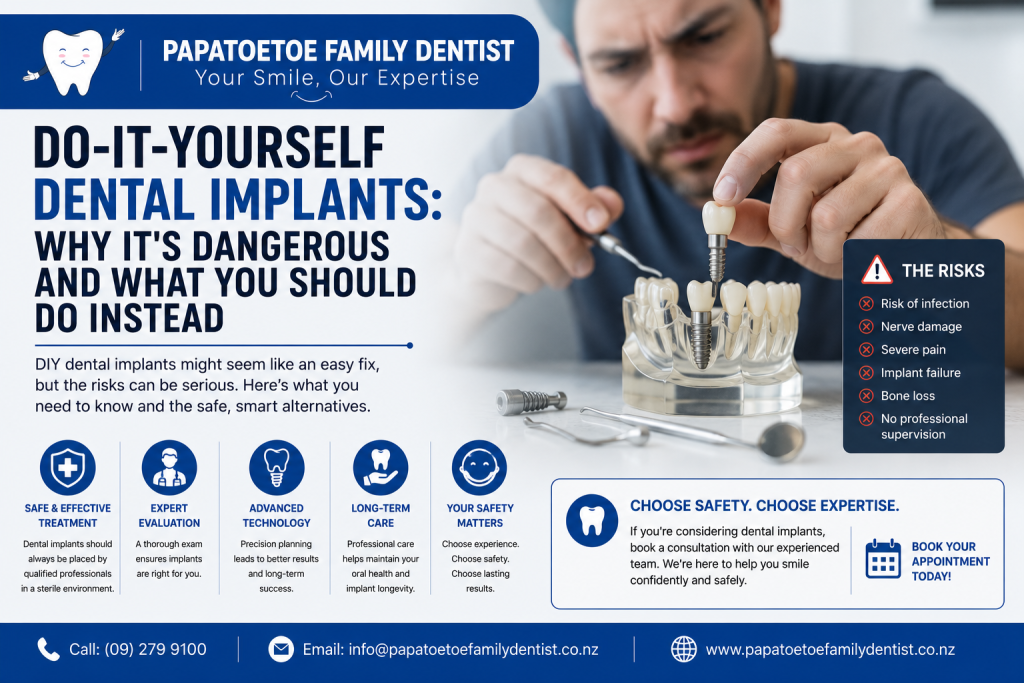
Replacing a missing tooth can be expensive, leading some people to search online for do-it-yourself (DIY) dental implants or at-home tooth replacement kits. While these options may seem like a way to save money, attempting to place a dental implant yourself is extremely dangerous and should never be attempted.
Dental implants are complex surgical procedures that require specialized training, sterile conditions, detailed planning, and professional follow-up care. Trying to perform a DIY implant can lead to severe infections, permanent damage to your jawbone, nerve injuries, and even tooth loss.
In this guide, we’ll explain why DIY dental implants are unsafe, how professional implants are placed, and what affordable alternatives are available.
What Is a Dental Implant?
A dental implant is a permanent replacement for a missing tooth. It consists of three main components:
A titanium implant placed into the jawbone
An abutment that connects the implant to the restoration
A custom-made dental crown that looks like a natural tooth
Unlike dentures or bridges, implants become securely anchored to the jawbone through a natural healing process called osseointegration.
Can You Install a Dental Implant Yourself?
No.
Dental implants should only be placed by a qualified dental professional with appropriate training and equipment.
Implant placement involves:
Clinical examination
Digital X-rays or 3D scans
Surgical planning
Sterile surgical techniques
Bone assessment
Ongoing monitoring during healing
These steps cannot be safely performed at home.
Why DIY Dental Implants Are Dangerous
Serious Infection Risk
A dental implant is placed directly into the jawbone.
Without sterile surgical conditions, harmful bacteria can enter the bone and surrounding tissues, leading to:
Severe infection
Bone damage
Abscess formation
Implant failure
In some cases, untreated infections can spread to other parts of the body.
Damage to Nerves
The lower jaw contains important nerves that control sensation in the:
Lips
Chin
Tongue
Incorrect implant placement can permanently damage these nerves, resulting in:
Numbness
Tingling
Chronic pain
Loss of sensation
Jawbone Damage
Professional implant placement requires careful measurement of:
Bone height
Bone width
Bone density
Improper drilling can weaken or fracture the jawbone and make future treatment more difficult.
Implant Failure
Dental implants succeed because they are placed at the correct angle and depth.
A poorly positioned implant may:
Fail to bond with the bone
Become loose
Cause bite problems
Require surgical removal
Replacing a failed implant is often more expensive than the original treatment.
Incorrect Bite Alignment
An implant must align perfectly with surrounding teeth.
Poor positioning can lead to:
Difficulty chewing
Uneven pressure
Damage to nearby teeth
Jaw discomfort
Professional planning helps ensure proper function and comfort.
Why Professional Dental Implants Require Careful Planning
Before placing an implant, dentists assess:
Overall oral health
Gum condition
Bone quality
Bite alignment
Medical history
Advanced imaging such as 3D CBCT scans helps identify the safest and most effective implant position.
This planning is essential for long-term success.
What Happens During Professional Implant Treatment?
Dental implant treatment generally involves several stages.
Initial Consultation
The dentist examines your mouth and discusses your treatment options.
Digital Imaging
X-rays or 3D scans evaluate the jawbone and surrounding structures.
Implant Placement
The titanium implant is carefully inserted into the jaw under local anesthesia.
Healing Period
Over several months, the implant fuses with the bone through osseointegration.
Crown Placement
Once healing is complete, a custom-made crown is attached to restore appearance and function.
Are DIY Tooth Replacement Kits a Good Alternative?
Some online products claim to replace missing teeth temporarily.
These may include:
Temporary cosmetic teeth
Snap-on replacement teeth
Moldable plastic tooth kits
While some products may temporarily improve appearance, they do not replace a dental implant and should not be used as a long-term solution.
They cannot:
Restore chewing strength
Prevent bone loss
Replace missing tooth roots
Affordable Alternatives to Dental Implants
If implant cost is a concern, speak with your dentist about other treatment options.
These may include:
Dental Bridges
A fixed restoration supported by neighboring teeth.
Partial Dentures
A removable appliance that replaces one or more missing teeth.
Flexible Payment Plans
Many dental clinics offer financing options that make implant treatment more manageable.
Your dentist can help you choose the solution that best fits your oral health needs and budget.
How to Protect Your Oral Health
If you have a missing tooth:
✔ Schedule a professional dental consultation
✔ Avoid attempting any DIY procedures
✔ Maintain excellent oral hygiene
✔ Ask about all available treatment options
✔ Seek prompt treatment to prevent bone loss
Early professional care often leads to better long-term outcomes.
Dental clinics such as Papatoetoe Family Dentist provide comprehensive implant consultations and can recommend safe, evidence-based solutions tailored to each patient’s needs.
Frequently Asked Questions
Can I buy a dental implant kit online?
Some products are marketed online, but they are not a safe substitute for professional dental implant treatment.
Is it illegal to place your own dental implant?
Regulations vary by country, but implant placement should only be performed by appropriately qualified dental professionals.
Are temporary DIY replacement teeth safe?
Some cosmetic products may temporarily improve appearance, but they do not replace missing tooth roots or restore normal function.
What is the safest way to replace a missing tooth?
A consultation with a qualified dentist is the safest way to determine whether a dental implant, bridge, or denture is the best option.
Final Thoughts
If you’re searching for do-it-yourself dental implants, it’s important to understand that implant placement is not a procedure that can be safely performed at home. Attempting a DIY implant can lead to serious infections, nerve injuries, jawbone damage, and permanent complications.
The safest approach is to consult a qualified dental professional who can assess your oral health and recommend the most appropriate tooth replacement option. Investing in professional treatment helps protect both your smile and your long-term health.
