What Is It Like Being a Dentist? A Real Look at the Rewards, Challenges, and Daily Life

How to Remove Tartar From Teeth Without Dentist: What Reddit Says and What Actually Works
May 18, 2026
Do Dental Implants Feel Natural? Everything You Need to Know Before Getting Dental Implants
May 18, 2026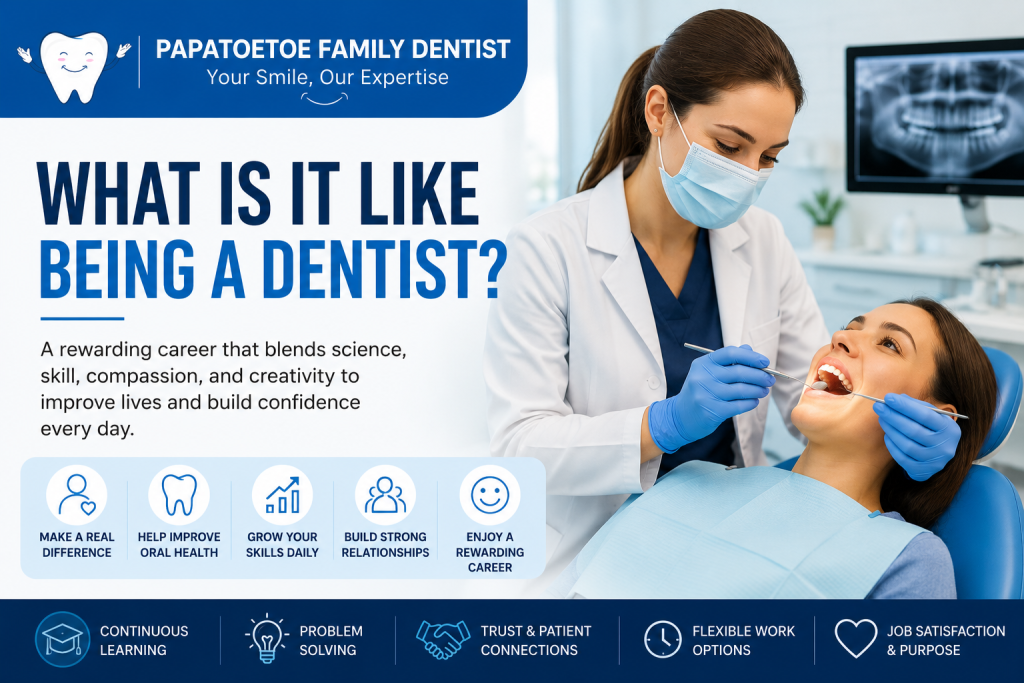
Choosing a career is one of the biggest decisions a person makes, and for many people considering healthcare professions, dentistry often stands out as an attractive option. Dentists are respected professionals, often associated with good income, career stability, and the ability to help others. But beyond the salary and qualifications, many people ask an important question:
What is it actually like being a dentist?
The reality of being a dentist goes far beyond simply fixing teeth. Dentistry combines science, healthcare, communication, problem-solving, artistry, and patient care. Every day is different, bringing new challenges and opportunities to improve someone’s confidence, comfort, and overall health.
At Papatoetoe Family Dentist, we understand that patients and future dental professionals are often curious about what life as a dentist truly involves. This guide explores the daily experience of dentists, the rewards of the profession, common challenges, work-life balance, earning potential, and whether becoming a dentist is worth it.
What Does a Dentist Actually Do Every Day?
Many people imagine dentists spending all day filling cavities or cleaning teeth. In reality, dentistry is much broader.
A dentist’s daily responsibilities may include:
- Examining patients’ oral health
- Diagnosing dental problems
- Treating tooth decay
- Performing fillings and restorations
- Carrying out extractions
- Creating treatment plans
- Educating patients about oral hygiene
- Managing dental emergencies
- Performing cosmetic procedures
- Monitoring gum health
- Working with dental hygienists and assistants
The exact routine depends on the type of practice and area of specialization.
No two patients are identical, meaning dentists regularly solve new problems and make clinical decisions.
A Typical Day in the Life of a Dentist
While schedules vary, a general workday might look like this:
Morning:
- Reviewing patient records
- Conducting examinations
- Completing routine procedures
- Emergency appointments
Afternoon:
- Restorative work
- Cosmetic treatments
- Consultations
- Treatment planning
End of Day:
- Patient notes
- Team discussions
- Managing administrative tasks
Some days are calm, while others involve urgent situations requiring quick decision-making.
The Most Rewarding Part of Being a Dentist
Many dentists say the most satisfying part of their career is helping people.
Patients often arrive with:
- Pain
- Anxiety
- Low confidence
- Difficulty eating
- Dental fear
Providing treatment can significantly improve someone’s quality of life.
Helping patients:
- Smile confidently again
- Eat comfortably
- Reduce pain
- Improve oral health
can be incredibly rewarding.
Seeing immediate results is one of dentistry’s unique advantages compared to some other healthcare professions.
Dentistry Combines Healthcare and Creativity
A surprising aspect of dentistry is the artistic element involved.
Procedures often require:
- Precision
- Aesthetic judgment
- Attention to detail
- Hand skills
Creating natural-looking restorations or cosmetic improvements requires both science and artistry.
Dentists frequently balance:
Function + Appearance + Comfort
This combination makes the profession appealing to individuals who enjoy practical, hands-on work.
Is Being a Dentist Stressful?
Like most healthcare careers, dentistry comes with pressure.
Common sources of stress include:
Patient Anxiety
Many patients fear dental treatment. Managing nervous individuals requires patience and communication skills.
Precision Requirements
Dental work demands accuracy. Small errors can have long-term consequences.
Busy Schedules
Back-to-back appointments may create pressure.
Physical Demands
Dentists spend long hours in specific positions, which may affect posture.
Business Responsibilities
Practice owners often manage:
- Staff
- Equipment
- Scheduling
- Finances
Stress levels vary depending on experience and workplace environment.
Do Dentists Experience Burnout?
Burnout can occur in any healthcare profession, including dentistry.
Potential causes include:
- Long working hours
- Emotional demands
- Administrative pressure
- Repetitive strain
However, many dentists reduce burnout through:
- Balanced schedules
- Continuing education
- Team support
- Flexible work arrangements
Maintaining work-life balance is important for long-term career satisfaction.
How Long Does It Take to Become a Dentist?
Becoming a dentist requires years of education and clinical training.
Training generally includes:
- University education
- Clinical practice
- Licensing requirements
The process is demanding but designed to prepare professionals for patient care responsibilities.
Do Dentists Earn Good Salaries?
Dentistry is often considered financially rewarding.
Income varies depending on:
- Experience
- Location
- Specialization
- Practice ownership
Experienced dentists may earn significantly higher incomes than national averages.
However, salary should not be the only reason for choosing the profession.
Long-term success usually comes from combining:
- Skill
- Passion
- Patient care
- Professional growth
What Personality Traits Make a Good Dentist?
Successful dentists often share certain characteristics.
Important qualities include:
Good Communication
Explaining treatment clearly builds trust.
Patience
Patients may feel anxious or uncertain.
Attention to Detail
Precision matters greatly.
Empathy
Understanding patient concerns improves care.
Problem-Solving Ability
Every patient presents unique situations.
Do Dentists Have Good Work-Life Balance?
Many people are surprised to learn that dentistry may offer better work-life balance compared to some healthcare careers.
Some dentists work:
- Standard weekday hours
- Part-time schedules
- Flexible arrangements
Practice ownership may reduce flexibility initially but create long-term independence.
Work-life balance depends heavily on:
- Career goals
- Workplace structure
- Personal preferences
What Are the Biggest Challenges of Being a Dentist?
Despite many rewards, challenges exist.
Common difficulties include:
Managing Patient Fear
Dental anxiety remains widespread.
Keeping Up with Technology
Dentistry evolves continuously.
Physical Strain
Long procedures may affect posture and muscles.
High Responsibility
Clinical decisions affect patient outcomes.
What Are the Best Parts of Being a Dentist?
Many professionals value:
✓ Helping people daily
✓ Strong earning potential
✓ Career stability
✓ Flexible work options
✓ Hands-on work
✓ Opportunities for specialization
✓ Building long-term patient relationships
These benefits contribute to high career satisfaction for many dentists.
What Types of Dentists Exist?
Dentistry includes multiple career paths.
Examples:
- General dentists
- Orthodontists
- Oral surgeons
- Pediatric dentists
- Periodontists
- Prosthodontists
Specialization allows dentists to focus on areas matching their interests.
Can Dentistry Become Boring?
Because every patient is different, many dentists find the work varied.
Daily cases may involve:
- Preventive care
- Cosmetic treatments
- Restorative procedures
- Emergencies
The variety keeps the profession dynamic.
Would You Enjoy Being a Dentist?
You may enjoy dentistry if you like:
- Science
- Healthcare
- Working with people
- Practical problem-solving
- Precision work
- Long-term patient relationships
People who dislike close patient interaction or repetitive precision tasks may find dentistry less appealing.
Frequently Asked Questions
Is dentistry a difficult career?
Dentistry requires extensive education, technical skills, and responsibility, making it challenging but rewarding.
Do dentists have flexible schedules?
Many dentists enjoy flexibility depending on their work setting.
Is dentistry worth it financially?
Dentistry often provides strong earning potential, though income varies widely.
Are dentists happy with their jobs?
Career satisfaction differs by individual, but many dentists appreciate helping patients and maintaining stable careers.
Final Thoughts
So, what is it like being a dentist?
The profession combines healthcare, science, technical skill, communication, and creativity. Dentists help people overcome pain, improve confidence, and maintain lifelong oral health. While challenges such as stress and responsibility exist, many professionals find the work meaningful and rewarding.
Being a dentist is not simply about treating teeth—it’s about improving lives, one patient at a time.
For individuals considering dentistry as a career, understanding both the rewards and challenges can help determine whether it’s the right path. Passion for patient care and lifelong learning often makes the difference between seeing dentistry as a job and experiencing it as a fulfilling profession.