How to Look After Dental Implants: A Complete Guide to Long-Term Care

How to Remove a Ring with Dental Floss: A Step-by-Step Guide
October 23, 2026
How to Make Dental Numbing Go Away Faster: Safe Tips to Get Your Feeling Back
November 12, 2026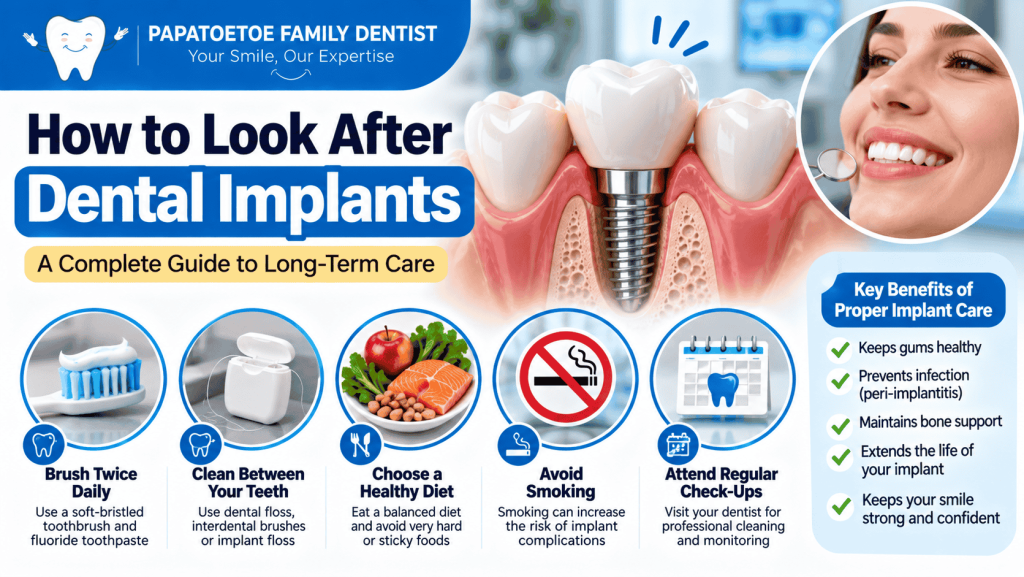
Dental implants are a popular and reliable option for replacing missing teeth. They are designed to look, feel, and function much like natural teeth, helping patients restore their smiles and enjoy everyday activities such as eating and speaking comfortably.
However, getting dental implants is only one part of the process. Looking after them properly is equally important. Although dental implants are made from durable materials, the gums and bone surrounding them still need regular care. Without proper cleaning and maintenance, plaque can accumulate around an implant and cause inflammation, infection, and potentially bone loss.
Whether you have recently received a dental implant or have had one for several years, following the right oral hygiene routine can help protect your investment and support long-term oral health.
In this guide, we explain how to look after dental implants, including daily brushing, flossing, professional cleaning, food choices, post-surgery care, and warning signs that should never be ignored.
Why Is It Important to Look After Dental Implants?
Dental implants are artificial tooth roots, usually made from titanium or other biocompatible materials. They are placed into the jawbone, where they integrate with the surrounding bone through a process called osseointegration.
A dental crown, bridge, or denture is then attached to the implant to replace the missing tooth or teeth.
Although the artificial tooth itself cannot develop natural tooth decay, the surrounding gum tissue and supporting bone can still be affected by bacteria and inflammation.
One condition associated with poor implant maintenance is called peri-implantitis. It involves inflammation around a dental implant and can lead to loss of the supporting bone if it progresses.
This is why regular cleaning and professional dental examinations are essential.
Taking care of your dental implants can help:
- Reduce plaque accumulation around the implant.
- Maintain healthy gums and supporting bone.
- Lower the risk of inflammation and infection.
- Protect the implant crown and connecting components.
- Maintain comfortable chewing and speaking.
- Support the long-term function of the implant.
Good implant care is not complicated, but it requires consistency.
1. Brush Your Teeth Twice a Day
Brushing is one of the most important parts of dental implant maintenance. Plaque can accumulate around the implant crown and gumline, just as it does around natural teeth.
Brush your teeth twice daily using a soft-bristled toothbrush and fluoride toothpaste.
Pay particular attention to the area where the implant crown meets the gum. This area can collect bacteria and food debris if it is not cleaned properly.
Tips for Brushing Dental Implants
- Use a soft-bristled manual or electric toothbrush.
- Brush gently along the gumline.
- Clean the front, back, and chewing surfaces of your teeth.
- Pay attention to the areas surrounding the implant crown.
- Avoid aggressive brushing that may irritate the gums.
- Replace your toothbrush when the bristles become worn.
Your dentist may recommend a particular toothbrush or brushing technique depending on the type and position of your implant restoration.
Do not assume that brushing only the artificial tooth is enough. The surrounding gums also need careful attention.
2. Clean Between Your Teeth Every Day
Brushing cannot reach every surface of your teeth. Food particles and plaque can collect between teeth and underneath certain implant-supported restorations.
Daily interdental cleaning helps remove these deposits and supports healthy gums.
You can use different cleaning tools depending on the design of your dental implant.
Dental Floss
Dental floss can help clean between individual implant crowns and neighbouring teeth.
Use it gently and avoid snapping it into the gums. If you have an implant-supported bridge, ordinary floss may not easily reach underneath the artificial teeth.
Interdental Brushes
Interdental brushes are small brushes designed to clean between teeth and around certain implant restorations.
They are particularly useful when there are wider spaces around the implant or areas that are difficult to reach with regular floss.
Choose an appropriate size with guidance from your dentist or dental hygienist. A brush that is too large may injure the gums.
Special Implant Floss
Some patients may benefit from specialised floss, such as superfloss or floss with a stiffened end. These products can help clean underneath bridges and around implant-supported restorations.
Your dentist can demonstrate the correct technique for your particular implant design.
The important thing is to clean between your teeth every day using a method that is suitable for your mouth.
3. Follow Your Dentist’s Instructions After Implant Surgery
If you have recently undergone dental implant surgery, the first few days and weeks are particularly important.
Your dentist or oral surgeon will provide specific instructions based on the procedure performed and your individual healing needs.
These instructions may include:
- Avoiding hard or crunchy foods during the early healing period.
- Eating soft foods as recommended.
- Avoiding unnecessary pressure on the surgical area.
- Following the prescribed oral hygiene routine.
- Taking medication only as instructed.
- Attending scheduled follow-up appointments.
- Avoiding smoking during the healing period.
Do not brush directly over a fresh surgical site unless your dentist has advised that it is safe to do so.
You may be instructed to clean the surrounding teeth carefully and use a recommended mouth rinse at a particular stage of healing.
Why Is the Healing Period Important?
After implant placement, the surrounding bone needs time to integrate with the implant surface.
This process is called osseointegration and can take several months, depending on the individual case and treatment plan.
Putting excessive pressure on the implant during healing may interfere with recovery. Following your dentist’s dietary and cleaning instructions helps protect the surgical site.
If you experience increasing pain, worsening swelling, persistent bleeding, fever, or other unexpected symptoms, contact your dental professional.
4. Avoid Smoking and Tobacco Products
Smoking is one of the lifestyle factors that can negatively affect dental implant health.
Tobacco use can interfere with healing, affect gum health, and increase the risk of complications around dental implants.
It may also contribute to plaque accumulation and make it harder to maintain healthy tissues around the implant.
If you smoke, consider seeking support to stop. Your dentist can explain how tobacco use may affect your individual treatment outcome and recommend appropriate support.
Avoiding smoking is particularly important during the healing period, but stopping long-term can also benefit your general and oral health.
5. Be Careful About What You Eat
Once your dental implant has healed and the final restoration has been fitted, you can usually enjoy a wide range of foods.
However, certain eating habits can place unnecessary stress on implant crowns and other components.
Foods to Be Careful With
Try to avoid or limit:
- Chewing ice cubes.
- Biting hard sweets.
- Cracking nuts or hard shells with your teeth.
- Chewing extremely hard foods.
- Biting non-food objects.
- Sticky foods that may be difficult to clean from your restoration.
These foods and habits can damage natural teeth as well as artificial restorations.
Choose a Balanced Diet
A balanced diet supports general health and helps maintain healthy gums and supporting tissues.
Include foods such as:
- Fresh vegetables and fruits.
- Eggs and other protein-rich foods.
- Fish and lean meats.
- Dairy products or suitable calcium-rich alternatives.
- Whole grains.
- Plenty of water.
You do not need to avoid all hard foods permanently. The goal is to avoid excessive pressure and follow any restrictions recommended for your specific restoration.
6. Attend Regular Dental Check-Ups
Even if your dental implants feel comfortable, regular dental appointments are essential.
A dental professional can examine the implant, check the surrounding gums, assess the bite, and look for early signs of potential problems.
During an implant maintenance appointment, your dentist or dental hygienist may:
- Examine the gum tissue around the implant.
- Check for bleeding, swelling, or inflammation.
- Assess plaque and tartar accumulation.
- Check the stability of the restoration.
- Evaluate your bite and chewing function.
- Recommend professional cleaning.
- Take dental X-rays when clinically necessary.
The frequency of appointments depends on your oral health, medical history, implant design, and risk of gum disease.
Some patients may need reviews every three to six months, while others may be suitable for longer intervals. Your dentist will recommend an appropriate maintenance schedule.
Do not wait until you experience pain before booking an appointment.
7. Watch for Signs of Dental Implant Problems
Dental implants can develop complications, particularly when plaque and bacteria accumulate around the supporting tissues.
Recognising early warning signs can help you seek treatment before a problem becomes more serious.
Bleeding Gums Around the Implant
Bleeding during brushing or interdental cleaning may indicate inflammation around the implant.
Occasional irritation can have different causes, but repeated bleeding should be assessed by a dental professional.
Redness and Swelling
Healthy gum tissue around an implant should not remain persistently swollen or inflamed.
If the area becomes red, tender, or swollen, arrange a dental assessment.
Bad Breath or an Unpleasant Taste
Persistent bad breath or an unpleasant taste around an implant may be associated with plaque accumulation, infection, or other oral health problems.
It is worth having the area examined rather than relying only on mouthwash.
Pain or Discomfort
Dental implants should not cause ongoing or increasing pain once healing is complete.
New discomfort, especially when chewing, should be checked by your dentist.
A Loose Crown or Implant
If the implant crown, bridge, or denture feels loose, contact your dental practice promptly.
Sometimes the problem involves a connecting screw or the restoration rather than the implant fixture itself. A dental professional needs to identify the cause.
Important: Do not attempt to tighten, repair, or remove implant components yourself.
8. Understand Peri-Implantitis and How to Prevent It
Peri-implantitis is an inflammatory condition that affects the tissues surrounding a dental implant. It can involve inflammation of the gums and progressive loss of supporting bone.
It is one of the complications that makes long-term implant maintenance so important.
What Causes Peri-Implantitis?
Several factors can contribute to the development of peri-implant disease, including:
- Poor oral hygiene.
- Plaque and bacterial accumulation.
- A history of gum disease.
- Smoking.
- Inadequate professional maintenance.
- Certain individual health and lifestyle factors.
Not everyone with dental implants develops this condition, but maintaining healthy gums and controlling plaque can reduce the risk.
How Can You Reduce the Risk?
Follow a consistent oral hygiene routine, clean between your teeth daily, avoid smoking, and attend regular dental examinations.
If you have previously experienced gum disease, inform your dentist. You may need more frequent monitoring and a personalised maintenance plan.
Early detection is important because inflammation can sometimes be treated before more extensive damage occurs.
9. Do Dental Implants Need Professional Cleaning?
Yes. Dental implants require professional maintenance, just like natural teeth.
Even with excellent home care, plaque and hardened deposits can accumulate in areas that are difficult to reach.
A dental hygienist can clean around the implant using techniques and instruments appropriate for the implant surface and restoration.
Professional cleaning may help:
- Remove plaque and deposits.
- Maintain healthy gum tissue.
- Identify early inflammation.
- Monitor the condition of the implant restoration.
- Reinforce effective home-cleaning techniques.
Not every cleaning tool is suitable for every implant surface. Your dental professional will select appropriate equipment based on your implant system and clinical needs.
Professional cleaning does not replace daily brushing and interdental cleaning. Both are important parts of maintaining healthy implants.
10. Use Mouthwash Only When Recommended
Mouthwash can be a useful addition to an oral hygiene routine, but it should not replace brushing or cleaning between teeth.
Some patients may be advised to use an antimicrobial mouth rinse for a limited period following surgery or to manage specific gum conditions.
However, not every patient needs a medicated mouthwash for routine implant care.
Using certain products for too long or without professional advice may cause unwanted effects, such as staining or changes in taste.
Ask your dentist which mouthwash, if any, is suitable for your situation.
11. Protect Your Implants If You Grind Your Teeth
Teeth grinding, also known as bruxism, can place excessive pressure on teeth and dental restorations.
Although dental implants are designed to withstand normal chewing forces, repeated excessive pressure may contribute to wear, crown damage, or mechanical complications.
If you grind your teeth during sleep, you may notice:
- Jaw discomfort in the morning.
- Headaches after waking.
- Worn or damaged teeth.
- Jaw muscle tension.
- Clicking or discomfort around the jaw.
Your dentist can assess your bite and discuss whether a custom-made night guard is appropriate.
A night guard may help protect your teeth and restorations from excessive contact during sleep.
12. Are Dental Implant Care and Natural Tooth Care the Same?
Dental implants require many of the same daily cleaning habits as natural teeth.
Both need regular brushing, interdental cleaning, and professional dental examinations.
However, there are some important differences.
| Natural Teeth | Dental Implants |
|---|---|
| Can develop tooth decay | Implant fixtures do not develop natural tooth decay |
| Supported by periodontal ligaments | Integrated directly with the jawbone |
| Can develop gum disease | Can develop peri-implant diseases |
| Need daily brushing and flossing | Need daily brushing and implant-specific cleaning |
| Require regular dental check-ups | Require regular implant maintenance and reviews |
Although the artificial crown cannot decay like a natural tooth, the surrounding gum and bone still need protection.
That is why implant care should never be ignored.
A Simple Daily Dental Implant Care Routine
Consistency is more important than using complicated products. A simple routine can help keep your implants clean and your gums healthy.
Morning:
- Brush for approximately two minutes with a soft-bristled toothbrush.
- Use fluoride toothpaste.
- Clean around the implant crown and gumline.
During the day:
- Drink water regularly.
- Limit frequent sugary snacks and drinks.
- Rinse with water after meals if you cannot brush.
Evening:
- Clean between your teeth using suitable floss or interdental brushes.
- Brush thoroughly before going to bed.
- Check for any unusual bleeding, swelling, or discomfort.
Regularly:
- Attend professional dental check-ups.
- Follow your dentist’s implant maintenance schedule.
- Ask for advice if your cleaning tools or restoration feel difficult to manage.
Conclusion
Knowing how to look after dental implants is essential for maintaining their health, comfort, and long-term function. Although implants are made from durable materials, the surrounding gums and jawbone still need proper care.
Brushing twice daily, cleaning between teeth, avoiding smoking, choosing sensible food habits, and attending regular dental check-ups can all help support healthy implants.
It is equally important to recognise warning signs such as bleeding, swelling, persistent bad breath, pain, or a loose restoration. Seeking professional advice early can help prevent minor problems from becoming more serious.
At Papatoetoe Family Dentist, we believe that good oral health continues long after dental treatment is completed. With a consistent home-care routine and professional maintenance, patients can take important steps towards protecting their dental implants and enjoying a healthy smile.
Frequently Asked Questions About Dental Implant Care
1. How often should I brush my dental implants?
Brush your teeth twice a day using a soft-bristled toothbrush and fluoride toothpaste. Pay particular attention to the gumline around your implant crown.
2. Can I use an electric toothbrush on dental implants?
Yes. An electric toothbrush can be suitable for cleaning around dental implants. Use it gently and follow your dentist’s instructions regarding the brushing technique.
3. Do I need to floss dental implants every day?
Daily interdental cleaning is important. Depending on your implant design, your dentist may recommend regular floss, superfloss, interdental brushes, or another suitable cleaning aid.
4. Can dental implants get infected?
Yes. The tissues surrounding dental implants can become inflamed or infected. Conditions such as peri-implantitis may cause gum inflammation and bone loss if not managed appropriately.
5. Can I eat normally after getting dental implants?
Most patients can return to a wide range of foods after healing and placement of the final restoration. During the initial healing period, follow your dentist’s soft-food and dietary instructions.
6. How often should I visit the dentist after getting implants?
The recommended frequency depends on your oral health and individual risk factors. Some patients need reviews every three to six months, while others may require a different schedule.
7. Is mouthwash necessary for dental implants?
Not always. Mouthwash may be recommended for specific situations, but it does not replace brushing and interdental cleaning. Ask your dentist which product is appropriate for you.
8. What are the early signs of dental implant failure?
Warning signs may include persistent bleeding, swelling, pain, an unpleasant taste, or a loose implant-supported restoration. Contact your dentist if you notice these symptoms.
9. Can smoking affect dental implants?
Yes. Smoking can interfere with healing and increase the risk of complications around dental implants. Quitting smoking can benefit both implant health and general health.
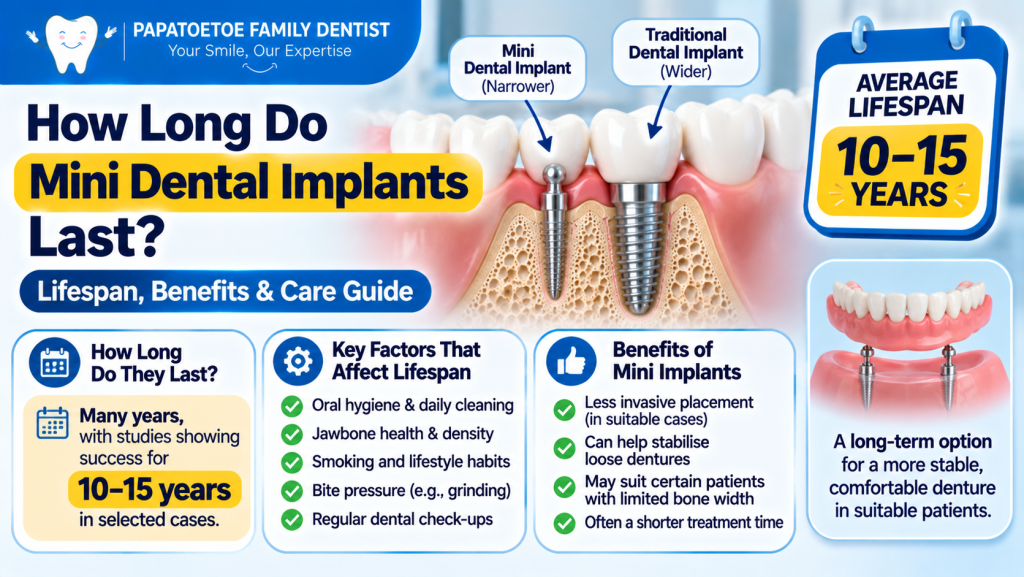
10. Can dental implants last a lifetime?
Dental implants can last for many years, but their lifespan is not guaranteed. Good oral hygiene, healthy gums, professional maintenance, and appropriate lifestyle habits help support long-term function.