
How to Remove a Ring with Dental Floss: A Step-by-Step Guide

How to Get Free Dental Care When Pregnant in New Zealand
October 23, 2026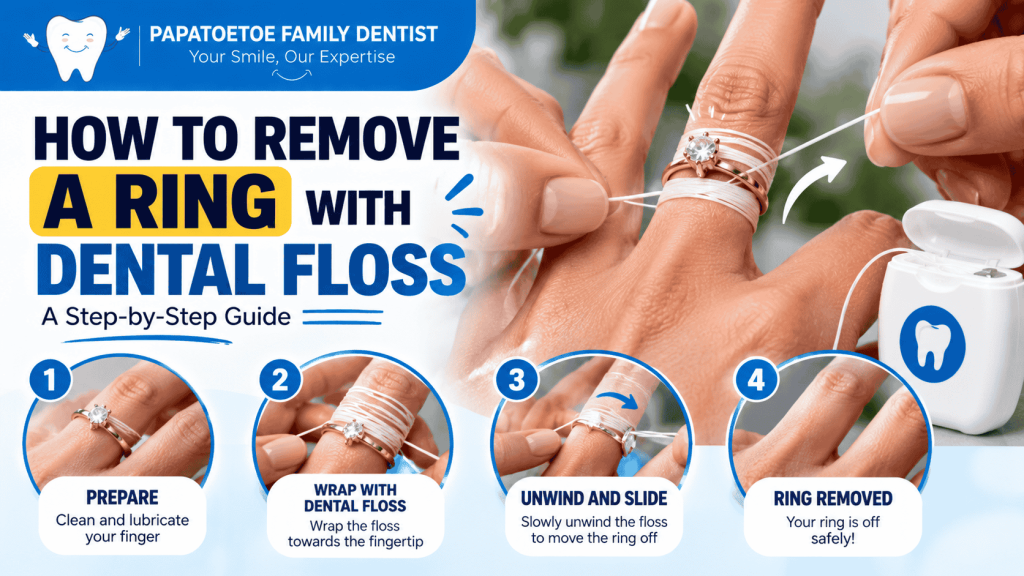
A ring that becomes stuck on your finger can be uncomfortable, frustrating, and sometimes painful. It may happen because of swelling, hot weather, an injury, pregnancy-related fluid retention, or simply because the ring is too tight. When soap and water are not enough, some people consider using dental floss to help remove the ring.
Dental floss can sometimes help slide a ring over a swollen finger by gently compressing the tissue. However, this technique is not suitable for every situation and must be used carefully. If your finger is severely swollen, injured, numb, discoloured, or increasingly painful, do not attempt to force the ring off at home.
In this guide, we explain how the dental floss method works, the steps involved, important safety precautions, and when to seek professional help.
Can You Remove a Stuck Ring with Dental Floss?
Yes, dental floss may help remove a stuck ring in certain situations. The technique works by temporarily compressing the soft tissue around the finger, making it easier for the ring to move over the knuckle.
Dental floss is thin and flexible, which allows it to fit underneath a ring in some cases. Once the floss is carefully wrapped around the finger, it may reduce the finger’s circumference enough to help the ring slide off.
However, this method is not risk-free. Wrapping floss too tightly or leaving it in place for too long can restrict circulation and damage the skin.
The method should only be considered when the finger is otherwise healthy and there are no signs of a medical emergency. Never use force or continue if you experience pain, tingling, numbness, or a change in finger colour.
What Do You Need to Remove a Ring with Dental Floss?
Before attempting the method, gather the following items:
- Dental floss or suitable thin, smooth thread.
- Mild soap and water or a skin-safe lubricant.
- A clean towel.
- Good lighting so you can see the ring and surrounding skin clearly.
Waxed dental floss may slide more easily than some other types, but do not use floss that cuts into the skin or becomes difficult to unwind.
If the ring is embedded in the skin, the finger is injured, or swelling is significant, skip the home method and seek medical assistance.
How to Remove a Ring with Dental Floss: Step-by-Step Instructions
The following steps describe the general technique. Because floss can create pressure around the finger, stop immediately if there is discomfort or any indication that circulation is being affected.
Step 1: Check Your Finger
Before doing anything, look closely at the finger.
Check for severe swelling, cuts, bruising, unusual colour, numbness, tingling, or intense pain. If any of these symptoms are present, do not attempt to remove the ring using floss.
If the finger looks normal apart from mild swelling, you can consider gentler methods first.
Step 2: Try a Gentle Lubricant
Apply a small amount of mild soap and water or another skin-safe lubricant around the ring and finger.
Gently rotate the ring while moving it towards the fingertip. Avoid pulling forcefully or repeatedly twisting the ring, as this can irritate the skin and worsen swelling.
If the ring begins to move comfortably, continue slowly. If it does not move, stop rather than forcing it.
Step 3: Understand the Floss Technique Before Proceeding
The traditional dental floss method involves passing one end of the floss beneath the ring and using the remaining length to wrap around the finger towards the fingertip. The wrapped section temporarily compresses the tissue, and the floss is then unwound from the ring end to help guide the ring over the knuckle.
Although this technique is often described in home-removal guides, it can be difficult to perform safely without assistance. Passing floss under a tight ring can injure the skin, and wrapping it can restrict circulation.
For that reason, it is safest to have a trained healthcare professional assess a difficult or tightly stuck ring rather than attempting to force floss underneath it.
Step 4: Do Not Tighten the Floss Excessively
If a healthcare professional has advised you that a floss technique is appropriate for your particular situation, the floss must not be wrapped so tightly that it causes pain, numbness, tingling, or a change in finger colour.
Do not leave tight floss in place while preparing other materials or trying different techniques.
If the floss becomes trapped, cuts into the skin, or cannot be unwound easily, stop and seek assistance.
Step 5: Stop if the Ring Does Not Move Easily
A ring should never be forced over a swollen knuckle. Excessive pressure can cause further swelling and make removal more difficult.
If gentle measures do not work, professional ring removal is the safer option. Healthcare professionals can assess circulation and use appropriate equipment to remove a ring when necessary.
Is the Dental Floss Method Safe?
The dental floss method may work in selected cases, but it is not universally safe.
The main concern is that floss can act like a tight band around the finger. If it is wrapped too firmly, it can impair blood flow, compress nerves, and damage the skin.
The risk is greater if the finger is already swollen or injured, or if the ring is extremely tight.
Avoid this method if:
- Your finger is severely swollen.
- The ring is cutting into your skin.
- Your finger is blue, purple, pale, or unusually cold.
- You have numbness, tingling, or significant pain.
- The finger has been injured.
- You cannot pass floss under the ring without force.
- You cannot easily loosen or remove the floss.
Important: A stuck ring can become a medical emergency if it restricts circulation. If your finger changes colour, becomes cold or numb, or develops severe pain or rapidly increasing swelling, seek urgent medical care immediately. Do not delay care to try another home remedy.
Other Ways to Remove a Stuck Ring
Dental floss is not the only option. Depending on the cause and severity of the problem, several alternatives may be more appropriate.
1. Elevate Your Hand
If there is mild swelling and no sign of injury or circulation problems, raising your hand above heart level for a short period may help reduce swelling.
Afterwards, you can try gently rotating the ring towards the fingertip. Stop if it hurts or does not move easily.
2. Use Soap and Water
A mild soap solution can help lubricate the skin and reduce friction.
Apply it around the ring and try to rotate the ring gently. Do not pull hard or repeatedly attempt removal if the finger becomes painful.
3. Try a Skin-Safe Lubricant
A suitable lubricant may help a ring move over the skin. Use only a product that is safe for the skin and avoid anything that irritates a cut or damaged area.
Lubrication will not solve severe swelling or a ring that is embedded in the skin.
4. Seek Professional Ring Removal
If the ring remains stuck, a healthcare professional can assess the finger and determine the safest removal method.
In some cases, a ring may need to be cut off using specialised equipment. This is often preferable to repeated attempts that could injure the finger or worsen swelling.
If circulation appears compromised, seek emergency care rather than visiting a jeweller or continuing home removal attempts.
Why Do Rings Get Stuck on Fingers?
Understanding the reason a ring becomes stuck can help prevent the problem from happening again.
Finger Swelling
Swelling is one of the most common reasons a ring becomes difficult to remove. It may occur after an injury, during hot weather, after prolonged activity, or because of certain medical conditions.
Pregnancy can also cause fluid retention and swelling in the hands and fingers.
Weight Changes
Changes in body weight can affect finger size over time. A ring that once fitted comfortably may become difficult to remove.
Joint Changes
Some people experience enlarged finger joints because of age-related changes or medical conditions. The ring may fit around the base of the finger but become difficult to move over the knuckle.
Wearing a Ring That Is Too Tight
A ring that fits too tightly may become difficult to remove when the finger swells slightly.
If you regularly struggle to remove your ring, consider having its fit assessed by a qualified jeweller once any swelling has resolved.
How to Prevent a Ring from Getting Stuck
A few simple precautions can reduce the likelihood of a ring becoming trapped.
- Make sure your ring fits comfortably and is not excessively tight.
- Remove rings before activities that may cause finger swelling, when it is safe and practical to do so.
- If you are pregnant and notice swelling, avoid forcing a ring onto or off your finger.
- Seek medical advice for unexplained or persistent swelling.
- Have a jeweller assess the ring size if it regularly becomes difficult to remove.
Sudden swelling of the hands or face during pregnancy, particularly with a severe headache, visual changes, or upper abdominal pain, needs urgent maternity assessment because it can be a warning sign of a serious pregnancy complication.
When Should You Seek Medical Help?
A stuck ring is not always an emergency, but certain symptoms require immediate attention.
Seek urgent medical care if:
- The finger becomes blue, purple, pale, or cold.
- You experience numbness or loss of sensation.
- There is severe or worsening pain.
- Swelling is increasing rapidly.
- The ring is embedded in the skin.
- The finger has been injured and the ring cannot be removed.
- The ring is visibly restricting circulation.
Do not wait to see whether floss, soap, or another home remedy works if these warning signs are present.
If there are no emergency symptoms but the ring remains firmly stuck, contact a healthcare professional for advice rather than repeatedly attempting removal.
Conclusion
Removing a stuck ring with dental floss is a technique sometimes used to help compress finger tissue and guide a ring over the knuckle. However, it can cause injury or restrict circulation if performed incorrectly, especially when the finger is swollen.
For a ring that is only mildly tight, gentle lubrication and careful movement may be worth trying first. If these measures fail, professional removal is safer than forcing the ring or wrapping floss tightly around the finger.
Always pay attention to warning signs such as pain, numbness, coldness, discolouration, or increasing swelling. These symptoms may indicate that the finger needs urgent medical attention.
The most important rule is simple: never risk the health of your finger to save a ring. When in doubt, seek professional help.
Frequently Asked Questions
Can dental floss remove a tight ring?
Dental floss may help in some cases by temporarily compressing the soft tissue around the finger. However, the method can restrict circulation or injure the skin if used incorrectly, so it is not suitable for every stuck ring.
Is waxed or unwaxed dental floss better?
Waxed floss may slide more easily in some circumstances, but the type of floss does not eliminate the risks associated with wrapping or pulling it around a swollen finger.
What if I cannot get the floss under the ring?
Do not force it. Trying to push floss beneath a tight ring can injure the skin. Seek professional assistance if the ring cannot be moved gently.
Can I use dental floss if my finger is swollen?
If swelling is significant, painful, or increasing, do not attempt the floss method. If the finger is discoloured, cold, numb, or severely painful, seek urgent medical care.
What is the safest way to remove a ring that will not come off?
For mild tightness without warning signs, gentle lubrication and careful movement may help. If the ring remains stuck, professional assessment and removal are safer than repeated home attempts.
Should I go to a hospital for a stuck ring?
Go to an emergency department if the ring is restricting circulation or your finger becomes discoloured, cold, numb, or severely painful. For a ring that is stuck without these symptoms, contact a healthcare professional for guidance on safe removal.