How Much Do Dental Implants Cost?
What is a Dental Dam?
April 20, 2026
How Much Do Dentists Earn in NZ? Complete Salary Guide for 2026
May 18, 2026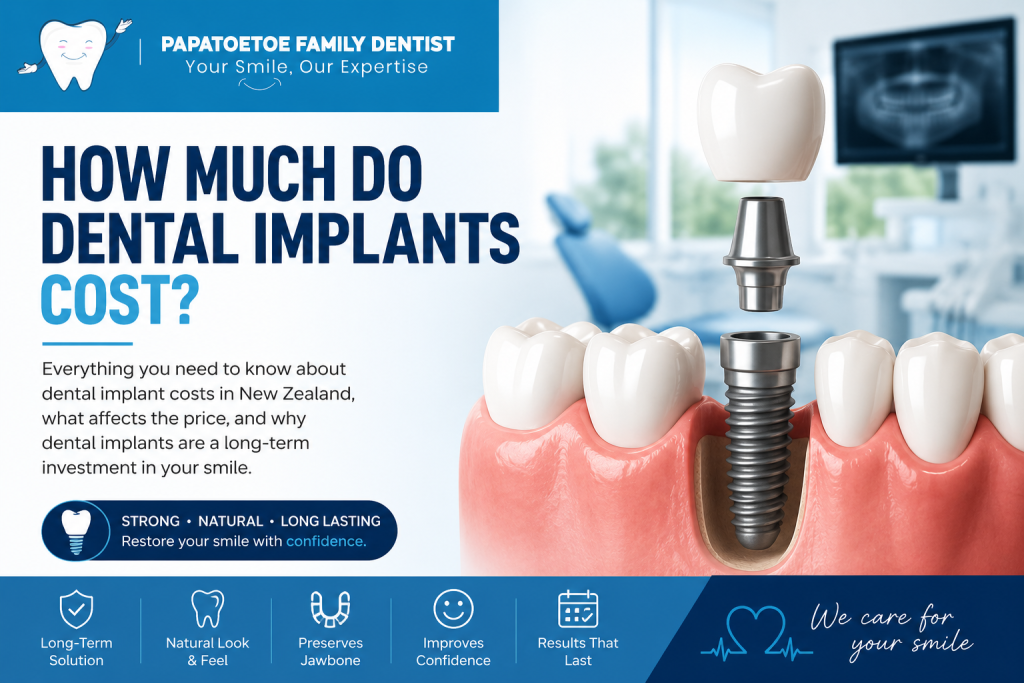
Dental implants are one of the most effective and long-lasting solutions for replacing missing teeth. They look natural, feel secure, and function much like real teeth. However, one of the first questions most patients ask is: How much do dental implants cost?
At Papatoetoe Family Dentist, we understand that dental implants are a significant investment. Patients want clear information about pricing, treatment stages, and what factors influence the final cost. The truth is that there is no single fixed price because every patient’s oral health needs are different.
In this detailed guide, we explain the average cost of dental implants in New Zealand, what is included in the price, factors that affect treatment costs, and why implants are considered one of the best long-term tooth replacement options available today.
What Are Dental Implants?
Dental implants are artificial tooth roots made from titanium or other biocompatible materials. They are surgically placed into the jawbone to support replacement teeth such as crowns, bridges, or dentures.
A complete dental implant system usually includes:
The implant post
The abutment
The dental crown
Unlike removable dentures, implants are fixed securely in the mouth and help preserve jawbone structure.
Average Cost of Dental Implants in New Zealand
In New Zealand, the cost of a single dental implant generally ranges between NZD $5,000 and $8,000 depending on the complexity of the case and the clinic providing treatment.
Some clinics report average prices closer to NZD $6,000–$7,000 for a complete implant procedure that includes the implant, abutment, and crown.
Additional procedures such as bone grafting or sinus lifts can increase the total cost significantly.
Why Dental Implants Cost More Than Other Options
Dental implants may appear expensive compared to dentures or bridges, but they are designed to be a long-term solution. The cost reflects:
Advanced surgical procedures
High-quality implant materials
Digital imaging and treatment planning
Custom-made crowns
Long-term durability
Unlike temporary solutions, implants are built to last for many years and, in some cases, even a lifetime with proper care.
What Is Included in the Cost of Dental Implants?
Many patients assume the implant cost only covers the visible replacement tooth, but implant treatment involves several important stages.
1. Initial Consultation and Assessment
The process begins with a dental examination, X-rays, and sometimes 3D imaging to evaluate:
Jawbone density
Gum health
Tooth positioning
Overall oral condition
This planning stage is essential for successful implant placement.
2. Implant Placement Surgery
The implant post is surgically inserted into the jawbone. This titanium post acts as the new tooth root.
The surgical procedure requires:
Precision planning
Sterile surgical equipment
Professional expertise
3. Healing and Osseointegration
After placement, the implant must bond with the jawbone through a process called osseointegration. This healing stage can take several months.
4. Abutment Placement
Once healing is complete, a connector called an abutment is attached to the implant.
5. Custom Dental Crown
The final stage involves placing a custom-made crown that matches the color and shape of your natural teeth.
Factors That Affect Dental Implant Costs
Every patient’s treatment plan is unique. Several factors influence the final price.
Number of Missing Teeth
Replacing a single tooth costs less than restoring multiple missing teeth or a full arch.
Common treatment options include:
Single implant
Implant-supported bridge
Full-mouth dental implants
All-on-4 implants
Naturally, larger restorations require more materials and clinical work.
Bone Grafting Requirements
If the jawbone is too thin or weak, bone grafting may be necessary before implant placement.
Bone grafting can add approximately:
NZD $800–$3,000 or more depending on complexity
This procedure strengthens the jawbone and improves implant success.
Sinus Lift Procedures
For upper jaw implants, some patients may require a sinus lift to create enough space for implant placement.
This additional procedure may cost:
Around NZD $2,000–$4,000
Implant Material and Brand
Premium implant brands with extensive research and proven long-term success rates may cost more.
High-quality implants generally provide:
Better durability
Improved integration
Higher success rates
Crown Material
The type of dental crown used also affects pricing.
Common options include:
Porcelain crowns
Ceramic crowns
Zirconia crowns
Premium materials offer better aesthetics and strength.
Clinic Experience and Technology
Experienced implant dentists using advanced digital technology may charge higher fees due to:
Precision treatment planning
Improved safety
Better long-term outcomes
Full Mouth Dental Implant Costs
Patients missing all or most of their teeth often ask about full-mouth implant costs.
In New Zealand, full-mouth dental implants may range from:
NZD $18,000 to $40,000+ depending on the treatment type
These treatments typically involve:
Multiple implants
Implant-supported dentures
Full-arch restorations
Are Dental Implants Worth the Cost?
For many patients, the answer is yes.
Although implants involve a higher upfront investment, they offer several long-term advantages:
Natural appearance
Stable chewing ability
Improved speech
Bone preservation
Long lifespan
Better confidence
Many alternative treatments require ongoing repairs or replacement over time.
How Long Do Dental Implants Last?
With proper care, dental implants can last decades. The implant post itself may last a lifetime, while the crown may eventually need replacement after years of wear.
Long-term success depends on:
Good oral hygiene
Regular dental visits
Avoiding smoking
Healthy gums and bone structure
Dental implants have reported success rates of over 90–95% in many long-term studies.
Are There Cheaper Alternatives to Dental Implants?
Yes, alternatives include:
Dentures
Dental bridges
While these options are often less expensive initially, they may not provide the same durability, comfort, or bone preservation benefits as implants.
Does Insurance Cover Dental Implants?
Coverage varies depending on your insurance provider and policy. Some plans may partially cover:
Consultations
Extractions
Crown placement
However, many cosmetic or advanced restorative procedures may not be fully covered.
Patients should always check directly with their insurance provider.
Can ACC Help Cover Implant Costs in New Zealand?
In some cases, ACC may contribute toward treatment costs if tooth loss was caused by an accident or injury. Eligibility depends on individual circumstances and ACC approval.
How to Maintain Dental Implants
Proper care is essential to protect your investment.
Important implant care tips:
Brush twice daily
Floss regularly
Avoid smoking
Attend routine dental check-ups
Use recommended oral hygiene products
Healthy gums are critical for implant success.
Who Is a Good Candidate for Dental Implants?
Many adults are suitable candidates for implants if they:
Have healthy gums
Have sufficient jawbone
Maintain good oral hygiene
Are generally healthy
Age alone does not usually prevent implant treatment.
Questions to Ask Before Getting Dental Implants
Before starting treatment, patients should ask:
What is included in the quoted price?
Are additional procedures likely?
What implant brand is used?
What financing options are available?
What maintenance is required?
Understanding the full treatment plan helps avoid unexpected costs later.
Why Choosing the Right Dental Clinic Matters
Dental implant treatment requires skill, planning, and long-term follow-up care. Choosing an experienced clinic improves the chances of successful treatment and lasting results.
At Papatoetoe Family Dentist, we focus on personalized treatment plans, patient comfort, and long-term oral health outcomes.
Final Thoughts
Dental implants are one of the most advanced and reliable ways to replace missing teeth. While the upfront cost may seem high, implants provide long-term value through durability, comfort, aesthetics, and improved quality of life.
The final cost depends on many factors including the number of implants required, jawbone condition, additional procedures, and the materials used. Understanding the treatment process helps patients make informed decisions about their oral health.
If you are considering dental implants, consulting with an experienced dental professional is the best way to receive an accurate treatment plan and personalized cost estimate.