How to Cure Gum Disease Without a Dentist: Safe Home Remedies & Prevention Tips
How Much Is Teeth Whitening at the Dentist?
December 24, 2025
How Often Should You Go to the Dentist? A Complete Oral Health Guide
February 28, 2026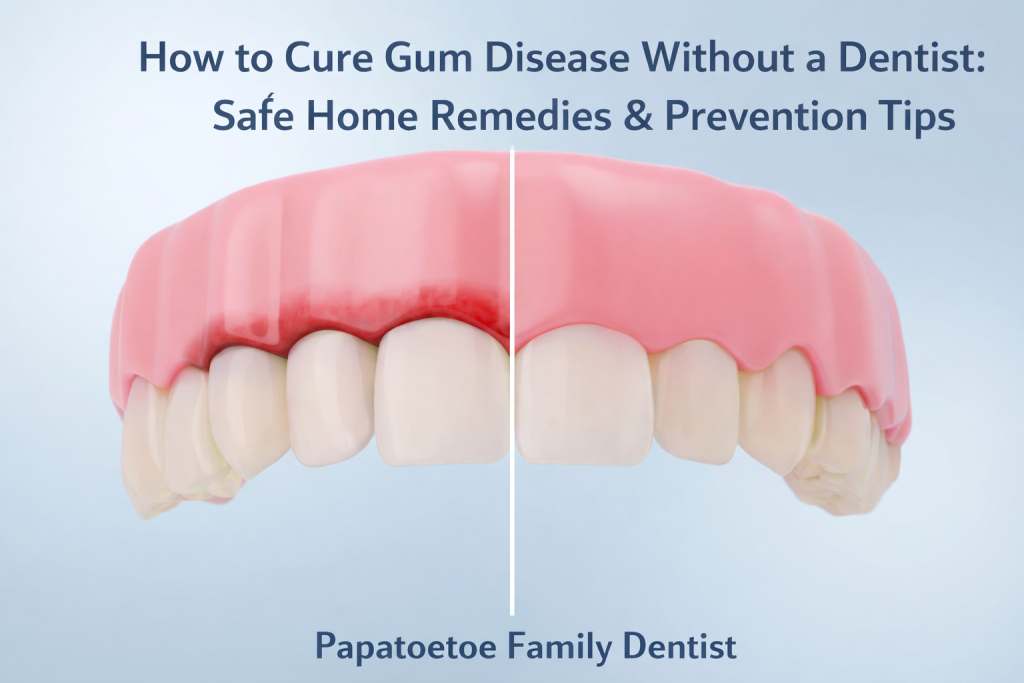
Gum disease is one of the most common oral health problems worldwide, yet many people don’t realize they have it until it becomes painful or severe. Bleeding gums, bad breath, swelling, and gum recession are early warning signs that shouldn’t be ignored.
If you’re wondering how to cure gum disease without a dentist, the honest answer is: mild gum disease (gingivitis) can often be reversed at home, but advanced gum disease (periodontitis) usually needs professional treatment. In this blog, we’ll explain what you can safely do at home, what actually works, and when seeing a dentist becomes necessary.
What Is Gum Disease?
Gum disease, also called periodontal disease, is an infection of the tissues that support your teeth. It starts when plaque—a sticky film of bacteria—builds up along the gumline.
Stages of Gum Disease
-
Gingivitis (Early Stage)
-
Red, swollen gums
-
Bleeding while brushing or flossing
-
Bad breath
-
Reversible with proper care
-
-
Periodontitis (Advanced Stage)
-
Gum recession
-
Loose teeth
-
Pain or pus around gums
-
Not reversible without dental treatment
-
If caught early, gum disease can often be controlled naturally at home.
Can You Cure Gum Disease Without a Dentist?
✔ Yes – if it’s gingivitis (early gum disease)
❌ No – if it’s periodontitis (advanced gum disease)
Home remedies help by:
-
Reducing plaque and bacteria
-
Calming inflammation
-
Preventing further damage
They cannot:
-
Remove hardened tartar below the gumline
-
Repair bone loss
-
Treat deep infections
Best Ways to Treat Gum Disease at Home
1. Brush Properly Twice a Day
Brushing incorrectly can make gum disease worse.
Best practices:
-
Use a soft-bristled toothbrush
-
Brush at a 45-degree angle toward the gumline
-
Use gentle circular motions
-
Brush for 2 minutes, twice daily
👉 Avoid hard brushing—it causes gum recession.
2. Floss Every Day (Non-Negotiable)
Plaque between teeth is a major cause of gum disease.
Tips:
-
Use dental floss or interdental brushes
-
Slide gently under the gumline
-
Clean both sides of each tooth
Flossing daily can dramatically reduce gingivitis within weeks.
3. Salt Water Rinse
One of the simplest and most effective home remedies.
How to use:
-
Mix ½ teaspoon of salt in warm water
-
Rinse for 30 seconds
-
Repeat 2–3 times daily
Benefits:
-
Reduces bacteria
-
Soothes swollen gums
-
Speeds healing
4. Use an Antibacterial Mouthwash
Choose an alcohol-free mouthwash to avoid dryness.
Look for ingredients like:
-
Chlorhexidine (short-term use)
-
Cetylpyridinium chloride
-
Essential oils
Mouthwash helps control bacteria but should never replace brushing and flossing.
5. Oil Pulling (Traditional Remedy)
Oil pulling may help reduce plaque bacteria.
How to do it:
-
Swish 1 tablespoon of coconut oil
-
Do it for 10–15 minutes
-
Spit and rinse well
While not a cure, oil pulling can support gum health when combined with proper oral care.
6. Improve Your Diet
Your gums need nutrients to heal.
Eat more:
-
Vitamin C (oranges, kiwi, bell peppers)
-
Omega-3 fatty acids (fish, flaxseed)
-
Calcium (milk, yogurt, cheese)
Avoid:
-
Sugary foods
-
Soft drinks
-
Smoking and tobacco (major gum disease risk factor)
7. Quit Smoking
Smoking:
-
Weakens the immune system
-
Slows gum healing
-
Increases the risk of severe gum disease
Quitting smoking is one of the most powerful ways to protect your gums.
8. Stay Consistent for 2–3 Weeks
Mild gum disease doesn’t disappear overnight.
Most people notice:
-
Less bleeding in 7–10 days
-
Reduced swelling in 2 weeks
-
Healthier gums in 3–4 weeks
Consistency is the key.
Signs Home Treatment Is Working
✔ Less bleeding while brushing
✔ Reduced gum redness
✔ Fresher breath
✔ Gums feel firmer, not swollen
When Home Remedies Are NOT Enough
See a dentist immediately if you have:
-
Persistent bleeding after 2–3 weeks
-
Loose teeth
-
Severe pain or pus
-
Gum recession
-
Bad breath that won’t go away
These are signs of periodontitis, which requires professional deep cleaning and treatment.
Why Early Dental Care Still Matters
Even if you manage gingivitis at home, regular dental check-ups help:
-
Detect gum disease early
-
Remove hardened tartar
-
Prevent tooth loss
Clinics like Papatoetoe Family Dentist focus on preventive care and patient education, helping families avoid serious gum problems before they start.
Frequently Asked Questions (FAQs)
Can gum disease heal on its own?
Mild gum disease can improve with proper oral care, but it won’t heal if plaque and tartar remain.
How long does it take to cure gingivitis naturally?
Usually 1–3 weeks, depending on oral hygiene and consistency.
Is gum disease permanent?
Gingivitis is reversible. Periodontitis is permanent but manageable with treatment.
Does salt water really help gums?
Yes, it reduces bacteria and inflammation, but it’s not a substitute for brushing and flossing.
Final Thoughts
If you’re searching for how to cure gum disease without a dentist, the key is understanding the stage of your condition. With the right home care routine, gingivitis can often be reversed naturally. However, ignoring symptoms or delaying treatment can lead to permanent damage.
Healthy gums are the foundation of a healthy smile—start caring for them today.